Best Accommodation Malawi: A Tea Estate Host's 24-Hour Day

/ By The Thyolo House

Best Accommodation Malawi: A Tea Estate Host's 24-Hour Day

best accommodation malawithyolo houseday itineraryboutique hotel malawitea estate stay

If you've been searching for the best accommodation in Malawi, you've probably already noticed the problem: every shortlist reads the same. Lake Malawi villas, a Big Five lodge in Majete, a hut on Mount Mulanje, and a colonial hotel or two. The photos are stunning. The descriptions are interchangeable. What none of them tell you is what a day actually feels like — the hour-by-hour rhythm of waking up, eating, walking, swimming, and going to sleep somewhere in this country.

So instead of another ranked list, here is the honest version. A full 24-hour day at The Thyolo House, our small boutique farmhouse on the Conforzi Tea Estate, written by the people who host it. Use it as a benchmark. If another stay on your shortlist can match this day, you've found your place. If it can't, you've also learned something useful.

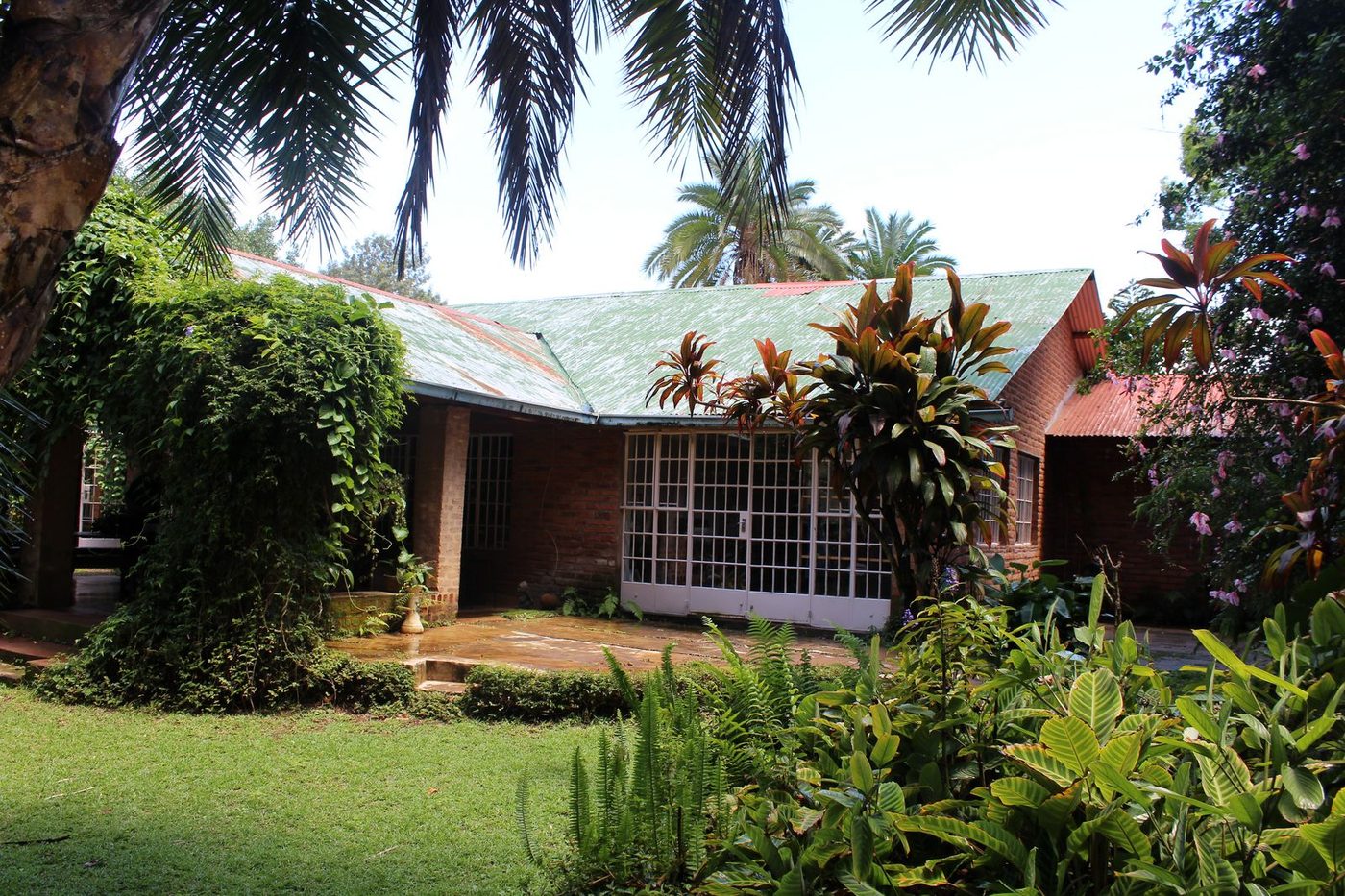
The Thyolo House boutique farmhouse on Conforzi Tea Estate, southern Malawi
The main farmhouse at The Thyolo House, built on the Conforzi Tea Estate in southern Malawi.

Why a day-in-the-life is the honest test of the best accommodation in Malawi

The phrase "best accommodation Malawi" hides a lot of work. A lodge can have a five-star website, a Tripadvisor badge, and a rate card pushing US$600 a night, and still fall apart in the small details: the coffee that comes lukewarm, the staff who don't know the names of the birds outside, the dinner that arrives plated but joyless. Conversely, some of the most memorable stays in this country are owner-run places where one person's standards run through every plate, every linen, every conversation.

The only way to compare them honestly is to walk through a real day. Not the highlight reel — the actual sequence of small choices that shape how you feel when you finally drive away. Below is what 24 hours look like at our place, on the Mulanje side of Thyolo. We've tried to be specific enough that you can hold it up against Huntingdon House next door, Mvuu Lodge in Liwonde, Pumulani on the lake, or Mkulumadzi in Majete — and decide for yourself.

6:00 AM — Dawn on the Conforzi forest edge

The first sound is not the gardener and not the kettle. It's the trumpeter hornbills in the indigenous forest behind the house, and a long, descending whistle from a Bertram's weaver moving between the tea rows. The mist sits in the valley below the veranda until about half past six, when the sun crests Mount Mulanje and pulls it apart in long ribbons.

The house wakes slowly. Coffee — beans roasted in Blantyre, ground that morning — goes onto the veranda table with hot milk and a small jug of estate honey. There is no breakfast service yet. The point of this hour is simply that you are awake before the world is, on the edge of a working tea farm, with a 3,000-metre granite massif in your eye line. No other "best accommodation Malawi" list captures this hour because most of those properties are an hour from a mountain, not under one.

Indigenous forest at dawn on the Conforzi Tea Estate, Thyolo, Malawi
The indigenous forest edge behind the house, where the dawn chorus starts before six.

8:30 AM — Garden-to-table breakfast and a slow walk through the tea

By half past eight, the long table on the restaurant veranda is laid for breakfast. The kitchen is run by Flavia Conforzi, the Italian-Malawian artist and fourth-generation member of the family who has farmed this hillside for nearly a century. The full story of how the Conforzi family came to Thyolo is its own piece — the short version is that the breakfast you are about to eat carries it in every component.

A typical morning plate: eggs from the chickens you can hear from the kitchen garden, focaccia baked at six, fig jam made from the trees beyond the pool, tomatoes still warm from the bed, a wedge of pecorino sent up from Blantyre, and Conforzi tea — picked, processed, and packed on the estate you're sitting on. Coffee refills are constant. Nobody hurries you.

After breakfast, the natural move is a slow walk down the gravel road into the tea. The plants are waist-high, cut flat across the top by hand, and the pickers move in coloured lines through them from about seven in the morning. By nine, the rows are quiet and you can walk them alone for an hour without seeing anyone but a malachite kingfisher on the irrigation channel.

11:00 AM — Tea plantation tour with a fourth-generation host, then a swim

At eleven, if you've asked the night before, one of the family or a senior estate hand will walk you through the working part of the plantation. This is not a script. You'll see the pruning cycles, the nursery beds, the drying sheds where green leaf becomes black tea, and the small factory where the Conforzi house blend is bagged. Questions about price, climate, labour, and history all get real answers, because the people answering them have been doing this for four generations.

Tea estate gardens at The Thyolo House on Conforzi Tea Estate
The kitchen gardens and tea rows that supply the restaurant.

By midday it is warm — Thyolo sits at about 900 metres, so the heat is honest but never punishing — and the pool deck is the obvious next move. The pool is a 25-metre rectangle set into a lawn that looks south across the tea, with the Mulanje massif filling the horizon. You can swim a few lengths, lie on a lounger with a paperback, or just sit on the edge with your feet in the water. There is no swim-up bar. There is no music. That is the point.

Pool deck looking across the tea estate towards Mount Mulanje
The pool deck looks straight at Mount Mulanje, twenty minutes' drive away.

1:00 PM — Italian fusion lunch from Flavia's kitchen

Lunch on the veranda is light and Italian-leaning. A typical plate this season might be hand-cut tagliatelle with slow-braised estate beef ragu, or a bright tomato and burrata salad with basil from the kitchen garden, or a wood-fired flatbread with last week's prosciutto and a soft cheese from Lilongwe. There is always a vegetarian option without being asked, and the bread is always made that morning. If you want the full breakdown of how this kitchen actually works, we have written a separate piece on Italian food in Malawi from a tea estate kitchen that goes ingredient by ingredient.

The thing to notice at lunch is what's missing. There is no buffet. There is no chafing dish. Nothing is reheated. The kitchen cooks for the number of people on the property that day, and the menu shifts to match whatever the garden is producing that week. This is not a feature of most Malawi hotels and it is a fair filter when you are comparing options.

Italian fusion lunch plate at The Thyolo House restaurant
A typical lunch plate from Flavia's kitchen — handmade pasta, garden vegetables, estate ingredients.

3:00 PM — Inside Flavia Conforzi's art studio

The afternoon hour is the one most guests are surprised by. Flavia is a working artist — large-scale figurative paintings, banana-leaf studies, portraits of estate workers — and her studio is in the old packing shed at the far end of the garden. Between three and five, guests are welcome to come in, look at what's on the easels, and if they want, sit down for an informal workshop. There is no charge for the visit; a longer guided workshop is arranged on request.

This is the moment a stay at The Thyolo House stops feeling like a hotel and starts feeling like staying with friends who happen to have unusual jobs. You're in a working artist's studio, on a working tea farm, in a working family home that happens to take guests. That overlap is rare in this country, and it is why people who stay once tend to come back.

6:00 PM — Sundowners on the pool deck as the plantation cools

Sunset over the tea is the cliché photograph for a reason. The sun drops behind the Shire Highlands to the west, and for about twenty minutes the eastern face of Mulanje turns rose-gold while the tea rows in front of it sit in cool shadow. The pool deck is the best seat in the house for this; the restaurant veranda is the second best.

The drink in your hand is whatever you want it to be. We pour a decent gin and tonic with rosemary from the garden, a Malawian Carlsberg if you want it cold and uncomplicated, or a glass of South African red while the kitchen finishes its prep. The temperature drops faster than you expect — bring a light layer if you plan to sit out until dark.

The Thyolo House restaurant lit up at night
The restaurant lights come on at dusk and the evening service begins.

8:00 PM — A long dinner, a nightcap, and why the silence here is the point

Dinner is the longest meal of the day and the one most carefully planned. The menu is a single set sequence — antipasto, a pasta course, a main, dessert — written that morning around what came in from the garden, the village butcher, and the road from Blantyre. Wine pairings are suggested without being pushed. The dining room sits eighteen comfortably; on a full night it has the feel of a private dinner party that you happen to have wandered into.

After dinner, most guests take a coffee or a grappa back to the veranda. This is the hour the silence really lands. There is no main road within earshot. There is no town lit up on the horizon. What you hear is the wind moving through the tea, a nightjar a long way off, and occasionally the watchman doing his rounds. People often say this is the part of the stay they remember longest, and it's also the part that no website photograph can sell you.

How Thyolo House compares to other "best accommodation Malawi" shortlists

Most lists of the best accommodation in Malawi tend to pick from the same handful of properties. Here is how we would think about them honestly, alongside what we offer:

  • Huntingdon House, Satemwa — Our closest neighbour, set in the next tea estate over. A beautifully preserved 1928 farmhouse, currently ranked the top B&B in Thyolo on Tripadvisor, from around US$260 a night. Excellent if you want the colonial-house experience without the working-artist studio.
  • Mvuu Lodge, Liwonde National Park — Run by Central African Wilderness Safaris, fourteen stone-and-canvas chalets on the Shire River, US$305–345 per person sharing through mid-2026. The right choice if game drives and boat safaris are your priority; new rooms are expected in 2026.
  • Mkulumadzi Lodge, Majete — Robin Pope's premium Big Five lodge, around US$600–900 per person all-inclusive. Roughly two hours from Blantyre. Best in class if budget is no object and wildlife is the trip.
  • Pumulani, Lake Malawi — Ten villas in Lake Malawi National Park, US$370–500 per person Fully Inclusive Plus. The southern lake option; pair it with Thyolo for a highlands-and-lake week.
  • Kaya Mawa, Likoma Island — Malawi's first fully renewable-energy beach lodge, US$610–880 per person. Two flights and a boat from Blantyre, and worth it.
  • Sunbird Ku Chawe, Zomba — Forty rooms on the edge of Zomba Plateau, US$100–250 per person, twenty minutes from Zomba town. Good mid-range mountain option, larger and more hotel-feeling than the boutique places.

The honest summary: if you want a working safari camp, you should book a safari camp. If you want the lake, book the lake. But if what you actually want is a small, owner-run, food-first boutique stay under Mount Mulanje, on a four-generation tea estate, you are looking at a very short list — and our five boutique rooms are on it.

Heritage suite interior at The Thyolo House
One of the five rooms — the Heritage Suite, in the original farmhouse.

Practical notes: getting here, what to pack, and how to book

The Thyolo House is about twenty minutes' drive from Limbe and forty minutes from central Blantyre on a tarred road. If you are flying in to Chileka International, allow an hour. Mount Mulanje is around half an hour further south-east. Lake Malawi's southern lakeshore (Cape Maclear and Pumulani) is a four-hour drive north-east; the lake should be planned as an overnight, not a day trip.

Bring a light jacket — even at the end of the warm season, evenings on the veranda are cool. Walking shoes for the tea trails and the forest edge. A swimsuit. A book you've been meaning to finish. If you plan to hike Mulanje from here, book your mountain hut in advance through the Mount Mulanje Conservation Trust or Likhubula Forest Tourism; we can help arrange the logistics and a guide.

For rates, dates, and meal plans across our five rooms, the simplest thing is to message us on WhatsApp on +265 884 202 040, or email thethyolohouse@gmail.com. We answer personally, usually the same day, and we are happy to talk through whether your trip is actually a good fit for the house before you book. That conversation, more than any "best accommodation Malawi" ranking, is how you find the right place to stay.