Best Accommodation in Malawi: Lake Lodges to Highland Retreats

/ By The Thyolo House

Best Accommodation in Malawi: Lake Lodges to Highland Retreats

MalawiAccommodationTravelThyolo

Malawi Has More to Offer Than You Think

If you are searching for the best accommodation in Malawi, you might picture one of two things: a thatched-roof lodge on the shores of Lake Malawi, or a basic guesthouse in a dusty town. Both exist, but the reality of accommodation in Malawi today is far more interesting than either.

Over the past decade, Malawi's hospitality scene has quietly matured. There are eco-lodges run by passionate conservationists, safari camps that rival anything in Zambia or Tanzania for wildlife and intimacy, lakeside retreats ranging from backpacker-friendly to genuinely luxurious, and — in the southern highlands — boutique properties that offer something you simply cannot find elsewhere in the country. The choices are not overwhelming in the way that Kenya or South Africa can be. They are manageable, personal, and often run by people who know every guest by name within an hour of arrival.

This guide covers the best accommodation in Malawi by region, with honest notes on what to expect, what each area offers, and which properties stand out. Whether you are planning a first visit or returning to explore a new corner of the country, this is where to start.

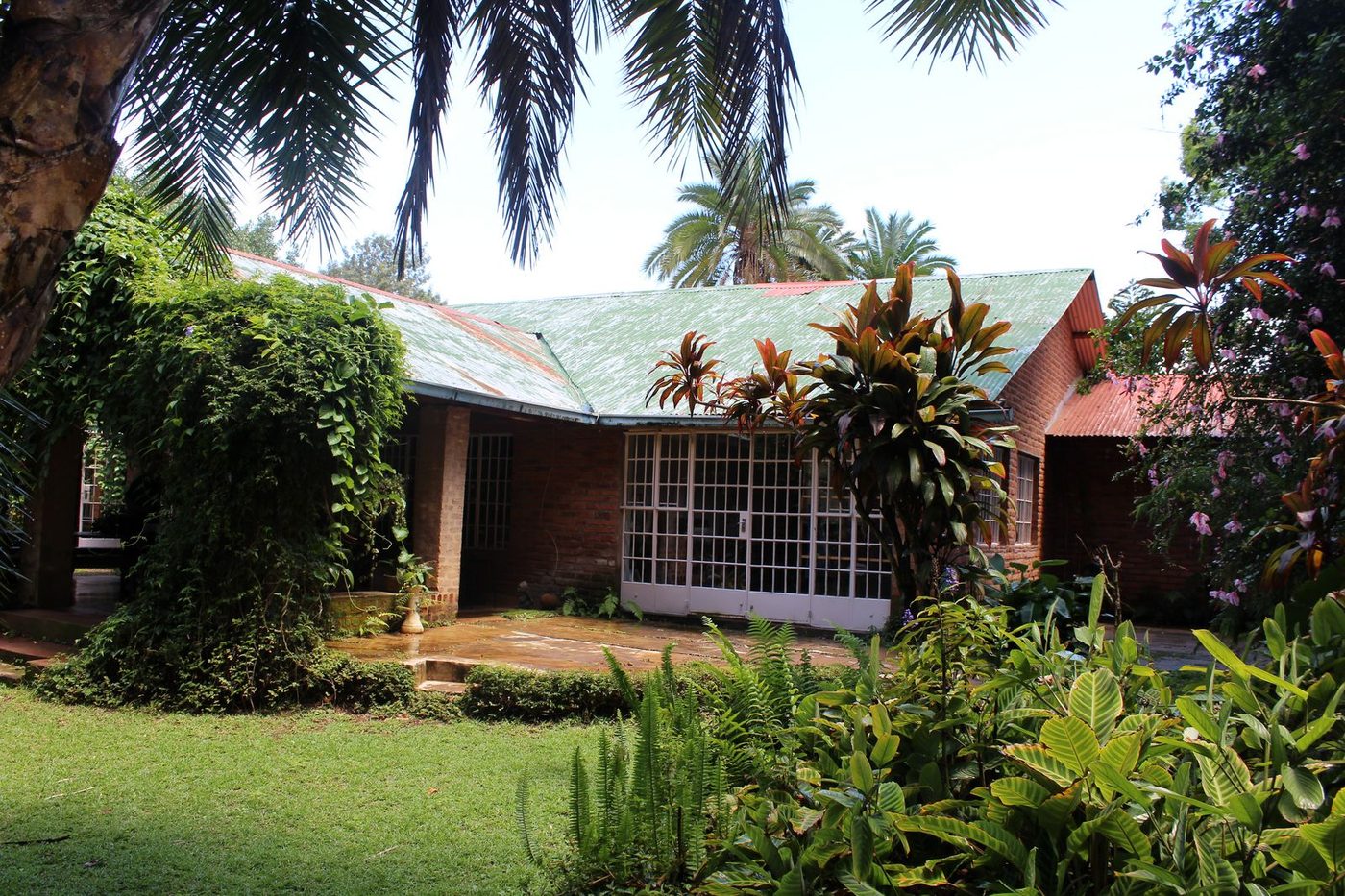
Lush gardens at The Thyolo House on the Conforzi Tea Estate in Malawi
The Thyolo House gardens — one of Malawi's most distinctive boutique stays

Lake Malawi — The Obvious Starting Point

No guide to where to stay in Malawi can begin anywhere else. Lake Malawi — one of the Great Rift Valley lakes, home to more fish species than any other lake on earth — is the country's defining natural feature. It stretches over 500 kilometres from north to south, and its shores offer the widest range of accommodation in the country.

Southern Lakeshore: Cape Maclear and Mangochi

Cape Maclear is where Malawi's backpacker culture was born, and it remains a lively, social stretch of lakeshore. Budget lodges line the beach, and the atmosphere is relaxed to the point of horizontal. For something more polished, Pumulani Lodge sits above the lake in the Cape Maclear area within Lake Malawi National Park, offering luxury cottages with sweeping views and excellent diving and snorkelling. Expect to pay from USD 250 to 500 per person per night for the top-tier properties, while budget options start as low as USD 15 to 30.

Mangochi, further south, serves as a gateway to the lake's southern reaches. Accommodation here is more functional — transit hotels and mid-range lodges rather than destination properties. Useful as a stopover, but not somewhere most visitors linger.

Central Lakeshore: Senga Bay and Salima

The central lakeshore around Senga Bay and Salima is the most accessible stretch from Lilongwe — about two hours by road. Kuti Wildlife Reserve nearby combines game viewing with lake access, and the lodges here tend to be mid-range and family-friendly. This is where many Lilongwe-based expats and diplomats spend their weekends. Properties like Carolina's and the Sunbird Livingstonia Beach offer comfortable rooms with lake views at USD 80 to 180 per person.

Northern Lakeshore: Nkhata Bay and Likoma Island

The north is where the lake gets wild. Nkhata Bay has the best backpacker scene outside Cape Maclear — think wooden decks built into the rocks, cold beers, and spectacular sunsets. Mayoka Village is a favourite for its atmosphere and cliff-edge setting.

Likoma Island, reached by a sometimes-unreliable ferry or charter flight, is the lake's hidden gem. Kaya Mawa is arguably the finest luxury lodge in all of Malawi — stone and driftwood villas built into the rocks of the island, with private plunge pools, kayaks, and a sense of remoteness that is hard to manufacture. Rates start around USD 450 per person per night and it books up well in advance during peak season. If your budget allows it, this is a once-in-a-lifetime stay.

Safari Lodges — Malawi's Wildlife Credentials

Malawi is not the first country that comes to mind for safari, but it should be closer to the top of the list than it is. Some of the best accommodation in Malawi is found inside its national parks, where the camps are uncrowded, the conservation stories are compelling, and the lodges offer intimate experiences that the bigger safari countries struggle to match.

Liwonde National Park

Liwonde is Malawi's flagship park, managed by African Parks, and home to elephants, hippos, crocodiles, and reintroduced lions, cheetahs, and black rhinos. Mvuu Camp and Mvuu Lodge offer boat safaris on the Shire River that are among the best wildlife experiences in the country. Bushman's Baobab is a more intimate alternative. Expect USD 200 to 500 per person per night depending on the season and level of luxury. The boat safaris at dawn, with elephants drinking on the riverbank and fish eagles calling overhead, are worth every kwacha.

Majete Wildlife Reserve

Majete is Malawi's only Big Five reserve, another African Parks success story. Mkulumadzi Lodge is the standout property — a luxury safari lodge at the confluence of two rivers, offering game drives, walking safaris, and the chance to see rhinos in a landscape that was empty of large wildlife just two decades ago. Around USD 300 to 600 per person per night, all-inclusive. For a day trip from Blantyre, Majete is only 90 minutes away — see our guide to day trips from Blantyre for practical details.

Nyika National Park

High in the north, Nyika is unlike any other park in Africa. Rolling grasslands, pine-scented air, zebras and antelope grazing on open plateaus that feel more like Scotland than the tropics. Chelinda Lodge is the main accommodation option, comfortable rather than luxurious, but the setting is extraordinary. Horse riding across the plateau is the signature experience. Budget around USD 150 to 300 per person.

Zomba and the Central Highlands

Zomba, the former colonial capital, sits at the base of the Zomba Plateau — a dramatic flat-topped mountain with forests, waterfalls, and trout dams at the top. The Zomba Forest Lodge and the old Ku Chawe Inn offer accommodation with views that justify the winding drive up the mountain road. This is a cooler, quieter alternative to the lakeshore, popular with writers, researchers, and anyone who wants to disappear into a book for a few days. Rates are moderate — USD 60 to 150 per person.

Lilongwe

The capital has the standard range of city hotels. Latitude 15 is the design-forward boutique option, with a strong restaurant and cocktail bar. The Sunbird Capital and Crossroads Hotel serve the business traveller market reliably. Lilongwe is not a city you visit for its hotels, but you will likely pass through, and these properties make the transit comfortable. City hotels range from USD 80 to 250 per night.

Blantyre

Malawi's commercial capital has a more developed dining and hotel scene than Lilongwe. Latitude 15 Blantyre (if you want boutique), the Sunbird Mount Soche (for old-school colonial grandeur), and Hotel Victoria (mid-range and central) are the main options. But the honest advice? Do not spend more than a night in Blantyre. The real magic of southern Malawi is in the highlands surrounding it — and that brings us to the region most visitors overlook entirely.

Indigenous forest surrounding the tea estates of Thyolo, southern Malawi
The indigenous forests of the Thyolo highlands — a world away from the lakeshore

Southern Highlands — Malawi's Best-Kept Secret

The Shire Highlands south of Blantyre are where the search for the best accommodation in Malawi gets genuinely interesting. This is tea country — rolling green estates, misty mornings, indigenous forest, and a pace of life that the lakeshore and the safari camps cannot replicate. If you have only experienced Malawi from the shore of the lake or the seat of a game drive vehicle, you have missed something essential.

Thyolo — Tea Estates and Boutique Stays

The Thyolo district, about 40 minutes southeast of Blantyre, is the heart of Malawi's tea industry. Two properties define accommodation here, and both are worth the drive.

The Thyolo House sits on the historic Conforzi Tea Estate — a family-owned property with roots stretching back to the early 1900s, when Italian settlers first began farming this land. The house itself is a colonial-era farmhouse that has been transformed by resident artist and host Flavia Conforzi into a boutique hotel that is unlike anything else in Malawi.

There are five individually designed rooms, each shaped by Flavia's artistic vision. The Heritage Suite features original artwork, antique furnishings, and the quiet grandeur of a century-old home. The Pool Cottage sits right beside the swimming pool, surrounded by tropical gardens and ancient trees. The Forest Cottage is tucked against the edge of indigenous woodland, where you fall asleep to birdsong and wake to dappled light through the canopy. Every room has its own character because every room was designed by hand, not by committee.

Pool Cottage room at The Thyolo House, Malawi
The Pool Cottage — one of five individually designed rooms at The Thyolo House

The restaurant is a destination in its own right. Italian-Malawian fusion cooked with ingredients from the estate's chemical-free garden — handmade pasta, wood-fired flavours, herbs picked that morning, and tiramisu made with estate-grown coffee.

Outdoor dining at The Thyolo House restaurant, Malawi
Garden-to-table dining at The Thyolo House — Italian-Malawian fusion at its finest

It is the kind of food that has Blantyre's expat community driving 40 minutes for lunch, and the kind that makes you upgrade from bed-and-breakfast to full-board after the first dinner. Our guide to the best restaurants in southern Malawi goes into the full culinary detail.

Beyond the rooms and the food, there is everything that makes The Thyolo House more than just a place to sleep: guided walks through the tea gardens, trails through the indigenous forest where you might spot the critically endangered Thyolo Alethe, an art studio where Flavia runs painting workshops, and a swimming pool shaded by trees that have been growing here since the estate was founded. It is the kind of place you book for one night and stay for three. Explore all of our tea estate experiences to plan your stay. Board options include self-catering, half-board, and full-board.

To understand the story behind the estate and the family who built it, read the history of the Conforzi Tea Estate — it is one of the more remarkable tales in Malawian hospitality.

Huntingdon House on the Satemwa Tea Estate is the other well-known property in Thyolo. A beautifully restored colonial house with structured tea tours, formal dining, and a more traditional country-house atmosphere. The tea-pairing dinners are the signature experience. It complements The Thyolo House well — Satemwa for the polished tour and tasting, The Thyolo House for the artistic, personal, garden-to-table experience. Many visitors do both over a long weekend.

Mulanje — Mountain Lodges

Mount Mulanje, Malawi's newest UNESCO World Heritage Site, draws hikers from around the world. Accommodation near the mountain tends toward the functional: Kara O'Mula at the base of the mountain offers basic rooms and camping in a forest setting, and there are budget guesthouses in Mulanje town. For hikers who want comfort before or after the mountain, The Thyolo House is roughly 30 minutes by road from Mount Mulanje and serves as the closest boutique option — our complete Mount Mulanje guide covers the hiking, the huts, and the recovery in detail.

What Sets the Best Accommodation Apart

Malawi is a small country, and its hospitality industry is small too. That means the best properties tend to share certain qualities that the mass-market destinations have lost.

Personal attention. At the finest Malawi hotels and lodges, the owner is often the person greeting you at the door, pouring your coffee, and recommending what to do tomorrow. This is not a corporate concierge reading from a script. It is someone who has invested their life in this place and genuinely wants you to love it as much as they do.

Sense of place. The best Malawian accommodation does not look like it could be anywhere. It looks like it could only be here — built from local materials, shaped by local landscape, serving local food. The generic international hotel has its place, but it is not what Malawi does best.

Value. Compared to Kenya, Tanzania, South Africa, or Botswana, Malawi offers extraordinary value. A luxury lodge that would cost USD 800 in the Masai Mara might run USD 300 here, with fewer vehicles, more personal service, and wildlife experiences that are just as memorable. At the boutique and mid-range level, the value proposition is even stronger.

How to Choose: A Quick Framework

Malawi is compact enough that you can combine several regions in a single trip. Here is a simple framework for choosing where to stay in Malawi based on what you are after:

  • Beach and water: Lake Malawi — southern shore for diving and snorkelling, northern shore for atmosphere and remoteness, Likoma Island for luxury.
  • Wildlife: Liwonde for boat safaris and big game, Majete for the Big Five, Nyika for open grasslands and horse riding.
  • Mountains and hiking: Mount Mulanje for serious trekking, Zomba Plateau for gentle walks and colonial atmosphere.
  • Culture, food, and slow travel: The Thyolo highlands. Tea estates, Italian fusion dining, indigenous forest, birdwatching, art. This is where Malawi slows down and reveals a side of itself that the tourist trail misses.
  • A bit of everything: Start in Blantyre, spend two nights in the Thyolo highlands, drive to Liwonde for a safari, then head to the lake. Ten days, three completely different experiences, one small country.

Practical Tips for Booking Accommodation in Malawi

A few things worth knowing before you book:

  • Book ahead for peak season. May to October is the dry season and the busiest time. The best lodges and boutique properties — especially those with fewer than ten rooms — fill up weeks or months in advance. The Thyolo House has only five rooms. Do the maths.
  • Pay attention to board options. Many properties outside the cities offer half-board or full-board rates. In remote areas, this is not just convenient — it is essential, as restaurant options may be limited. In Thyolo, half-board at The Thyolo House is the best value and the best way to experience the kitchen.
  • Carry cash. Card payments are increasingly accepted at larger lodges, but ATMs are unreliable outside Blantyre and Lilongwe. Bring enough Malawian kwacha for tips, market purchases, park fees, and incidentals.
  • Internal flights are limited. Malawian Airlines operates domestic routes between Lilongwe, Blantyre, and Club Makokola on the lake. Charter flights reach more remote lodges. For the southern highlands, you fly into Chileka Airport near Blantyre and drive — Thyolo is about 40 minutes from the airport.
  • Roads are improving but imperfect. Main routes between cities are tarmac and generally passable. Estate roads, park access roads, and rural routes can be rough, especially in the rainy season. A 4x4 is advisable for parks and mountain areas but not necessary for the Thyolo highlands.
Swimming pool at The Thyolo House surrounded by tropical gardens
The pool at The Thyolo House — the perfect place to recover after a day of exploring

The Accommodation That Stays With You

When you think back on a trip to Malawi, the accommodation you remember will not be the one with the most stars on a booking site. It will be the one where something surprised you — a meal that was better than it had any right to be, a host who told you a story you have repeated ever since, a view from a veranda that made you put your phone down and simply look.

Lake Malawi will give you the postcard. The safari parks will give you the stories. But the best accommodation in Malawi — the kind that changes how you think about a country — often hides in the places you almost did not visit. A tea estate in the highlands. A farmhouse with a century of history in its walls. A garden where the food on your plate was growing that morning.

That is the kind of accommodation we have built at The Thyolo House, and it is the kind of experience we believe southern Malawi deserves to be known for. If you are planning a trip, we would love to be part of it. Get in touch to check availability, or reach us on WhatsApp to start planning.

For more on what makes this corner of Malawi worth exploring, see our complete guide to Thyolo and our guide to the perfect weekend escape from Blantyre.