/ By The Thyolo House
Best Restaurants Malawi: The Meals I Still Think About
A journal from a boutique lodge in the Thyolo highlands. These are notes from our corner of Malawi — places we love, walks we've done ourselves, operators we've watched do good work. The mountain treks, tea-estate tours, and day trips are all run by independent operators in Malawi; book those directly with them. Come stay with us before or after — we'll do the room, the meal, and the quiet.
The question of the best restaurants in Malawi is one I get asked more than almost any other — usually by guests sitting at our dining table, halfway through a plate of something Flavia has just lifted out of the garden. They want a list. A clean, rankable list they can paste into a notes app and tick off between safaris. I always disappoint them a little, because the meals I actually remember in this country don't sit cleanly on a list. They sit in specific weather, with specific people, in places that often don't bother with signage.
This is a personal essay, not a directory. It's the restaurants and kitchens I send my own friends to when they fly into Blantyre or Lilongwe and ask where to eat. Some are formal. Most aren't. A few I drive an hour for. One I walk to barefoot, across a tea field, when the bell rings for dinner.
Why the best restaurants in Malawi don't look like restaurants
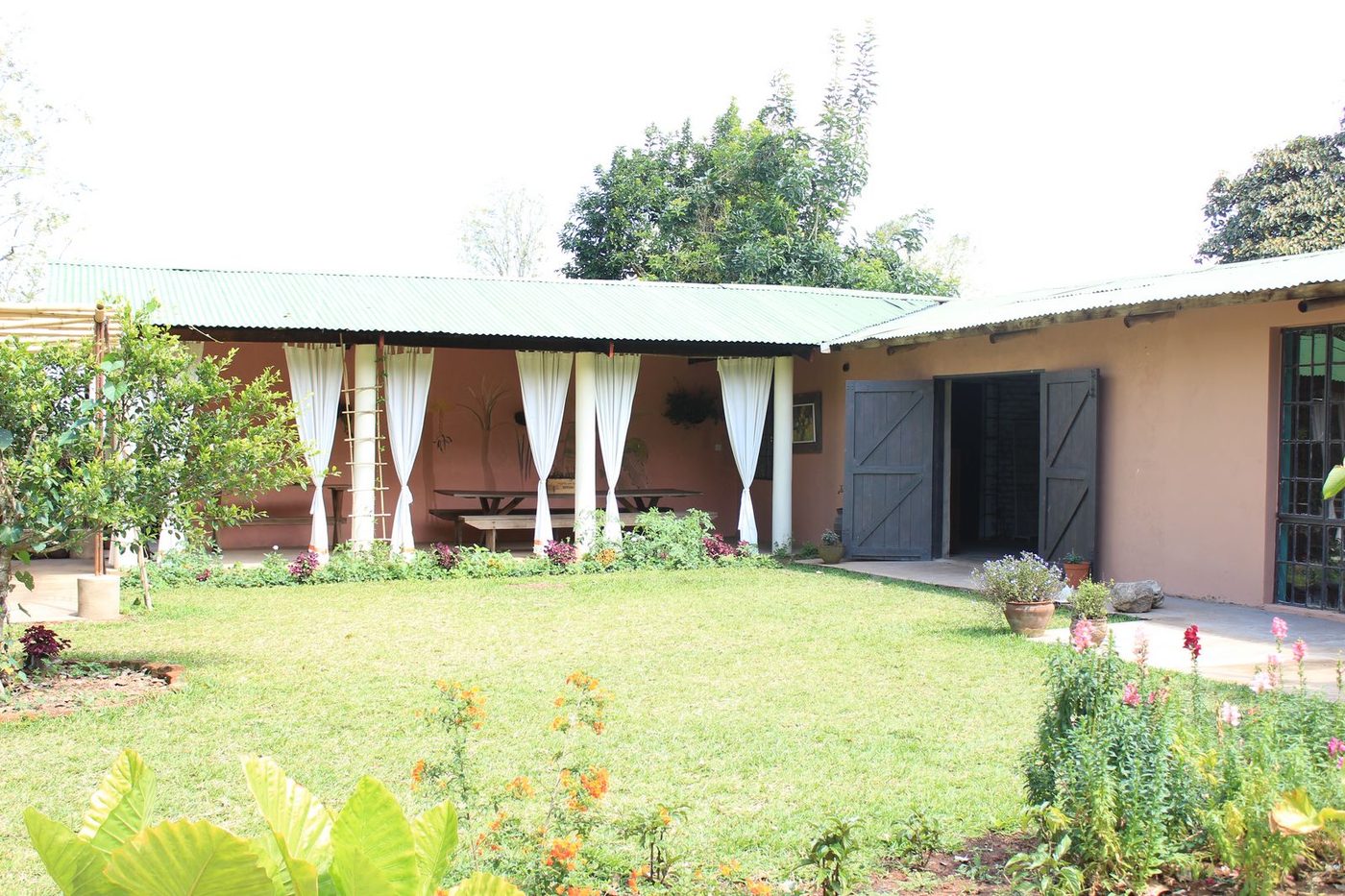
The thing that throws first-time visitors is that Malawi's most interesting kitchens are rarely standalone restaurants in the way Cape Town or Nairobi understands them. There are exceptions in Blantyre and Lilongwe — and I'll get to those — but the food culture here is layered into estates, lodges, and family-run guesthouses. The reason is partly economic and partly geographic. Lake Malawi splits the country lengthwise, the highlands cluster in the south, and the most ambitious cooks tend to land in places where someone is already hosting overnight guests. That's where the produce is grown, the staff are trained, and the rhythm allows a three-hour Sunday lunch to actually unfold.
So when I say the best restaurants in Malawi, I'm including the dining rooms of tea estates, the kitchens of two-room guesthouses on the lake, and the back-garden carveries of Blantyre. The grading isn't about white tablecloths. It's about whether the cook knows where the chambo came from this morning, whether the tomatoes were picked or trucked, and whether the person bringing your plate has any reason to care if you enjoyed it.
The garden-to-table table at The Thyolo House (and why dinner takes three hours on purpose)
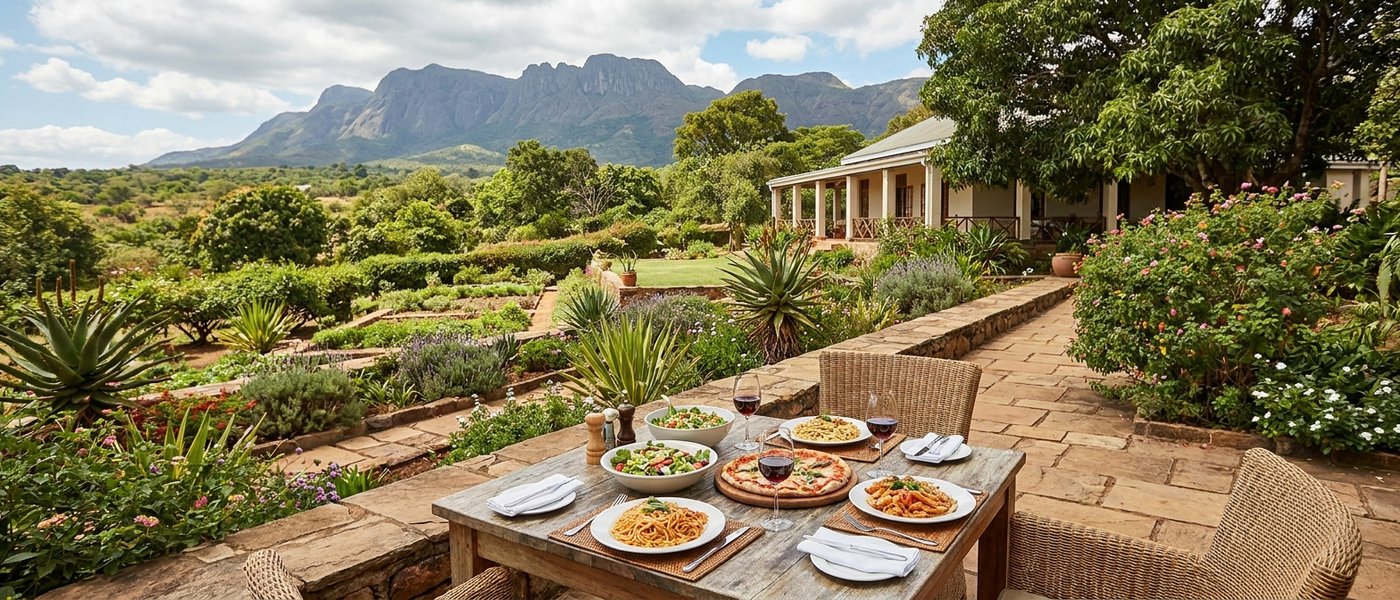
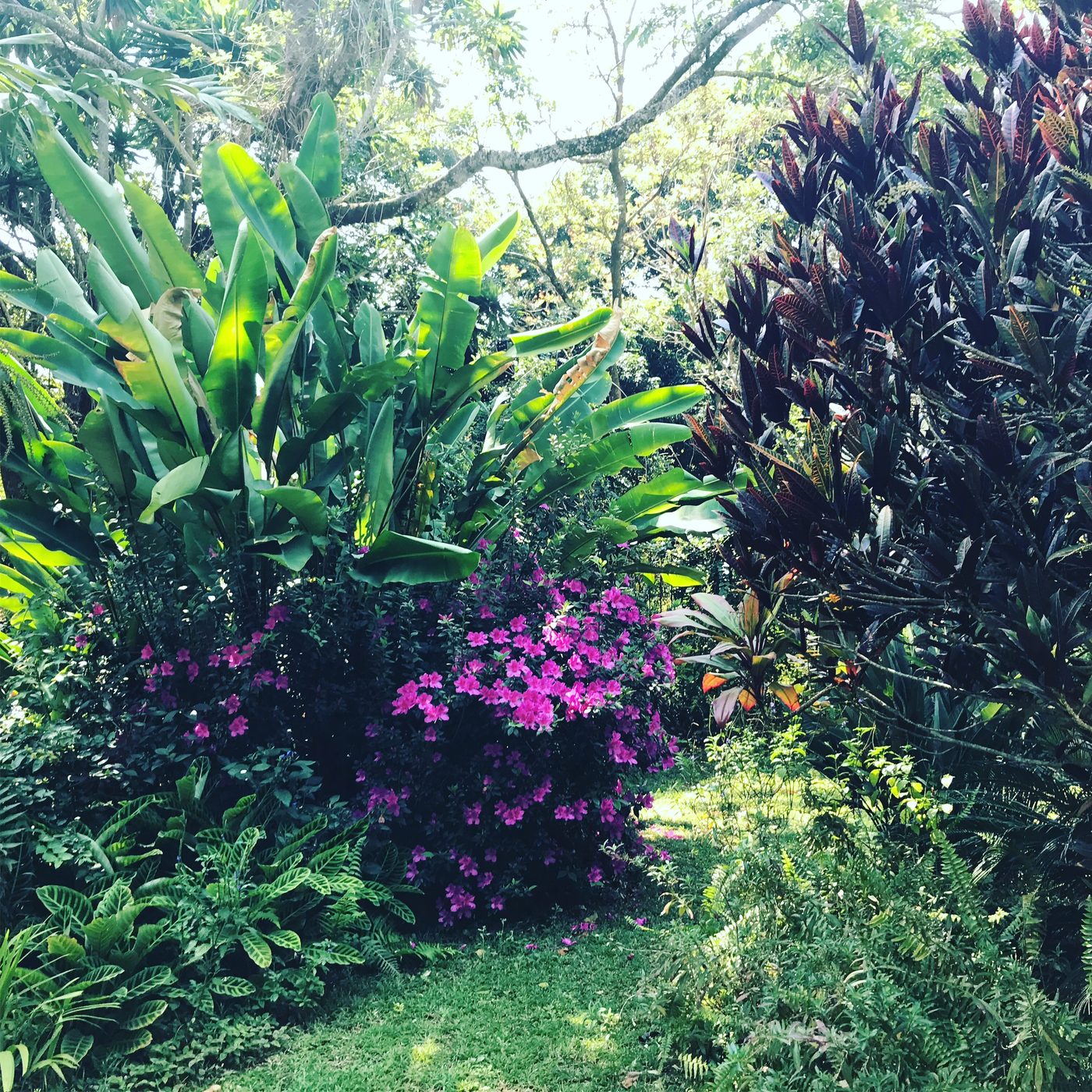
I'll start with the table I know best, because honesty matters in a piece like this. The Thyolo House sits on a historic property that was once part of the Conforzi Tea Estate, about twenty minutes from Limbe and forty from central Blantyre. Flavia Conforzi — the owner, an Italian-Malawian artist who grew up in the highlands — runs the kitchen, and the menu rotates with what the chemical-free garden gave up that morning. Italian roots, Thai and Indian detours, and a strong bias toward things that taste like the place they came from.
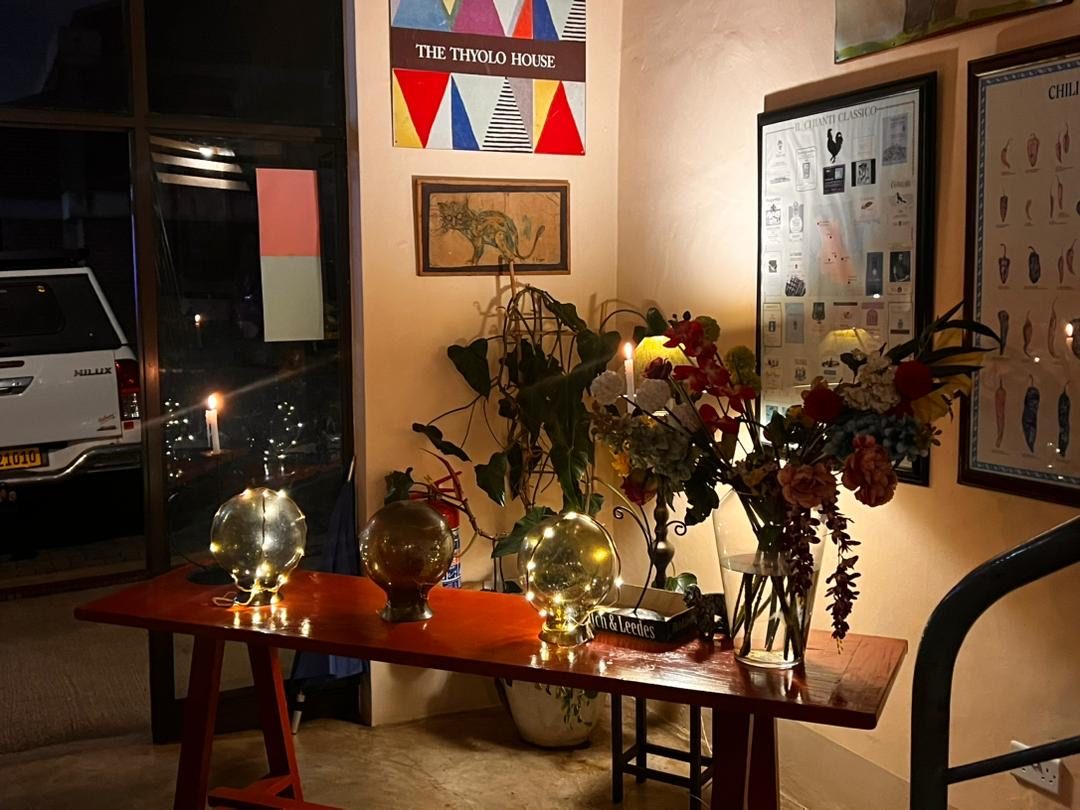
Sunday lunch here has become an institution among Blantyre expats and visiting consultants, partly because it's long. Three hours is a deliberate choice. Antipasti come out in waves, the pasta course settles, the mains get carved at the table, and someone always opens a second bottle of Rupert & Rothschild that nobody had planned on. Mt. Mulanje is visible on the clear days, which in winter is most of them. Outside diners are welcome, but bookings matter — the kitchen plans against what's been picked, and walk-ins throw the maths off.
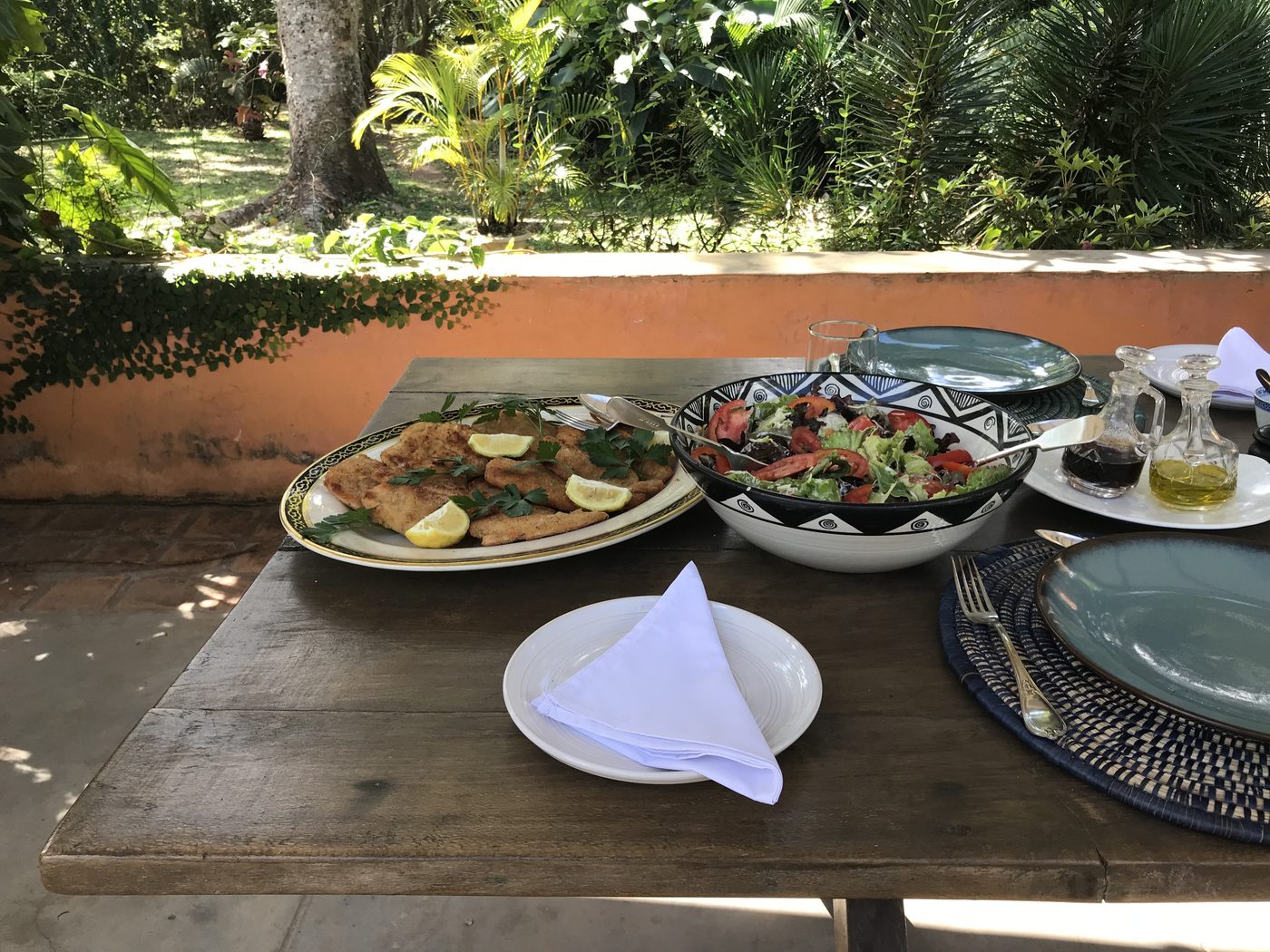
If you want a deeper read on the cooking itself — the techniques, the suppliers, the way an Italian grandmother's repertoire translates into a tea-country kitchen — I wrote a longer piece on Italian food in Malawi and how the estate kitchen works. The short version is that you eat what the garden produced, cooked by someone whose family has been feeding people in this valley for three generations.
Huntingdon House — the grande dame down the road
Five kilometres off the main road, on Satemwa Tea Country, Huntingdon House serves three-course set dinners in a 1928 colonial dining room. It's more formal than us — jacket-optional but the room rewards making an effort — and the tea programme is the real headline. Twenty-five-plus varieties for visit, and a proper high tea on the terrace with scones, cakes, and finger sandwiches that would not embarrass a Cotswolds hotel. If you have two nights in tea country, do one at each. They're complementary, not competing.
Blantyre's quiet contenders — the chefs cooking without a marketing budget
Blantyre is where the city food scene actually lives. Lilongwe is the capital, but Blantyre is the older, denser, more interesting eater's town. The places I send people to first:
- 21 Grill on Hanover — 2 Hanover Avenue, Mandala. Open 11:00–15:00 and 18:00–23:30. The steakhouse the city actually trusts. The steak burger and the carne asada with chimichurri are what regulars order; the chambo with Irish potato wedges is the move if you want to eat something specifically Malawian without slumming it. Reliable in a way that matters when you've had a long day.
- Carrigan's Blantyre — The premier carvery. Generous, freshly carved meats, the kind of place where the queue moves and the gravy is hot. Two-and-a-half thousand reviews and a steady local crowd.
- Chez Maky — Sunnyside. Quiet jazz, fresh salads, grilled white meats handled with restraint. The room is small and the cooking is unhurried. My pick for a slow weeknight dinner.
- Hostaria — Italian, mid-priced, dependable. Not as ambitious as what you'll eat at a tea country, but useful when you're in town and want pasta that hasn't been overthought.
- Jungle Pepper (Blantyre original) — Stone-oven pizzas, the kind that survive a power cut because the oven holds heat for six hours. The Mulanje branch (Mulanje Pepper Pizza) is the one hikers know.
- Café Mandala, La Caverna, Picasso's Brasserie, The Cinnamon Grill, Manda a Mbuzi, Abby's Kitchen — All worth a meal. The 2026 lists I trust mention all of them, and none have disappointed friends I've sent.
What's striking about Blantyre's better restaurants is how few of them market themselves at all. The good cooks rely on word of mouth, and the word travels. Ask three locals where to eat and you'll get the same three names. Ask in your hotel lobby and you'll get a different three names entirely, usually owned by someone the concierge has an arrangement with. Trust the locals.
Lakeside kitchens worth the drive (and the ones that aren't)
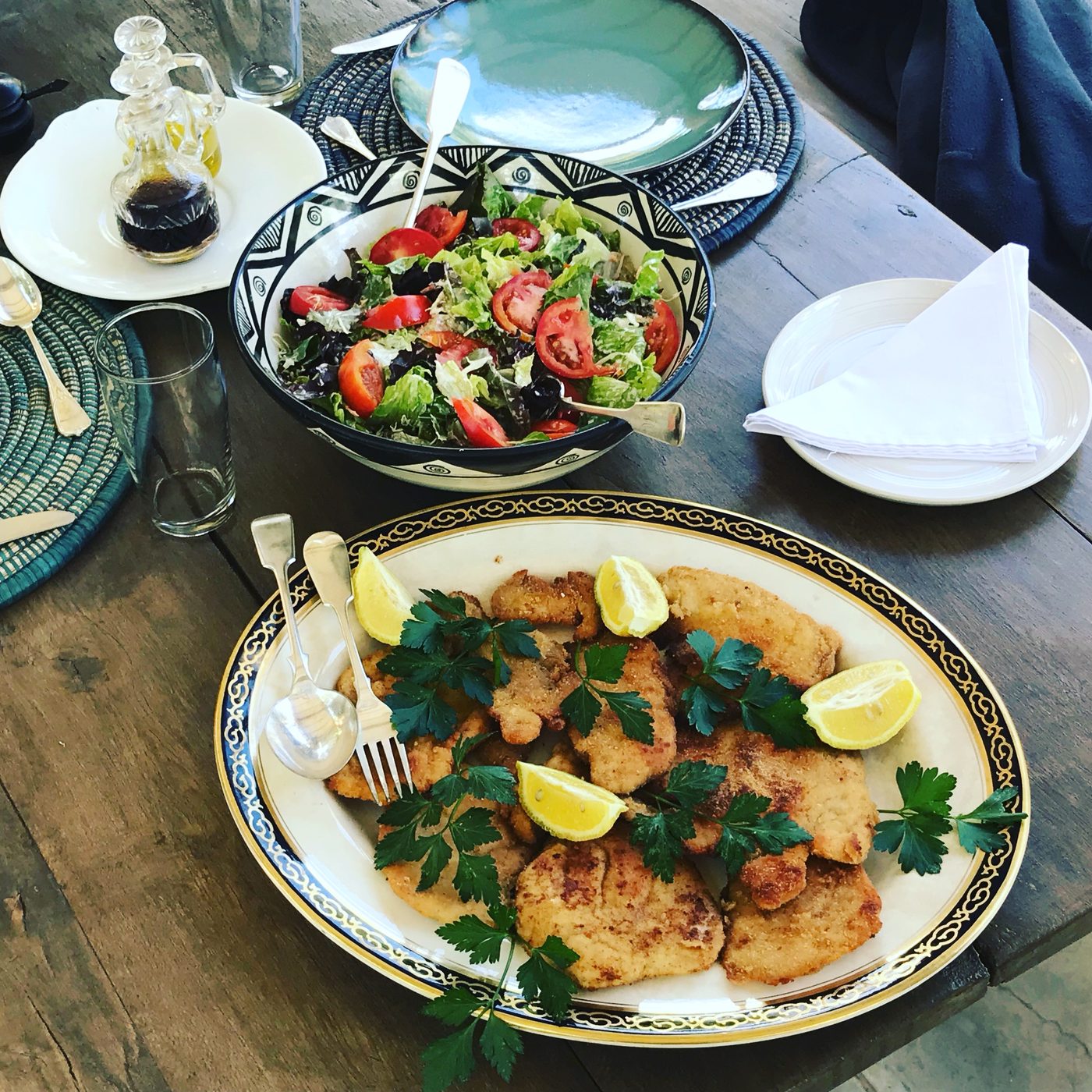
Lake Malawi is four hours from us by road, which sounds far until you remember the road runs through some of the country's loveliest landscape. The lake's food scene is a different animal — looser, fishier, more dependent on what came in that morning. The kitchens that earn the drive are the ones attached to small lodges where the cook has both standards and a fish supplier with a phone.
Cape Maclear and Nkhata Bay have the highest concentration of decent lake-side eating, but I'd caution against assuming any beach bar with a chambo on the chalkboard will deliver. The fish needs to be cooked the day it's caught, and lots of places stretch a delivery across three days. The signal is whether the menu changes — if the same six items appear at every meal for a week, the kitchen is freezing and reheating. Walk on.
The exception that proves the rule is the handful of lodges where the owner-operator is in the kitchen or pays close attention to it. You can usually tell within ten minutes of arriving: ask what's fresh today and listen to whether the answer is specific. "Chambo, caught at 6am off the south arm" is a good sign. "We have chambo" is not.
What makes a meal stay with you — sourcing, story, and the people at the next table
I've been thinking about this for years and I keep coming back to three things. The first is sourcing — not in the precious farm-to-table sense, but in the basic question of whether the cook knows the provenance of the ingredients. A tomato from the garden tastes different from a tomato that travelled. You don't need to be told; your palate does the work.
The second is the story. The best meals come with a context that the cook is willing to share. Why is this dish on the menu? What's the technique? Who taught it to whoever's cooking it? In Malawi this kind of conversation happens naturally because the kitchens are small and the cooks are often near the table. At Huntingdon House the head of the tea programme will sit with you and walk through the varieties; at The Thyolo House Flavia is usually somewhere within shouting distance and will tell you exactly why the pasta is the shape it is.
The third is harder to engineer: the people at the next table. A great restaurant attracts a crowd that improves the room. Blantyre's better restaurants tend to fill up with a mix of locals, NGO staff, visiting agronomists, and the occasional safari group on their way north — and the conversational hum is part of the meal. The Sunday lunches at Conforzi work partly because the regulars know each other and the visitors get absorbed into the conversation.
Building a tea-country food itinerary: where to sleep so you can eat properly
The honest practical advice for anyone serious about eating well in southern Malawi is this: sleep in tea country and drive into Blantyre for the city meals, rather than the other way around. The reason is that the best tea-estate dining experiences are tied to staying overnight. You can drop in for lunch at most estates, but dinner is generally for residents and pre-booked outside guests, and the rooms get booked weeks ahead in high season.
A workable four-night itinerary:
- Night one — arrive Blantyre, dinner at 21 Grill or Chez Maky depending on appetite.
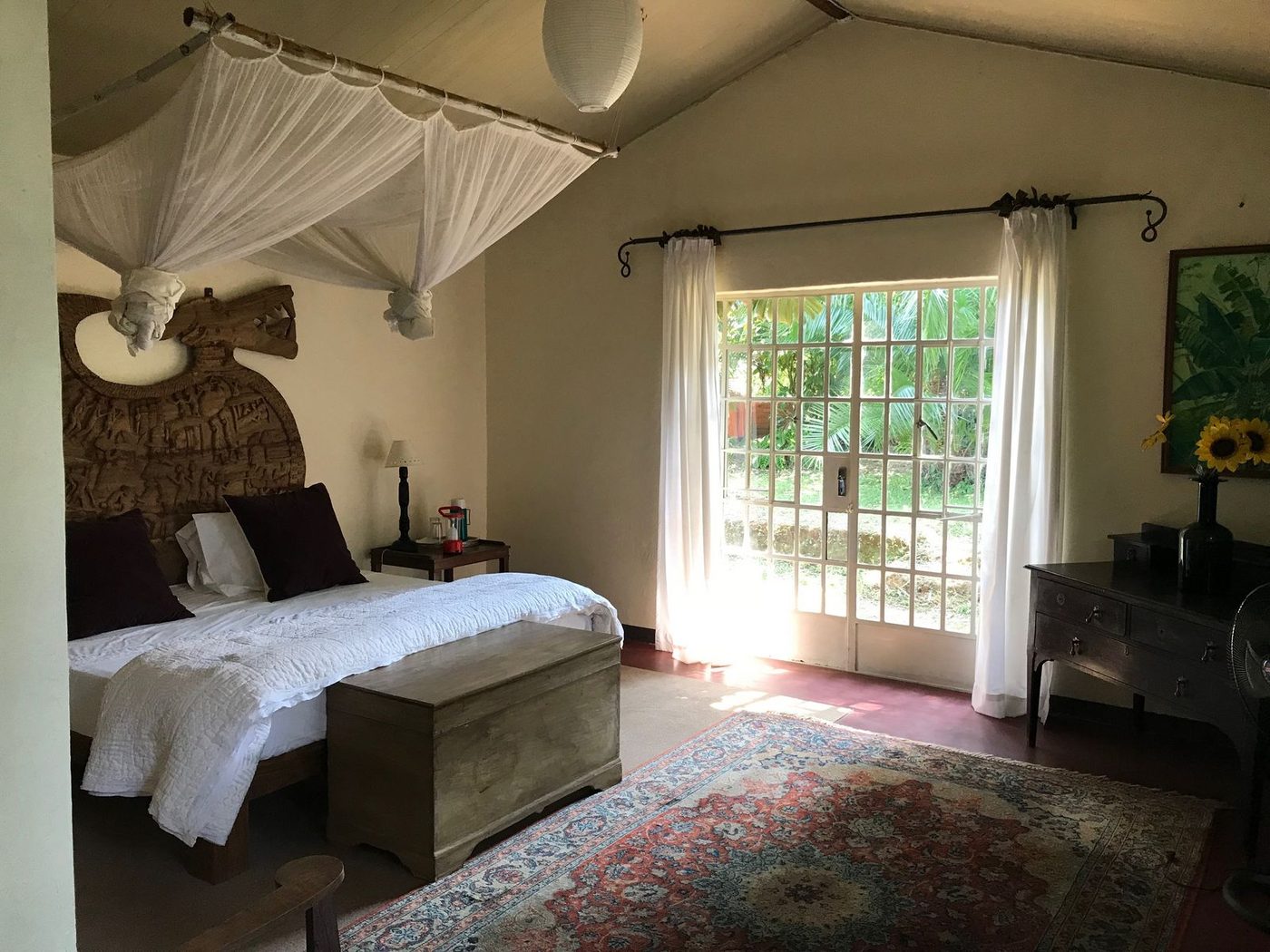
- Nights two and three — Thyolo. One night at the boutique rooms on Conforzi, one night at Huntingdon House on Satemwa. Lunch at Mulanje Pepper Pizza if you're walking up Mulanje Mountain in between.
- Night four — back to Blantyre for a final dinner, or push on to the lake if you have an extra day.
I've written a more detailed companion piece on lodges in Thyolo for food lovers that goes into the room-by-room logic, and a separate guide to the best restaurants in Thyolo specifically if you want to stay in the district and eat your way through it.
Practical notes — bookings, distances, and the rhythm of a Malawian dinner
A few things that will save you grief:
- Book ahead. The good places are small. Thyolo House Sunday lunch fills a week out in season; Huntingdon House dinner needs at least 48 hours' notice; even 21 Grill on a Friday night benefits from a call.
- Cash and card both work, mostly. Blantyre restaurants take cards reliably. Estate kitchens and lake lodges sometimes prefer cash or bank transfer. Carry both.
- Distances are real. Blantyre to Thyolo is 40 minutes on a good day, an hour in rain. Blantyre to the lake is four hours. Lilongwe to Blantyre is five. Don't try to do two regions in one day — you'll eat badly and arrive grumpy.
- Dinner runs late. Italian-influenced kitchens here (ours included) serve from 7:30pm and don't rush. Lakeside lodges often serve earlier — 6:30pm — because the staff need to get home. Ask when you book.
- Drinks are good and cheap. Malawian gin, Carlsberg Special Brew (brewed locally since 1968), and a surprising South African wine selection. Tip the staff in cash; the kitchen rarely sees card-machine tips.
- Dress code is "country smart" almost everywhere. No restaurant in Malawi will turn you away for a clean shirt and trousers. Huntingdon House dinners are the only place I'd consider a jacket.
If you're planning a visit and want help working out where to eat and where to sleep around it, the simplest thing is to message us on WhatsApp on +265 88 420 2040 or email thethyolohouse@gmail.com. The Thyolo House can confirm its own restaurant and room availability for your dates. External restaurants, estates, drivers, guides, travel plans, and activities must be arranged directly with the relevant operators.
The list will keep changing. New kitchens open, old ones lose their head chef, a lake lodge changes hands and suddenly the fish is good again. But the underlying truth holds: the best restaurants in Malawi are the ones where someone gives a damn, where the garden or the boat is close enough to matter, and where dinner is long enough that you remember it. Find those, and you'll eat as well here as anywhere on the continent.