/ By The Thyolo House
Malawi Visa and Travel Tips: A Tea Country Host's Arrival Notes
A journal from a boutique lodge in the Thyolo highlands. These are notes from our corner of Malawi — places we love, walks we've done ourselves, operators we've watched do good work. The mountain treks, tea-estate tours, and day trips are all run by independent operators in Malawi; book those directly with them. Come stay with us before or after — we'll do the room, the meal, and the quiet.
Most of what you'll read online about Malawi visa and travel tips was written for a country that briefly didn't require visas at all — and then quietly started requiring them again on 2 January 2026. As hosts on a tea country in Thyolo, we've watched guests arrive at Chileka with everything from a printed eVisa and a yellow fever card to nothing but a charming smile and a story. The smile-and-story crowd usually gets through too, eventually, but they don't enjoy the first hour as much. This piece is the briefing we wish every guest had before they boarded the plane: what the rules actually are in 2026, what the airport really looks like, and how to land in southern Malawi in a way that lets you reach your bed before dark.
the journal includes it from the perspective of the people who pick up the WhatsApp message when your flight is delayed, who answer the question "do they take cards here?" three times a week, and who have driven the road between Blantyre and the estate so often we could probably do it blindfolded (though we don't recommend that, see the section on night driving). Take what's useful, ignore the rest, and arrive curious.
The Visa Question, Answered Honestly
From 2 January 2026, most nationalities again require a visa to enter Malawi. The short-lived 2024 visa-waiver scheme — which made travel here briefly frictionless — has been revoked. The good news: the system is functional, the online portal works, and visa-on-arrival is still available at official ports of entry for most passport holders. The slightly less good news: arrivals queues are longer than they were in 2024, and the staff processing them are sometimes outnumbered.
The cleanest path is the eVisa. Apply in advance at evisa.gov.mw, ideally a week or two before you fly. Fees start at USD $50 for a single-entry tourist visa and climb to about USD $250 for a 12-month multiple-entry. You'll upload a passport scan, a passport photo, your accommodation confirmation, and your return ticket. Approval usually arrives by email within a few days; print two copies and keep one in your hand luggage.
Visa-on-arrival at Chileka (Blantyre) and Kamuzu (Lilongwe) still functions for most nationalities, and many guests do successfully use it. But if you land at the same time as a regional flight from Johannesburg or Addis Ababa, you can find yourself ninety minutes deep into a queue holding crisp dollar bills, watching the eVisa lane move quickly past you. We mention this not to scare you — Chileka is one of the calmer arrivals halls on the continent — but to explain why we keep nudging guests toward the pre-approved option.
What hosts actually see at Chileka
Chileka International is small, walkable, and immediately followed by the warm smell of woodsmoke from the surrounding farms. Immigration is a single counter row; baggage is a single belt. There's an ATM (sometimes working), a SIM card kiosk (usually working), and a small café (always working, mercifully). If you've booked a transfer directly with a transport provider, your driver will usually wait in the small parking area outside arrivals, not inside, because the airport doesn't permit it.
The Documents Nobody Mentions
The visa is the headline. The supporting cast is what catches people out.
Your passport must be valid for at least six months beyond your arrival date, with two clean facing pages for stamps. We've watched a guest from Italy nearly be turned back over five months and three weeks of validity — the rule is enforced strictly, even when it feels arbitrary.
If you're flying in from, or transiting more than twelve hours through, a country in the yellow-fever risk zone — which includes much of central and east Africa, plus parts of South America — you'll need your original yellow fever certificate (the small yellow ICVP booklet). Photocopies are refused. The good news: the WHO updated the rules in 2016 and the certificate is now valid for life, so if you've ever been vaccinated, you're set forever.
You'll also need proof of onward or return travel and an address for your first night. The address field is where guests heading to The Thyolo House sometimes stall, because "a tea country in Thyolo" doesn't fit the box. Our standard line for the form is: The Thyolo House, Thyolo Highlands, Thyolo District, Southern Region, Malawi. Add our WhatsApp number (+265 884 202 040) in the phone field. That's enough for any immigration officer in the country.
Kwacha, Cards and SIMs: Decisions to Make Before You Leave the Terminal
Malawi runs on cash. The local currency is the Malawi Kwacha (MWK), and outside of the international hotels in Lilongwe and Blantyre, you'll rarely see a card machine. US dollars are accepted at many lodges (ours included, for room charges), but everyday purchases — market vegetables, a beer at a roadside bar, a tip for a guide — happen in kwacha.
The ATM in the arrivals hall, when it's working, is the easiest place to draw your first kwacha. We suggest pulling out the equivalent of USD $200–300 on arrival, more if you're planning to travel beyond Thyolo. ATMs in town centres run out of cash frequently, particularly on Friday afternoons and over public holidays, and Thyolo town's machines are no exception. The week before Christmas, expect to queue.
A few money points the guidebooks gloss over:
- Bring crisp, post-2013 USD notes if you want to change cash anywhere. Older or torn bills are refused without apology.
- Declare any foreign currency over USD $5,000 on arrival. The exit limit on undeclared currency is also $5,000 — exceed it and you risk confiscation or worse.
- Traveller's cheques are essentially extinct here. Don't bother.
- Credit cards work at top-end hotels in Blantyre and at a handful of tourist lodges, but assume cash for everything else.
The SIM card decision
The kiosk just outside arrivals sells Airtel or TNM SIMs for around MWK 1,000–2,000 (a couple of dollars), plus whatever data bundle you want. Bring your passport — registration is mandatory and takes about five minutes. Airtel has slightly better coverage on our estate; TNM is stronger in Blantyre city. We have wifi at the house, but a local SIM is invaluable for the drive in and for the inevitable WhatsApp call home.
Getting from Chileka or Blantyre to Tea Country
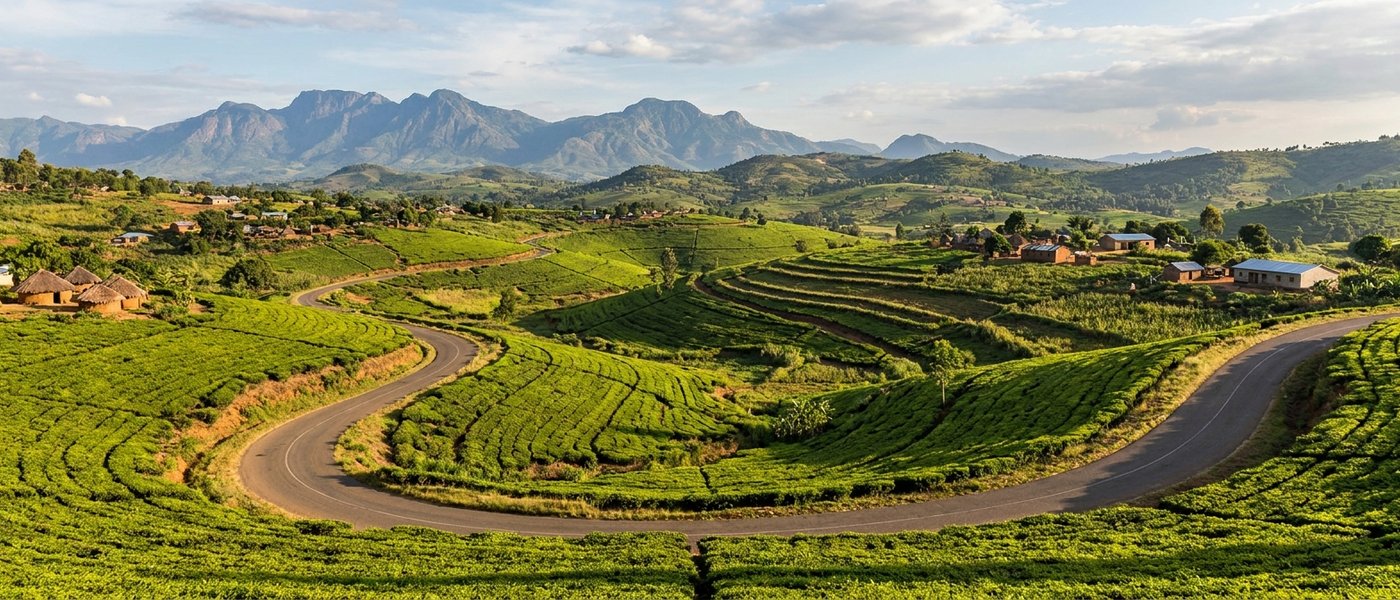
The estate sits about 40 minutes from Blantyre and roughly an hour from Chileka airport by road. The route is fully tarmac, well-signed, and one of the prettier drives in the country — out through Limbe, past the wholesale markets, then climbing gently into the Shire Highlands as the working tea fields begin to fold in around you.
Your three options:
- Private transfer booked directly with a transport provider. The most expensive option per head, but door-to-door and with no negotiation at the airport. Confirm the rate, waiting time, fuel, and drop-off point with the provider before travel.
- Hire a driver-guide from Blantyre directly if you want one for your wider Malawi visit. Confirm rates, fuel, and route scope with that provider.
- Public transport. Cheap, characterful, slow. Minibus from Chileka to Blantyre, then another from Blantyre's Wenela bus depot to Thyolo town, then a matola (shared pickup, around MWK 500) for the last few kilometres to the estate. Expect 3–4 hours and a story for every bump.
Why we quietly recommend arriving before 3pm
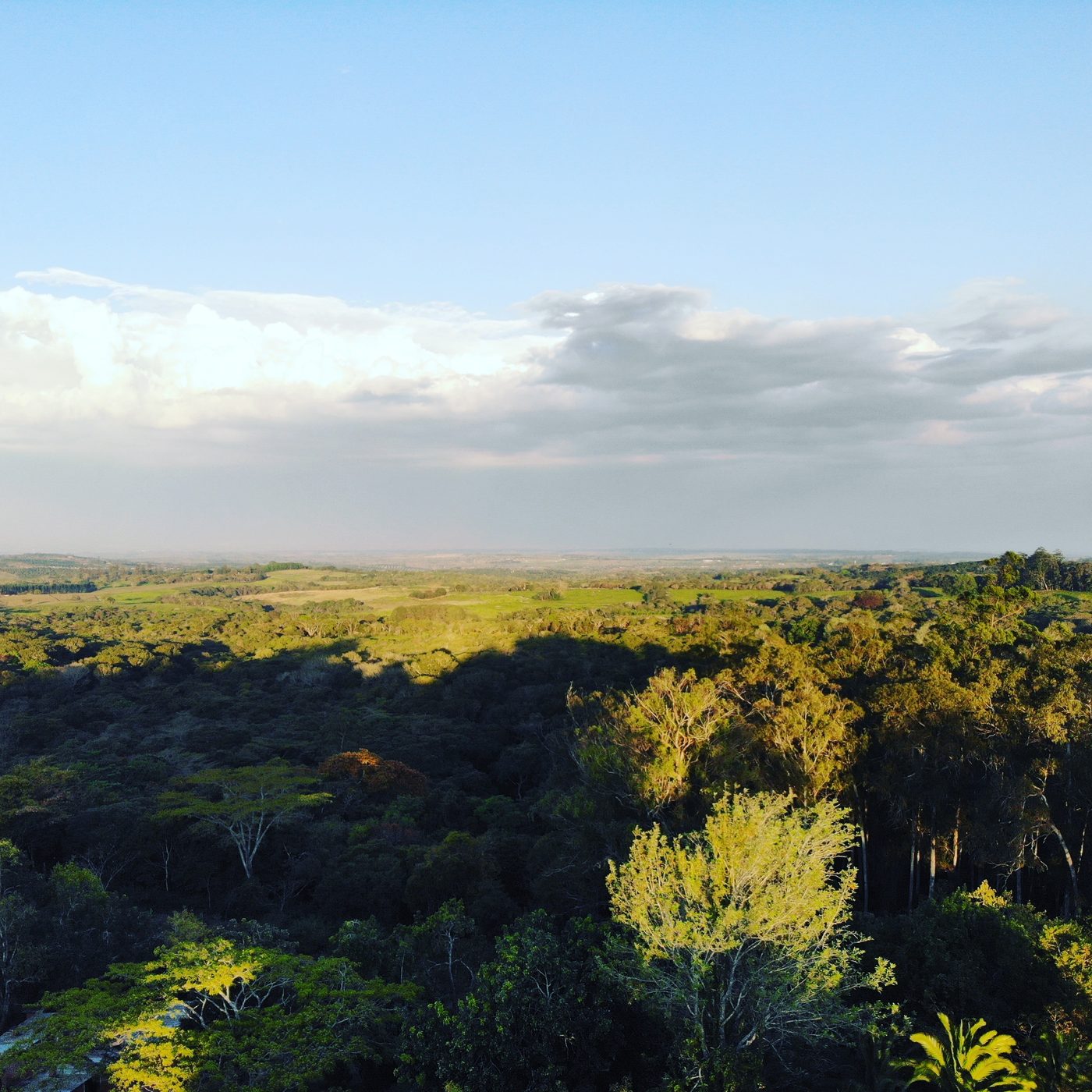
Driving at night in Malawi is something locals do reluctantly and visitors should not do at all. The roads are unlit. There are pedestrians, cyclists, livestock, and broken-down trucks parked in the lane with no warning triangles. Even our most experienced driver won't take the Blantyre–Thyolo road after dark if he can help it. If your flight lands at 5pm, you'll be arriving in the dark, and the drive will be tense rather than scenic. A morning or early-afternoon arrival gives you the long, low golden light over the working tea fields — and gets you to a glass of something cold while you can still see the view.
Your First 24 Hours in the highlands: A Slow-Arrival Itinerary
We've watched hundreds of guests arrive, and the ones who enjoy their stay most are the ones who don't try to do anything on day one. The estate is structured to let jet lag dissolve into a long lunch and then a longer afternoon. Here's the rhythm we suggest:
On arrival, you'll be shown to your room and offered tea — Conforzi tea, grown about three hundred metres from where you're sitting. Drink it slowly. Unpack the things you'll need in the next twenty-four hours and leave the rest in the suitcase.
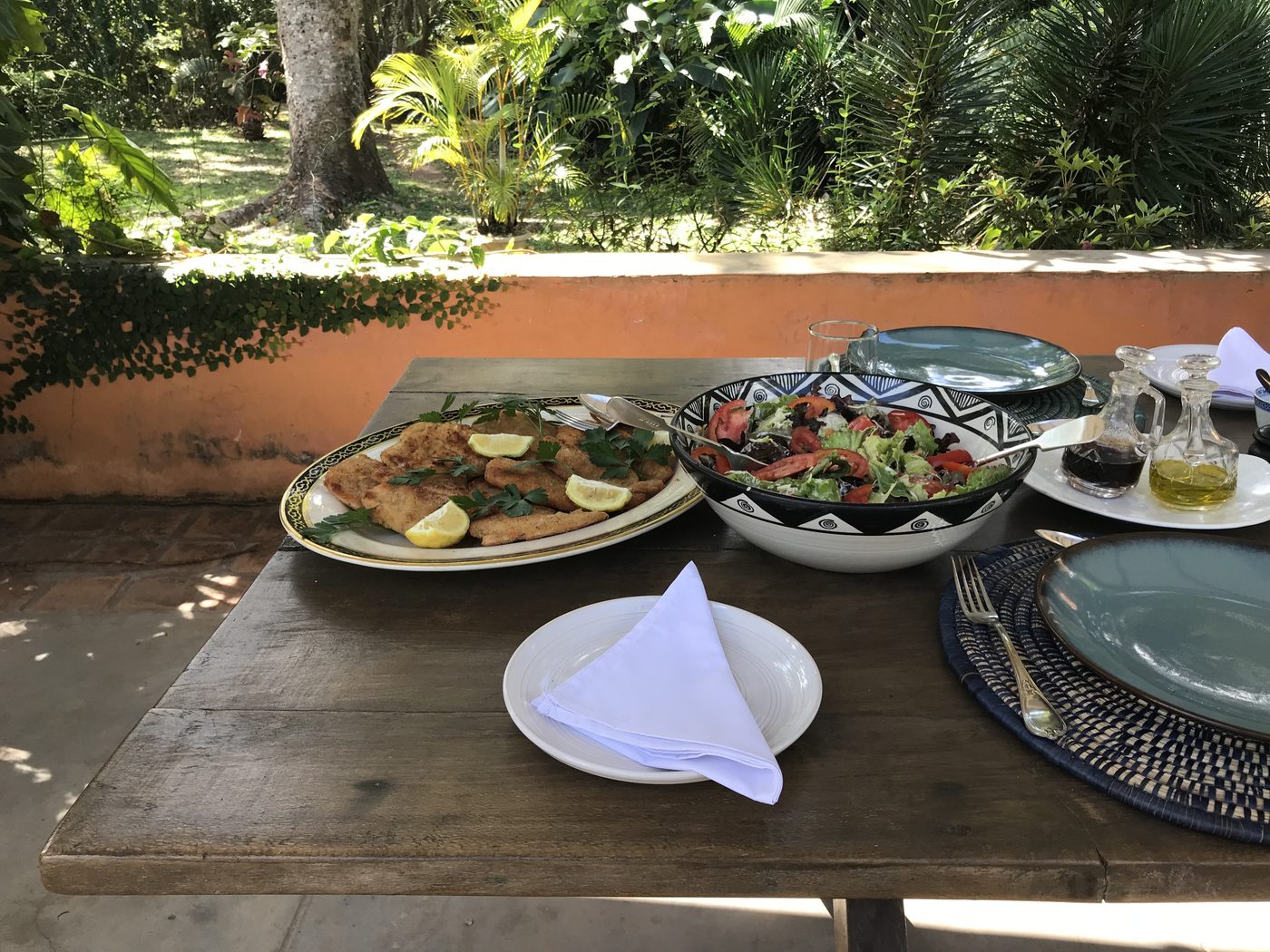
Lunch is served in the garden or on the terrace, whichever is cooler. Flavia's kitchen leans Italian-fusion with whatever the kitchen garden has produced that morning — courgette flowers in tempura batter, a slow-braised pork shoulder, a salad of tomatoes that taste the way you remember tomatoes visit as a child. If you'd like to see the menu in advance, just ask on WhatsApp.
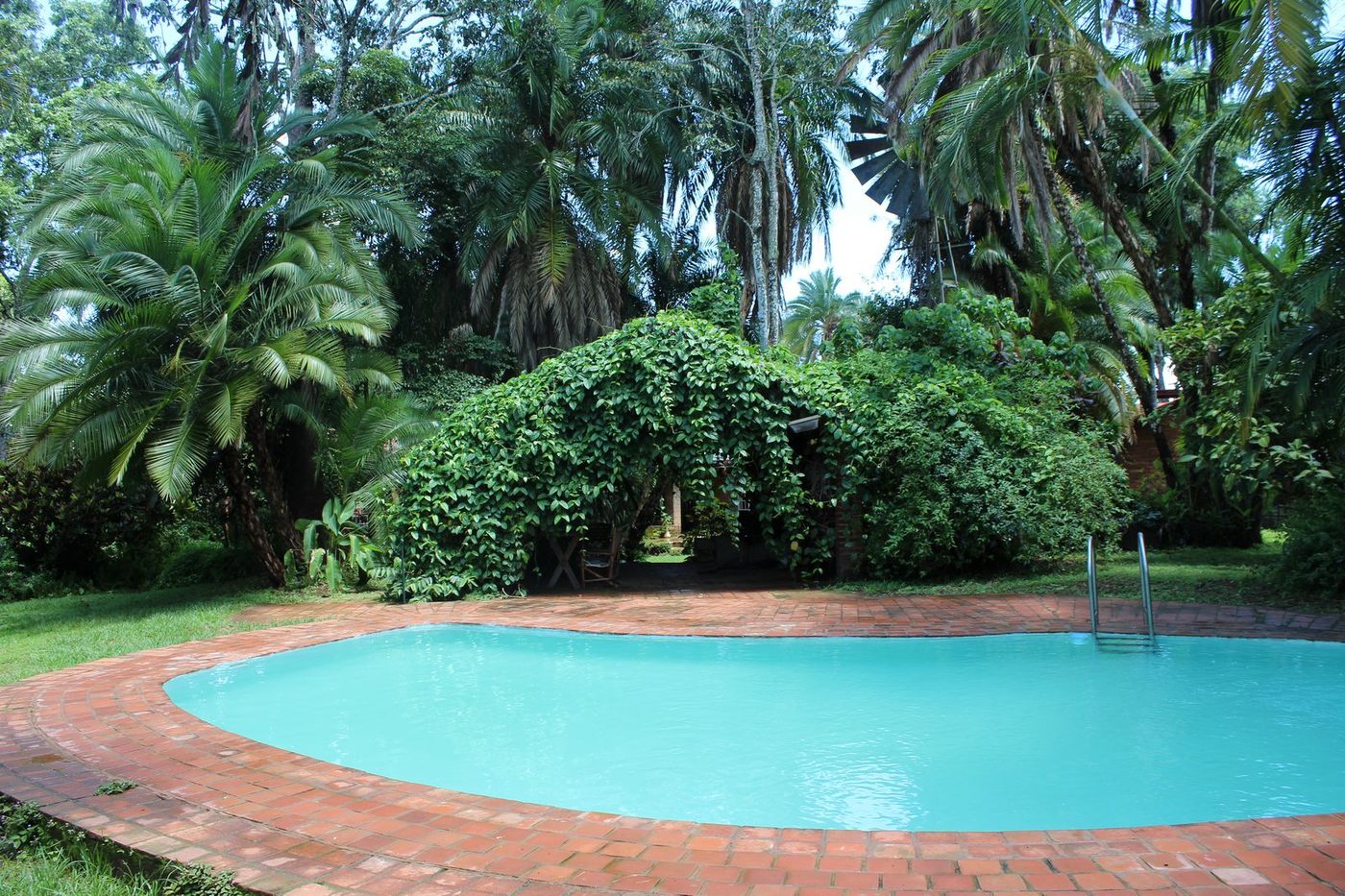
The afternoon is for the pool, the hammock, gardens, or the restaurant. The Thyolo House does not book guided activities, trips, tours, tea visits, drivers, or guides. If you've been on a plane for sixteen hours, the most useful thing the property can offer you is silence and shade.
Dinner in the restaurant — candle-lit, often with a fire going if it's the cooler months — and then bed. The estate is properly dark at night, and sleep arrives easily.
For guests with a few days, this guide suggests one full day in the highlands to settle in, then a independent visit exploring Blantyre or a Mulanje hike, then a third day at a slower pace before any onward travel. If you're working backwards from a city break, our weekend escape itinerary from Blantyre compresses the essentials into 48 hours.
Safety, Health and the Small Cultural Notes That Make You a Welcome Guest
The current US State Department travel advisory for Malawi is Level 2 — exercise increased caution, which reflects mostly urban petty crime and occasional political demonstrations. In southern Malawi, and especially in the rural tea districts, the on-the-ground reality is gentler than the advisory suggests. We've had guests walk the local roads alone, take public transport across the country, and report nothing more alarming than being invited to tea by a stranger.
That said, sensible precautions:
- Don't walk around Blantyre or Limbe alone after dark, particularly with visible valuables.
- Keep your phone out of sight in markets and bus terminals — opportunistic snatching does happen.
- Don't leave bags visible in a parked car anywhere.
- Carry a colour photocopy of your passport; leave the original in the room safe.
Health: the realistic version
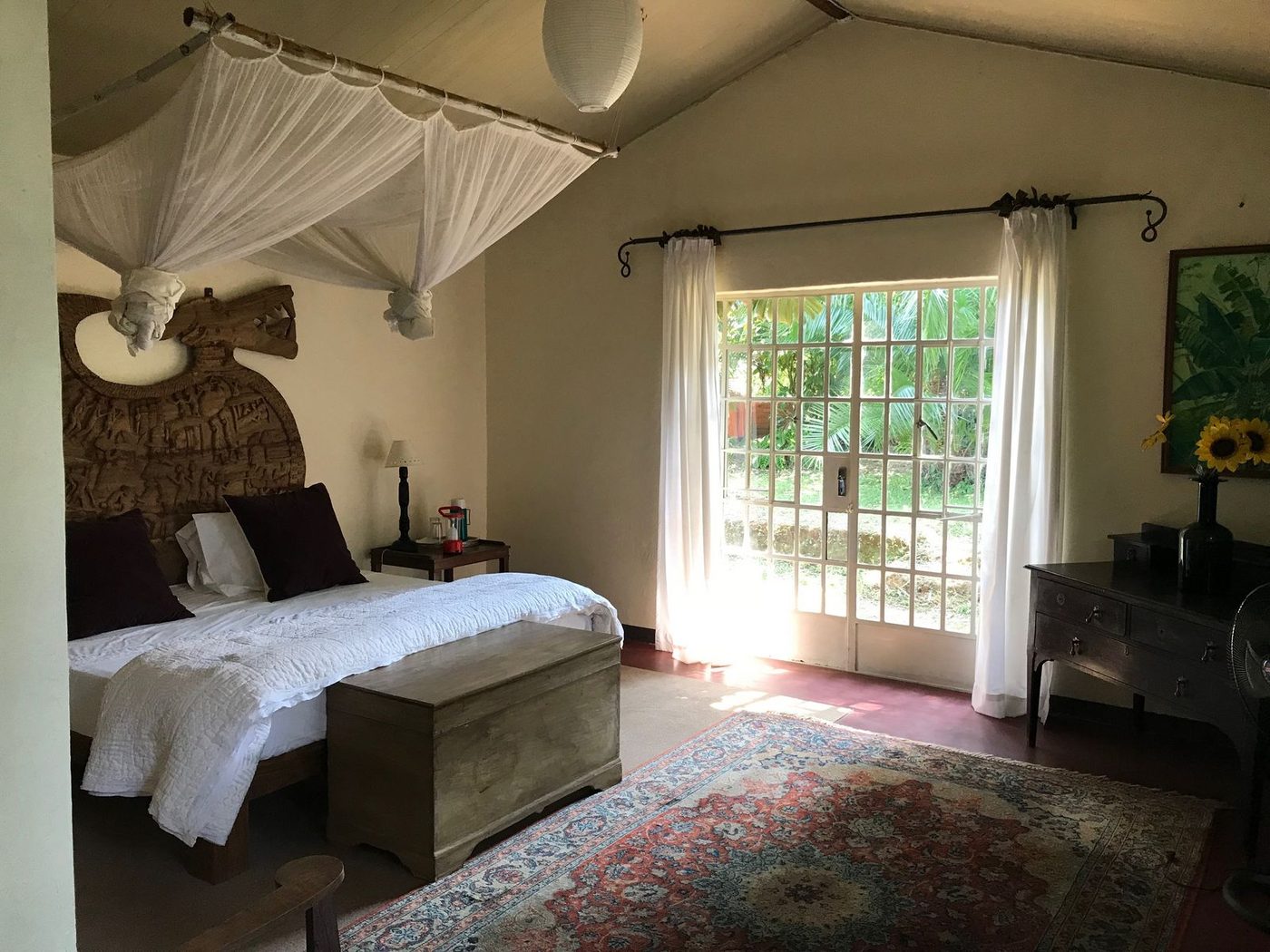
Malawi is a malaria country, including in Thyolo. Speak to a travel-health clinic four to six weeks before you fly about prophylaxis — most visitors take a daily or weekly tablet. The risk on our estate is low (we're at altitude, mosquitos are fewer than at the lake) but real. We provide nets in every room.
The other often-overlooked risk is schistosomiasis (bilharzia) in Lake Malawi and other freshwater. The safest approach is to assume any still freshwater carries it, and to take a single dose of praziquantel six weeks after your visit if you've swum in the lake. Our pool is chlorinated and bilharzia-free, so swim there freely.
Recommended vaccines include Hepatitis A and B, typhoid, and your routine boosters. Bring a basic medical kit — paracetamol, antihistamines, antiseptic cream, plasters, oral rehydration salts, and any prescriptions you rely on, in original packaging. Pharmacies exist in Thyolo town but their stock is variable.
Cultural notes that make a difference
Greetings matter here. A handshake and a "muli bwanji?" ("how are you?") before launching into a question goes a long way. Dress modestly in town and at the markets — knees and shoulders covered is the local norm. Asking before photographing people is good manners everywhere; in Malawi it's also polite to offer to share the photo afterwards if you can. Tipping is appreciated but not aggressive: 10% in restaurants, a few hundred kwacha for porters and drivers.
What to Pack for the Highlands (and What to Leave Behind)
Thyolo sits at around 900 metres above sea level — high enough to be noticeably cooler than the lakeshore, especially at night. Pack with that in mind. Our seasonal guide to visiting Malawi goes deeper into when to come; this is the short version of what to bring:
- Layers. Days are warm (often 25°C), evenings can drop to 12°C in June and July. A fleece or wool jumper is essential in winter (May–August).
- Proper walking shoes — not just sandals. Independent forest paths, garden paths, and regional outings can involve uneven ground.
- A waterproof shell from November to April.
- A wide-brim hat and high-SPF sunscreen. The altitude makes the sun stronger than the temperature suggests.
- A torch or headlamp. The property has lighting on the paths, but power cuts happen.
- Modest "town" clothes for visits to Thyolo town or Blantyre.
- A small daypack for hikes and independent visits.
- Adapter: Malawi uses UK three-pin plugs (Type G).
What to leave behind: drone (registration is complicated and locally sensitive), anything camouflage-patterned (technically illegal for civilians), and most of the "Africa travel" gear the outfitters will try to sell you. You don't need a mosquito jacket in Thyolo. You don't need water-purification tablets — bottled and filtered water is everywhere. You don't need anti-snake-bite kit. You do need an empty stomach for dinner.
One Last Note Before You Fly
Most of what makes a trip to Malawi memorable isn't on a checklist — it's the half-hour conversation with the man selling bananas at the side of the road, or the afternoon when the rain comes in over the working tea fields and you decide to stay for another pot. The visa, the SIM card, the kwacha in your pocket: these are just the friction-reducers that let the actual trip start. Get them right and you'll barely notice them.
For Thyolo House room, restaurant, dietary, or pool questions, please message us on WhatsApp or email thethyolohouse@gmail.com. We answer ourselves, usually within a few hours, and External transfers, drivers, guides, trips, tours, and activities must be arranged directly with the relevant providers.
Safe travels. We'll have the kettle on.