/ By The Thyolo House
Mulanje Conservation: WeForest, Cedar Restoration and the Future of Malawi's Sacred Mountain
A journal from a boutique lodge in the Thyolo highlands. These are notes from our corner of Malawi — places we love, walks we've done ourselves, operators we've watched do good work. The mountain treks, tea-estate tours, and day trips are all run by independent operators in Malawi; book those directly with them. Come stay with us before or after — we'll do the room, the meal, and the quiet.
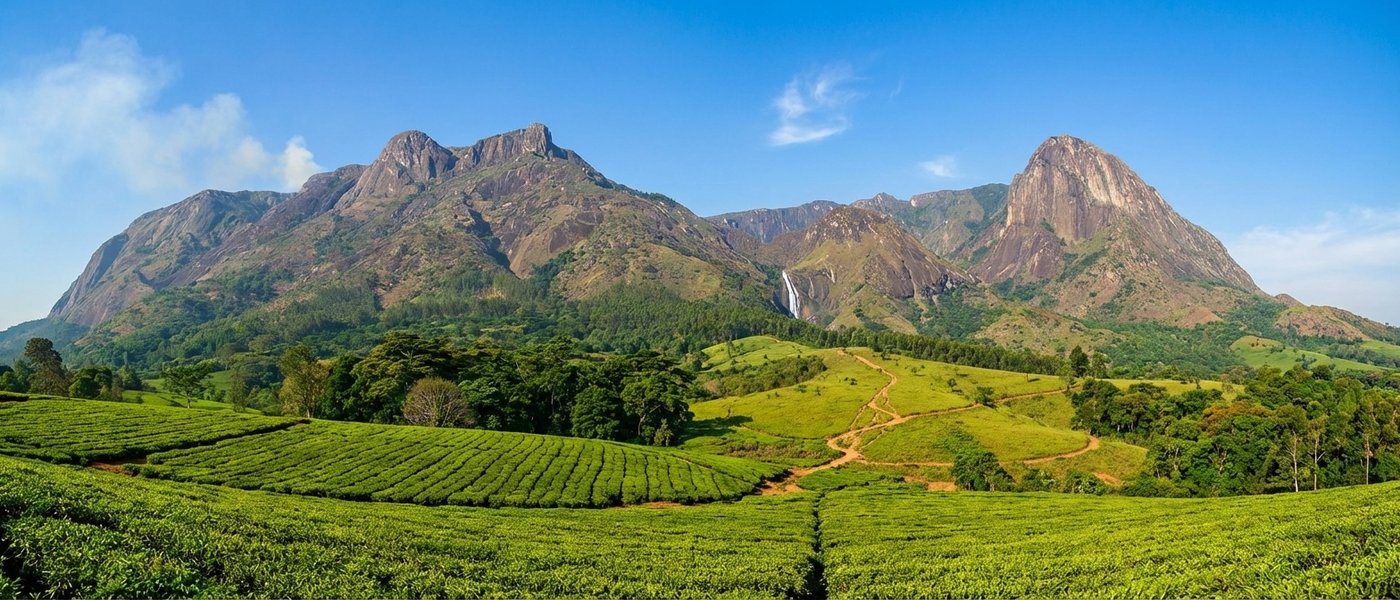
Mount Mulanje has always been more than a mountain. To travellers it is the great granite presence rising above southern Malawi's tea country. To local communities it is a sacred landscape of spirits, stories, water and ancestral responsibility. To conservationists it is a living archive of rare forest, endemic species and hard lessons about what happens when pressure on land, timber and livelihoods meets a fragile highland ecosystem.
That is why Mulanje conservation matters far beyond the hiking trails. The mountain supplies water, protects biodiversity, anchors cultural traditions and gives the Thyolo-Mulanje corridor much of its identity. It is also why the restoration work being carried out by organisations such as WeForest at Mount Mulanje deserves attention from anyone visiting this part of Malawi.
This guide is written for travellers who want context before they arrive. It explains what makes Mulanje ecologically special, why the forest has been under pressure, what WeForest is doing through its own Mount Mulanje programme, how MMCT fits separately into the wider conservation landscape, and how visitors can move through the area in a way that supports rather than strains it.
Why Mount Mulanje Matters
In July 2025, UNESCO inscribed the Mount Mulanje Cultural Landscape on the World Heritage List. The designation recognised the mountain not simply as scenery, but as a cultural landscape where geology, water, sacred sites and living traditions are deeply connected. UNESCO describes Mulanje as one of the world's largest inselbergs and a place of spiritual significance for the Yao, Mang'anja and Lhomwe peoples.
The mountain is also a UNESCO Biosphere Reserve. Its habitats range from miombo woodland on lower slopes to high cloud forest and montane grassland on the plateau. This mix of altitude, isolation and climate has created a remarkable level of endemism. Some species associated with Mulanje are found nowhere else, or almost nowhere else, on Earth.
The best-known symbol is the Mulanje cedar, Widdringtonia whytei, Malawi's national tree. The cedar is widely listed as Critically Endangered, and WeForest notes that the mountain also supports rare fauna including the Mulanje pygmy chameleon and other endemic forest species. When people talk about saving Mulanje, they are talking about a whole living system: trees, streams, soil, wildlife, culture and livelihoods.
The Pressure on the Forest
Mulanje Mountain Forest Reserve has been formally protected since 1927, but legal protection has not prevented decades of degradation. WeForest's own project summary is direct about the causes: deforestation, firewood demand, charcoal pressure, construction timber, population growth and the need for income among communities living around the reserve.
That honesty matters. Conservation fails when it treats local people as the problem. Around Mulanje, people need wood, land, food, income and water. Any serious restoration effort has to reduce pressure on the mountain while also creating practical alternatives. It is not enough to plant seedlings and walk away. The work has to make sense for families living below the slopes.
Fire is another major threat. Young cedar and other regenerating trees are vulnerable, and WeForest notes that hundreds of kilometres of firebreaks are maintained on the mountain each year. The point is simple: restoration is not a single planting day. It is nursery work, monitoring, fire management, community agreements, livelihoods, enforcement and patience.
What WeForest Is Doing at Mount Mulanje
WeForest's Mount Mulanje programme sits within its Miombo Belt Regeneration work. The project describes its purpose as restoring forest to protect water and biodiversity. Its restoration approaches include assisted natural regeneration, enrichment planting, full planting and agroforestry. The partners listed by WeForest include WeForest Malawi, Malawi's Forest Department and Cedar Energy.
The work focuses on both montane forest and miombo woodland. That distinction is important. Mulanje's high cedar forests are iconic, but the lower miombo systems are also essential for biodiversity, fuelwood pressure, soil stability and community use. WeForest notes that miombo restoration can involve many native species typical of that woodland type, not just one flagship tree.
One of the most encouraging parts of the project is its attention to local livelihoods. WeForest describes employment in nurseries, honey-sector opportunities and other sustainable livelihood schemes for families living around the reserve. It also notes work with community nurseries producing Mulanje cedar seedlings, and support for small-scale tea farmers through tree planting in agricultural landscapes.
That is the right shape of conservation for this region. The mountain cannot be protected as an isolated postcard. Its future depends on the people, farms, tea estates, villages and visitors around it. Restoration has to work across that whole corridor.
Five Years of Monitoring: Signs of Recovery
In April 2025, WeForest published an update on five years of restoration monitoring at Mulanje. The team revisited permanent monitoring plots across the Mbewa, Nakhonyo and Mangombo sub-blocks. According to the update, the monitoring involved WeForest staff, Forestry Block Committee members, Village Natural Resources Management Committees, a botanist from the Forestry Research Institute of Malawi and other local stakeholders.
The assessment looked at tree diameter, height, species composition, seedling and sapling density, fire disturbance, soil condition, erosion and other site indicators. This kind of monitoring matters because it moves the story beyond simple tree counts. A healthy forest is not just a number of seedlings planted; it is a structure returning, a canopy forming, young trees establishing and local people taking ownership of the process.
WeForest highlighted one severely degraded monitoring plot that had become lush and visibly restored by 2025. That is exactly the kind of story visitors should know about before they hike the mountain. The beauty they see on a trail is not accidental. It is shaped by years of patient work by community members, conservation staff, researchers, guides and local institutions.
Why This Matters for Travellers
Visitors often arrive in Mulanje thinking first about Sapitwa, Chambe, Lichenya, waterfalls or mountain huts. Those are all worth planning for. But a better trip begins with understanding the place beneath the itinerary. The paths cross a protected cultural landscape. The rivers support communities below. The cedar is not a decorative tree; it is a national symbol fighting for survival. The guides and porters are part of the human system that makes responsible travel possible.
For guests staying in Thyolo, the connection is especially clear. The tea highlands and Mount Mulanje are neighbours. The same wider landscape links tea estates, forest patches, water catchments, small farms, bird habitat and visitor routes. From The Thyolo House, Mulanje is close enough for a serious independent visit or the start of a longer trek, but far enough that travellers can return to a quieter base, a proper meal and time to think about what they have seen.
That position gives local hospitality businesses a responsibility. We should not treat conservation as a marketing word. We should point guests toward good information, encourage guides and official routes, respect sacred places, reduce waste, support local services and amplify the organisations doing the hard work on the mountain.
How to Visit Mulanje Responsibly
Responsible travel around Mulanje is not complicated, but it does require intention.
- Hire local guides. Guides improve safety, route-finding and interpretation, and they help make conservation economically meaningful to nearby communities.
- Use official trailheads and hut systems. Register properly, pay required fees and avoid informal shortcuts that create erosion or conflict.
- Respect sacred places. UNESCO's World Heritage listing recognises Mulanje's cultural and spiritual significance. Ask before entering sensitive areas, photographing ceremonies or treating ritual places as scenery.
- Carry waste out. The mountain does not need more plastic, batteries, food wrappers or broken gear left behind.
- Learn before you climb. Read about the Mulanje cedar, WeForest's restoration work and the mountain's cultural landscape before you arrive. Knowledge changes behaviour.
- Support local conservation where possible. That may mean donating directly to reputable restoration programmes, using responsible operators, or simply choosing guides and businesses that take the mountain seriously.
WeForest, MMCT and the Bigger Conservation Picture
WeForest and the Mulanje Mountain Conservation Trust (MMCT) are separate organisations. This article focuses primarily on WeForest's public Mount Mulanje restoration materials, while recognising that MMCT, Malawi's Forest Department, village natural resource committees, researchers, guides, community nurseries and local authorities all form part of the wider conservation picture around the mountain. That distinction matters because conservation success rarely belongs to a single logo, and different organisations have different roles.
What WeForest has done well is communicate the complexity of the work. Their Mount Mulanje materials talk about biodiversity, water, livelihoods, firebreaks, monitoring plots, community nurseries, honey and smallholder tree planting. That is far more useful than a simple tree-planting claim. It shows visitors that restoration is a living, adaptive process.
For travellers, the most respectful response is not to turn conservation into a badge. It is to pay attention. If Mulanje becomes more famous after its UNESCO inscription, tourism will grow. The question is whether that growth supports the mountain's future or simply extracts another layer of value from it. The answer depends on the choices made by visitors, accommodation providers, guides, donors and local institutions over the next few years.
A Local Base for a Thoughtful Mulanje Trip
The Thyolo House is a small lodge and restaurant on a historic property that was once part of the Conforzi Tea Estate, west of Mulanje and close to the wider tea country that defines this part of southern Malawi. We are not an official WeForest sponsor or partner, and we are not an MMCT partner. We are writing about this work because guests who come to this region should know what is happening on the mountain, and because good conservation deserves to be visible.
A stay in Thyolo pairs naturally with a Mulanje itinerary. Guests can spend a day in the highlands trails, visit tea country, then continue to Likabula, Lichenya, Chambe or other Mulanje routes with better context for the landscape they are entering. After a demanding hike, the return to gardens, food and quiet rooms is part of the rhythm of travelling well in southern Malawi.
For Thyolo House room or restaurant availability, you can message us on WhatsApp. Timing, routes, transport, guides, conservation visits, and external activities should be arranged directly with the relevant providers.
Sources and Further Reading
- WeForest: Mount Mulanje restoration project
- WeForest: Five years of growth in Mulanje's forest revival
- UNESCO World Heritage Centre: Mount Mulanje Cultural Landscape
- UNESCO Decision 47 COM 8B.11
- The Mulanje cedar tree: a guide to Malawi's rarest conifer
- Mount Mulanje UNESCO World Heritage: what it means for visitors