/ By The Thyolo House
Where to Eat Near Mount Mulanje — Restaurants & Dining Guide 2026
The Dining Situation Around Mount Mulanje
Let us be straightforward about something: if you are looking for Mulanje restaurants expecting a restaurant strip with a dozen options and online menus, you will need to adjust your expectations. This is not Blantyre. Mount Mulanje is one of Africa's great mountains — a UNESCO World Heritage Site, a granite massif that draws serious hikers from every continent — but the dining infrastructure around it has not caught up with the mountain's reputation. What you will find instead is a small number of places that range from basic to genuinely excellent, spread across Mulanje town, the base of the mountain, and the nearby Thyolo highlands.
The good news is that the best meal within striking distance of Mount Mulanje is not just passable — it is a destination in its own right. The not-so-good news is that you need to know where to look, and you need to plan ahead. Walk-in culture has not really arrived here. This guide covers every worthwhile option, starting with the one we know best.
The Thyolo House Restaurant — Conforzi Tea Estate
Italian Fusion, 30 Minutes from the Mountain
We are putting ourselves first, and we are not going to pretend otherwise. The Thyolo House restaurant sits on the Conforzi Tea Estate in the Thyolo highlands, roughly thirty minutes by car from Mount Mulanje along a tarmac road that winds through tea plantations and small trading centres. It is not on the mountain's doorstep, but it is close enough to be practical — and the drive itself, through some of the greenest landscape in southern Malawi, is part of the experience.
Chef Flavia Conforzi runs a kitchen rooted in her Italian heritage but shaped by decades of living between cultures. The result is something genuinely difficult to categorise — Italian at its foundation, with Thai, Indian, and continental influences woven in where they make sense. This is not fusion for novelty. It is the cooking of someone who understands multiple culinary traditions deeply enough to move between them without losing the thread. The menu changes with the seasons because it has to: most of what appears on your plate was growing in the estate's chemical-free garden that same morning.
The garden deserves emphasis. This is not a restaurant that orders its herbs from a distributor. The basil in the pesto was picked before service. The salad greens, the tomatoes, the chillies, the lemongrass — all of it comes from a garden that has been cultivated with intention and without chemicals. You can taste the difference, and once you have, supermarket produce feels like a compromise.
What to Eat
The cotoletta milanese is the dish that has people driving from Blantyre — a thin-pounded cutlet with a crisp golden breadcrumb crust, served with lemon and whatever the garden has produced that day. It sounds simple. It is simple. It is also the kind of dish that reminds you what cooking is supposed to taste like when the ingredients are right and the technique is honest.
The pasta al pesto is another benchmark — fresh pasta, garden basil, pine nuts, and parmesan, made in the Ligurian tradition with no shortcuts. The Thai coconut soup is a wildcard that works beautifully: creamy, fragrant with lemongrass and galangal, proving the kitchen can cross continents without losing its footing. For dessert, the tiramisu is made with coffee from the neighbouring estates. When your espresso was grown a few hundred metres from your table, the flavour has a depth that cannot be replicated elsewhere.
The wine list is modest but well chosen. The estate tea and coffee are exceptional — you are sitting in the middle of where they grow. Cocktails are mixed with local spirits and garden botanicals, and they are better than they have any right to be in a setting this remote.
Practical Details
Vegan and vegetarian: Fully accommodated on request. With a garden this productive, plant-based dishes are not an afterthought — they are often the best things on the menu. Let the kitchen know your preferences when you book.
Open to non-guests: Yes. You do not need to be staying at the hotel to eat here. Lunch and dinner are available by reservation. This is important — book ahead, especially on weekends and during peak hiking season. The restaurant is small and personal, which is part of its charm, but it means walk-ins are not guaranteed a table.
Reservations: WhatsApp +265 884 202 040 or contact us through the website.
Budget: Around MWK 15,000 to 30,000 per person for a full meal.
Getting there: From Mulanje town, take the Thyolo road west. The drive is about 30 minutes on tarmac. From Blantyre, it is roughly 40 minutes heading southeast through the highlands.
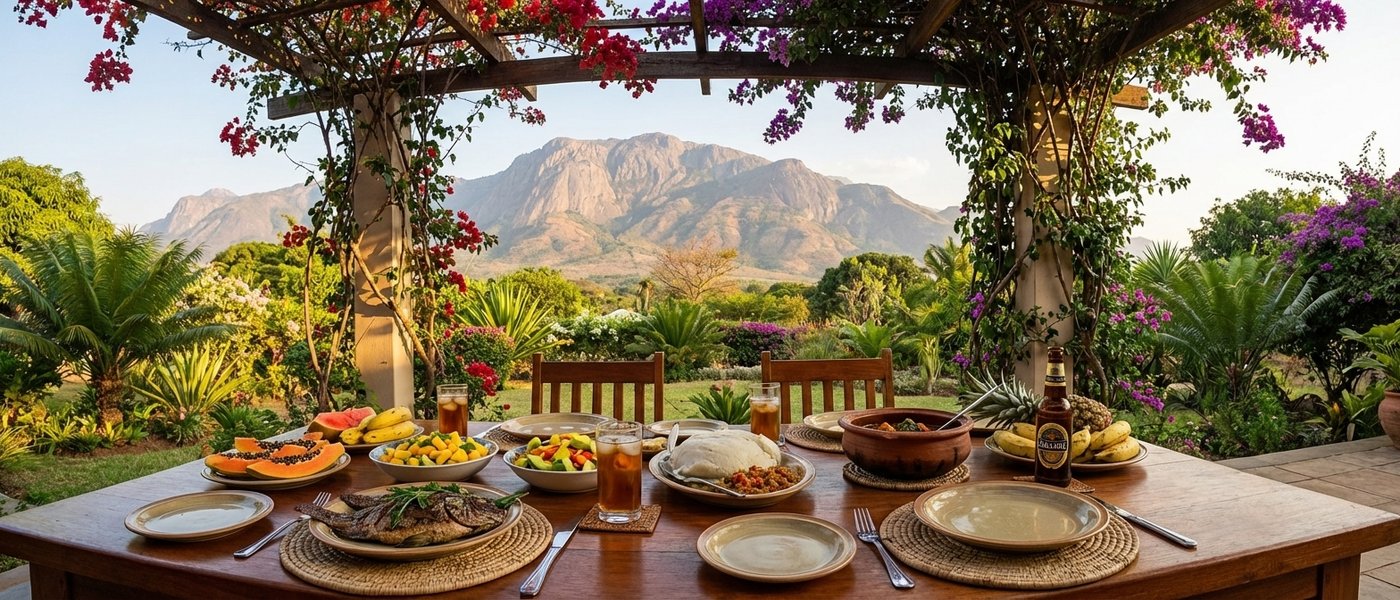
Atmosphere: You eat on a veranda overlooking the garden, or under the trees in good weather, with tea fields and green hills rolling out in every direction. No rush, no background music fighting for attention. The kind of quiet that city restaurants cannot buy.
If you are coming off Mount Mulanje after two or three days of trail food, sitting down to handmade pasta and a glass of wine on this veranda will feel like one of the best decisions you have ever made. For the full picture on rooms and overnight stays, the hotel has five individually designed rooms on the estate — combining a Mulanje hike with a night or two at The Thyolo House is the itinerary we recommend most often.
Kara O'Mula Lodge Restaurant — Mulanje
Mountain Lodge Cooking at the Base of the Massif
Kara O'Mula sits in indigenous forest at the foot of Mount Mulanje, near the Likhubula Forest Station where most hikers begin and end their treks. The lodge restaurant serves the kind of food that makes sense in this setting — hearty, honest, and designed for appetites sharpened by altitude and exertion. Grilled meats, stews, fresh bread, and whatever the kitchen has managed to source locally.
This is not fine dining and it does not pretend to be. The menu is limited and changes based on availability rather than culinary ambition. But the setting compensates for a lot. Eating dinner with the Mulanje Massif looming directly above you, the air cool and clean, the forest sounds filling the pauses in conversation — that context turns even a simple meal into something memorable.
Kara O'Mula works best as a functional dining option for the night before or after a hike. If you are starting an early ascent, having dinner and breakfast at the lodge makes logistical sense. The rooms are basic but clean, and the forest setting is genuinely beautiful.
What to order: Grilled chicken, the stew if it is on, fresh bread. Keep expectations honest.
Budget: Around MWK 8,000 to 18,000 per person.
Reservations: Advisable, particularly during peak hiking season (May to October). Contact them directly — options can be limited if you show up unannounced.
Atmosphere: Mountain lodge. Casual, warm, best appreciated after a day on the trails.
Mulanje Town — Local Restaurants and Eateries
What the Town Centre Offers
Mulanje town is a small but busy trading centre at the western base of the massif. It is where most travellers pass through on the way to or from the mountain, and it has the range of eating options you would expect from a district capital in rural Malawi — which is to say, functional rather than exciting, but perfectly capable of feeding you well if you know what to look for.
The town has several local restaurants serving Malawian staples: nsima (the thick maize porridge that is the backbone of every meal in the country) with various relishes — chicken, beef, fish, beans, or leafy greens. If you have not eaten nsima before, Mulanje town is as authentic a place to try it as anywhere. The portions are generous, the prices are low, and the experience is genuinely local. Expect to pay MWK 1,500 to 4,000 for a full plate.
A few spots to be aware of:
Local restaurants near the bus station and market: These are the busiest at lunchtime, which is generally a good sign — follow the crowd. The food is cooked fresh in large pots and served quickly. Chicken and nsima is the reliable choice. The fish (usually chambo or usipa) varies in quality but is worth trying when available. These are not places with printed menus or online reviews. You walk in, see what is cooking, point, and eat. The best ones have a queue.
Takeaway shops and bakeries: Mulanje has a few shops selling samosas, mandazi (fried dough, similar to doughnuts), and chips. These are useful for quick snacks or stocking up before a hike, but they are not meals in any meaningful sense.
Grocery shopping: If you are self-catering or packing food for the mountain, the main market in Mulanje town sells fresh fruit, vegetables, eggs, and bread. The macadamia nuts are locally grown and excellent — buy a bag. There are also a few small supermarkets for packaged goods, water, and basic supplies.
A Note on Expectations
Mulanje town's restaurants serve food that is filling, affordable, and authentic. They do not serve food that is designed to impress visitors. The menus are limited, English is not always spoken (though pointing works universally), and the settings are basic — plastic chairs, maybe a television playing football, and a handwritten price list on the wall. None of this is a problem if you approach it with the right mindset. This is real Malawian cooking, served in the way most Malawians actually eat, and there is value in that experience beyond the food itself.
But if you are looking for a meal that involves a wine list, a veranda, and ingredients that were grown specifically for your plate — that is a different proposition, and it exists thirty minutes up the road at The Thyolo House.
Lujeri Tea Estate — Mulanje
Tea and Light Refreshments
Lujeri is one of the larger tea estates on the slopes of Mount Mulanje, and while it is primarily a working plantation rather than a hospitality venue, it occasionally offers tours and light refreshments for visitors. The estate produces some of Malawi's finest teas, and tasting them where they are grown — with the mountain rising behind the tea fields — adds a dimension that no shop shelf can replicate.
This is not a restaurant in any conventional sense. You will not find a set menu or regular dining service. But if you are interested in Malawi's tea heritage and want to combine a tea tasting with your Mulanje visit, it is worth enquiring about access. Availability varies, and advance contact is essential.
Huntingdon House — Satemwa Estate, Thyolo
Formal Dining on a Historic Tea Estate
About 35 to 40 minutes from Mulanje (and a near neighbour of The Thyolo House in the Thyolo highlands), Huntingdon House on the Satemwa Tea Estate offers a more structured dining experience. The house is a beautifully preserved colonial property, and meals here lean into that heritage — think multi-course dinners, afternoon tea done properly, and food designed to complement Satemwa's award-winning teas.
The tea-pairing dinners are the signature experience. Satemwa produces some of the finest teas in southern Africa, and the kitchen builds courses around their flavour profiles — a white tea with a fish course, a first-flush green with a salad, an aged dark tea with dessert. It is a unique dining concept in Malawi and one that tea enthusiasts will find fascinating.
Huntingdon House and The Thyolo House make a natural pair for visitors spending time in the highlands. The two estates are close to each other, and the experiences are complementary rather than competing: Satemwa for the polished tour and structured tasting, The Thyolo House for the artistic, personal, garden-to-table approach. Many visitors do both over a weekend — our guide to Thyolo tea estate tours covers how to plan that.
Budget: MWK 20,000 to 45,000 per person for a full dinner experience.
Reservations: Essential. Huntingdon House is a small property and meals are prepared for confirmed guests.
What About Blantyre?
Blantyre is roughly 70 kilometres northwest of Mulanje — about an hour and fifteen minutes by road. If you are passing through the city on the way to or from the mountain, it has the widest range of restaurants in southern Malawi. A few worth noting for the Mulanje-bound traveller:
- 21 Grill on Hannover: Blantyre's best steakhouse. A good place to fuel up the evening before a big hike.
- Veg Delight: Excellent Indian vegetarian food. A lifeline for plant-based travellers.
- Casa Mia: Reliable Italian — pizzas and pastas in the city, for when you cannot make the drive to Thyolo.
- The Mandala House Cafe: Light lunches, good coffee, and a lovely garden setting in a heritage building.
For the full rundown, see our guide to the best restaurants in southern Malawi, which covers Blantyre in detail alongside the highland options.
Planning Your Meals Around a Mulanje Trip
How you approach dining depends on the kind of Mulanje trip you are doing. Day-trippers doing the Likhubula Falls walk can skip Mulanje town entirely — do the falls in the morning, then drive to The Thyolo House for a late lunch on the veranda. You have earned the pasta.
Weekend hikers should plan around the mountain's reality: there are no restaurants, shops, or resupply points on the plateau. Have a proper dinner the night before at The Thyolo House or Kara O'Mula, carry your own trail food up, and book the recovery meal in advance. Coming down from two days of packet soup to garden-to-table Italian fusion is the kind of contrast that creates lifelong restaurant loyalty.
Multi-day trekkers should consider booking a night at The Thyolo House on either side of the traverse — rooms are available for single nights. Use the pre-hike stay to eat well and sort gear. Use the post-hike stay to recover in the pool and eat spectacularly. We regularly host hikers who check in trail-worn and leave two days later looking like different people.
Practical Tips for Eating in the Mulanje Area
Book ahead. The Thyolo House, Kara O'Mula, and Huntingdon House are all small properties that prepare food for confirmed numbers. A WhatsApp message the day before is usually sufficient, but during peak season (May to October), book several days ahead.
Carry cash. The Thyolo House accepts cards, but Mulanje town restaurants, market vendors, and the forest station operate on cash only. The nearest reliable ATMs are in Blantyre.
Dietary requirements. Flag them when you book. The Thyolo House actively caters to vegan, vegetarian, and allergy-specific diets. For other restaurants in the area, options are limited and improvisation is not guaranteed.
Timing. Lunch runs noon to 2pm. Dinner service at the better restaurants starts around 6:30 or 7pm. Local restaurants in Mulanje town tend to run out of popular dishes by early afternoon — go at noon, not three.
The Meal That Makes the Trip
Here is what we have learned from years of hosting hikers, birdwatchers, tea enthusiasts, and travellers who found themselves in the Thyolo highlands without quite knowing how they got there: the meal you remember from a trip is rarely the most expensive or the most technically accomplished. It is the one that arrived at exactly the right moment — when you were tired enough to appreciate sitting down, hungry enough to taste everything twice, and relaxed enough to let the setting wash over you.
Mount Mulanje provides the tiredness and the hunger. The Thyolo highlands provide the setting. And the kitchen at The Thyolo House provides the meal. It is a combination that works every time, and it is the reason so many of our guests arrive as hikers and leave as regulars.
If you are planning a trip to Mount Mulanje and want to build meals into the itinerary — or if you simply want to eat the best food within an hour of the mountain — get in touch or message us on WhatsApp at +265 884 202 040. We will help you plan the food around the adventure, or the adventure around the food. Either approach works.
For more on the area, see our complete Mount Mulanje hiking and accommodation guide, our guide to the best accommodation in Malawi, and our overview of the best restaurants in southern Malawi.