/ By The Thyolo House
Green Headed Oriole Thyolo: A Quiet Morning in Conforzi Forest
A journal from a boutique lodge in the Thyolo highlands. These are notes from our corner of Malawi — places we love, walks we've done ourselves, operators we've watched do good work. The mountain treks, tea-estate tours, and day trips are all run by independent operators in Malawi; book those directly with them. Come stay with us before or after — we'll do the room, the meal, and the quiet.
There is a particular kind of silence in Thyolo just before sunrise — the silence that comes before the forest decides to speak. If you are out early enough on the wooded edges of the Thyolo Highlands, with a thermos of strong coffee and the patience of a person who has learned to stand still, you may hear it: a clear, slightly mournful, liquid whistle dropping out of the canopy. That is the call you have come for. The green headed oriole Thyolo birders speak about in slightly hushed tones is one of Malawi's rarest reliable sightings, and Thyolo Mountain — together with the indigenous forest fragments tucked between the tea blocks of Conforzi — remains one of the only places in the country where you can confidently hope to see it.
This guide is written for the traveller who wants more than a list of species. It is for the person who wants to understand why this bird lives here, what the forest tells you about its presence, and how to share a quiet morning with it without disturbing the place it calls home. We have walked these paths from the verandah of The Thyolo House in every season, in every weather, and we will tell you what we have learned.
Why Thyolo Is the Only Place in Malawi to Reliably See This Bird
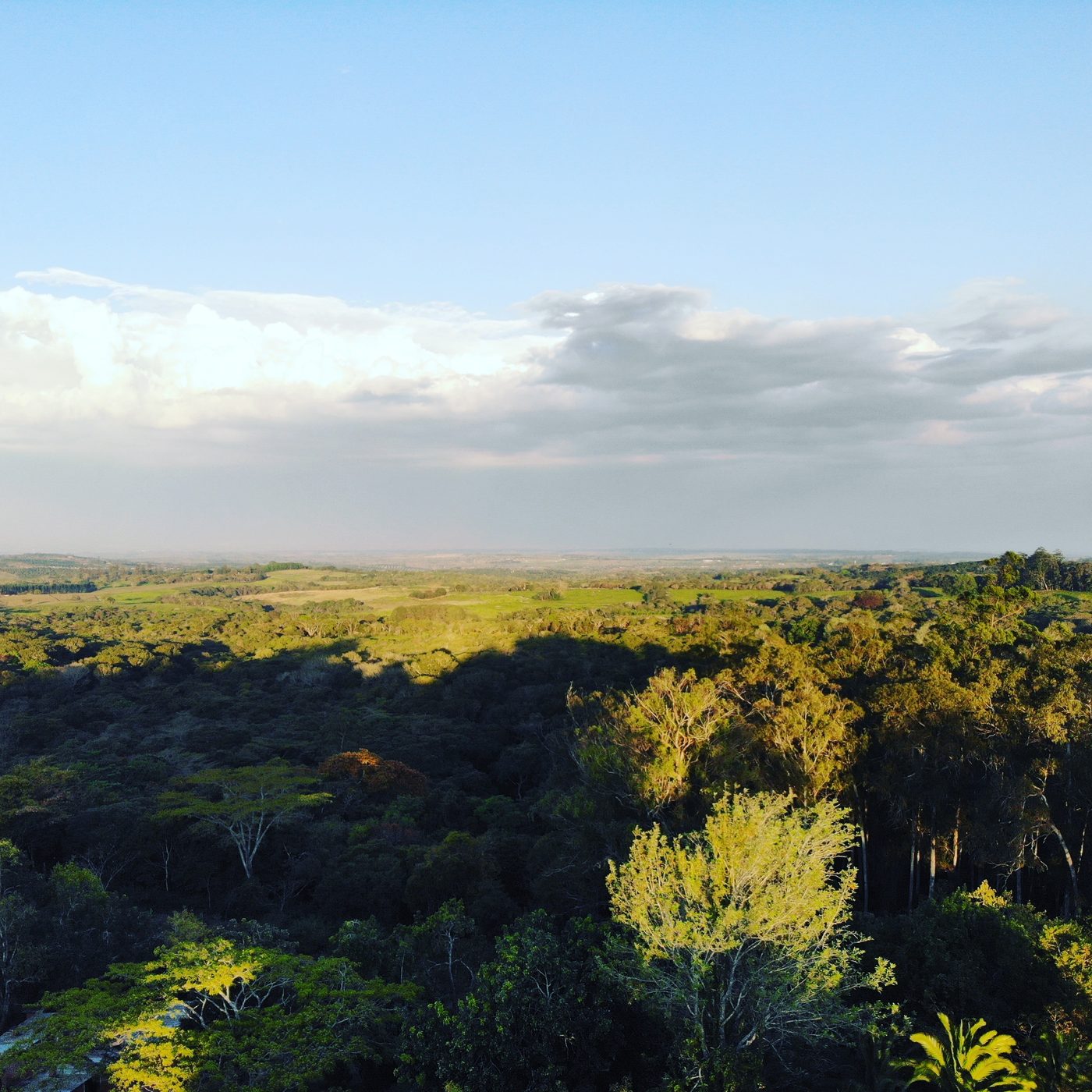
The green-headed oriole (Oriolus chlorocephalus chlorocephalus) is a bird of mossy, mid-altitude submontane forest. Its world is fragmented across East Africa: small populations cling on in central Mozambique, the East Arc Mountains of Tanzania, and a thin strip of coastal southeastern Kenya. In Malawi, it is essentially confined to three remnant forest massifs — Thyolo Mountain, the Mulanje Massif, and Zomba Massif. Of those three, Thyolo is the one where birders consistently report success, particularly along the wooded fringes of the tea estates that buffer the indigenous forest patches.
The bird itself is unmistakable once you have it in binoculars. Bright yellow underparts and a yellow neck-collar give way to a moss-green head and mantle, with dark grey wings and a vivid red bill that catches the early sun like a struck match. It is, plainly, beautiful — and globally it is still listed as Least Concern by the IUCN. But that label hides a more uncomfortable truth: the population trend is declining, the Malawi sub-population is poorly counted, and habitat loss across the region has steadily nibbled away at the forest patches the species depends on. In Malawi, sightings are described as "very rare." Thyolo Mountain remains one of the last places where "rare" still means "findable, if you know where to stand."
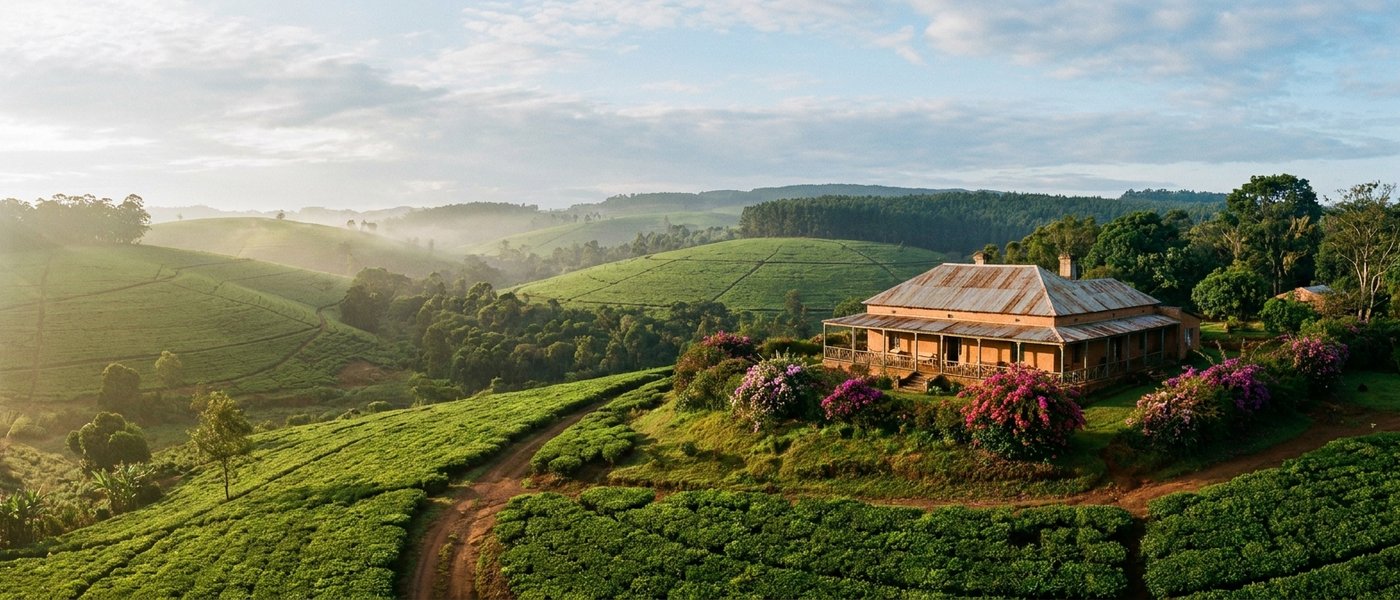
That is partly why The Thyolo House sits where it does. The boutique is on the historic Thyolo Highlands, and the indigenous trees that fringe the working tea blocks are exactly the habitat this bird favours — a soft transition zone between cultivated rows and old-growth forest, where epiphytes drip from the high branches and fruiting figs draw in barbets, turacos, and orioles in turn.
The Ten Quiet Minutes After Sunrise: When the Oriole Calls
If you take only one piece of advice from this article, take this: be in position before first light. The green-headed oriole is most vocal in the brief, golden ten-minute window that opens roughly as the sun first reaches the upper canopy. After that, it does not go silent — but it becomes harder to locate, often calling from deep cover or moving through high branches without showing itself.
From The Thyolo House this means leaving the verandah at around 5:15 in the warmer months and 5:45 in the cooler ones. We will pour the coffee for you the night before in a flask. The walk to the nearest reliable patch is short — under fifteen minutes at a slow pace — which is part of why we recommend staying at The Thyolo House itself rather than driving in from Blantyre or Limbe. By the time you have parked and walked from outside, the window has closed.
"The orioles do not wait for late risers. The forest decides who hears it." — a guide we have walked with on Conforzi for years.
Bring a bird recorder if you have one. The call is so distinctive — a slow, almost human whistle of two or three notes — that even a phone recording from this single ten-minute window will let you re-identify the species at home with confidence.
Reading the Forest — Indigenous Trees the Green Headed Oriole Prefers
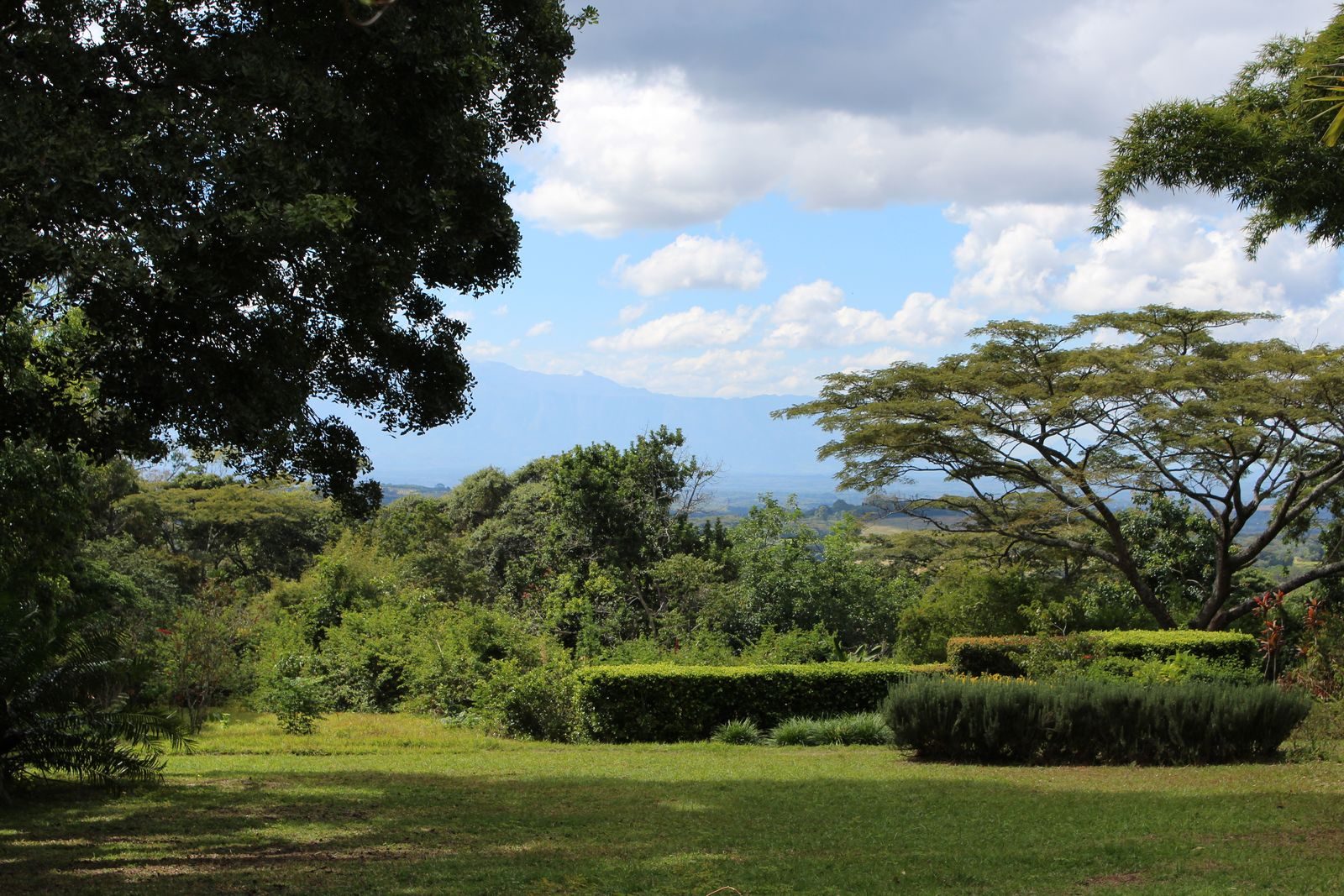
You will find this bird where the forest still has its old bones. It favours the high canopy of mature indigenous trees, particularly fruiting figs (Ficus species), large emergent Albizia, and the moss-furred branches of Khaya anthotheca (East African mahogany) where the latter survives. The presence of epiphytic ferns, mosses, and lichens on the upper boughs is a quick visual shorthand for "this part of the forest is old enough to interest an oriole."
Conversely, blocks of fast-growing exotic plantation — pine, eucalyptus, wattle — are essentially empty of green-headed orioles. They will cross such blocks but they will not feed there. This is why the indigenous forest remnants on Thyolo Mountain and the wooded fringes of the tea estates matter so much: each fragment is a stepping stone, and losing one severs a corridor that took two centuries to grow.
When you walk the trails, look for the trees with thick lichen cover and the soft constant patter of fig-fall. Stop. Wait. Listen up — the bird is almost always above you, not at eye level.
A Morning Walk From The Thyolo House Into the Nearby Indigenous Forest
The route we suggest takes you out of the main gate of The Thyolo House, along the upper edge of the tea blocks, and onto a narrow earth path that winds into a small but well-preserved patch of indigenous forest at the head of a stream. It is roughly a 35-minute round trip if you are walking at a birder's pace — which is to say, mostly standing still.
The path passes a stand of fruiting figs that, in the right month, can hold a remarkable density of frugivorous birds: Schalow's turaco, Black-eared Seedeater, several barbet species, and, if you are lucky, the oriole itself coming down to feed for a few minutes before retreating to higher cover. The small ridge above the stream is where we have most reliably had sightings — the canopy thins just enough to allow a clear binocular line into the upper branches.
For a fuller route description and the wider list of estate species, our companion piece on birdwatching across Thyolo's forests and tea estates walks you through a full-day itinerary including the more challenging trails further up the mountain.
The Sound Before the Sighting: Learning Its Liquid Whistle
Most green-headed oriole records on Thyolo Mountain are heard before they are seen. The call is a clear, slow, fluty whistle — three or four notes, often slightly downslurred, and unmistakably oriole in character once you have heard it twice. It is louder than you might expect from a canopy-dweller and it carries surprisingly well across a forested slope.
If you are new to the call, spend ten minutes the night before listening to recordings on xeno-canto or the Macaulay Library before you go to bed. Do not, however, play the call back in the field. Audio playback is a contentious birding practice everywhere; in a small, declining population in Thyolo tea country it is firmly off-limits. We will say more about this in the next section.
Other vocalisations to learn before your morning walk:
- The dry, rolling churr of the White-eared Barbet — a frequent companion in the same canopy.
- The duet of the Yellow-throated Apalis, often working through the mid-storey just below where the oriole sits.
- The plaintive double-whistle of the Thyolo Alethe, an endangered Malawi-Mozambique near-endemic that shares this exact habitat — and is arguably the rarer prize.
Ethical Birding on a Working Tea Country — What Not to Do
Conforzi is not a national park. It is a tea-country property that has been quietly producing some of Malawi's best leaf for over a century, and the indigenous forest patches survive precisely because successive owners chose not to clear them. That generosity comes with responsibilities for visitors.
- Do not play call audio. A small population of a declining species cannot afford the energetic cost of repeated false-territorial responses. Even one playback session, repeated by enough visitors, has measurable impacts.
- Stay on the paths. The forest understorey is where the Thyolo Alethe forages, and trampling its leaf-litter foraging zones disturbs more than it reveals.
- Do not enter active tea blocks during picking hours without the permission of the supervisor on duty. The pickers are working a schedule; a wandering birder slows them down.
- Take litter home. Even fruit peel — banana skins draw monkeys to the path edges, which then disturbs everything else.
- Hire a local guide. local guides know which patches have been productive that week. They also need the work, and your fee keeps the trail network maintained.
Pairing the Oriole With Other Thyolo Specials in One Stay
A two- or three-night stay at The Thyolo House lets you build a target list that goes well beyond the green headed oriole Thyolo birders typically come for. The same indigenous patches and tea-estate fringes hold a remarkable concentration of regional specials:
- Thyolo Alethe — endangered, secretive, and arguably the country's most sought-after forest bird. Best worked at dawn from the same trail you used for the oriole.
- White-winged Apalis — a regional rarity, often in mixed-species flocks at mid-storey level.
- Yellow-throated Apalis — easier to find than its white-winged cousin but still a regional special.
- Green Barbet — a Thyolo Mountain reliable, vocal at dawn.
- White-eared Barbet — frequent in the fruiting figs alongside the oriole.
- Schalow's Turaco — flashes of crimson in the canopy as it crosses between fig stands.
If you have a fourth or fifth night, an independent visit to the Mulanje Massif extends the list further with cisticolas and the iconic Mulanje cedar habitat — a journey of roughly an hour and a half from the estate.
Practical Notes: Season, Gear, Guides & Booking The Thyolo House
Best season. The green-headed oriole is resident year-round on Thyolo Mountain, but it is most consistently vocal — and therefore most easily found — between September and December, when birds are setting up territories. The cooler, drier months of June to August are also productive, particularly for combining the oriole with the alethe in a single morning.
Gear. Bring 8x42 binoculars (10x is too much wobble for canopy work in low light), a warm layer for the pre-dawn start (Thyolo's altitude makes mornings genuinely cold from May to August), a quiet rain shell, and a small notebook. A camera with at least a 300mm lens helps for record shots but is not essential — this is mostly a binocular bird.
Guides and tours. The Thyolo House does not arrange bird guides. Contact licensed local bird guides or specialist birding operators directly. If you would like to add a tea-estate factory visit arranged directly with the estate or visit, contact Satemwa or the relevant estate directly before travelling.
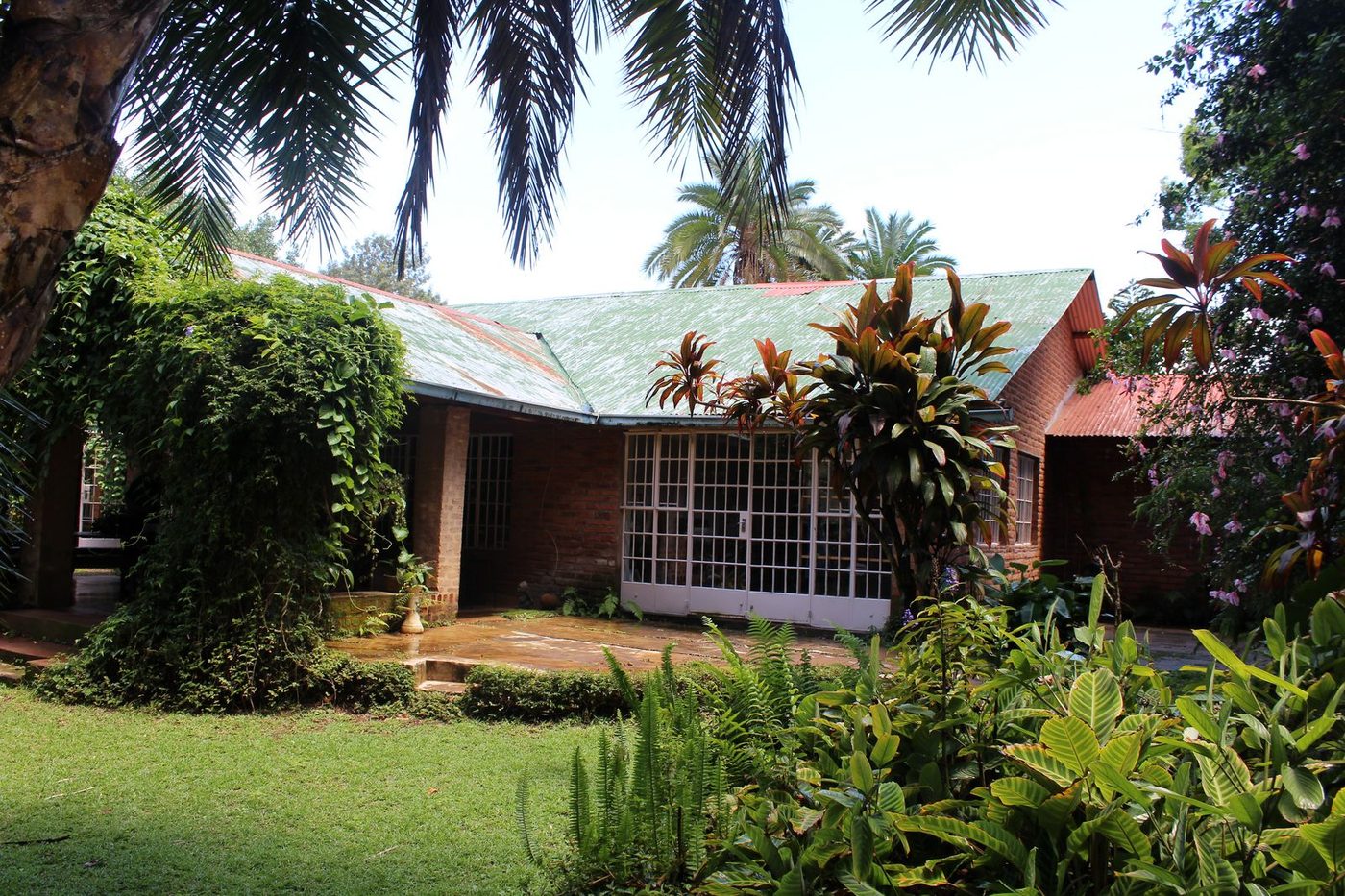
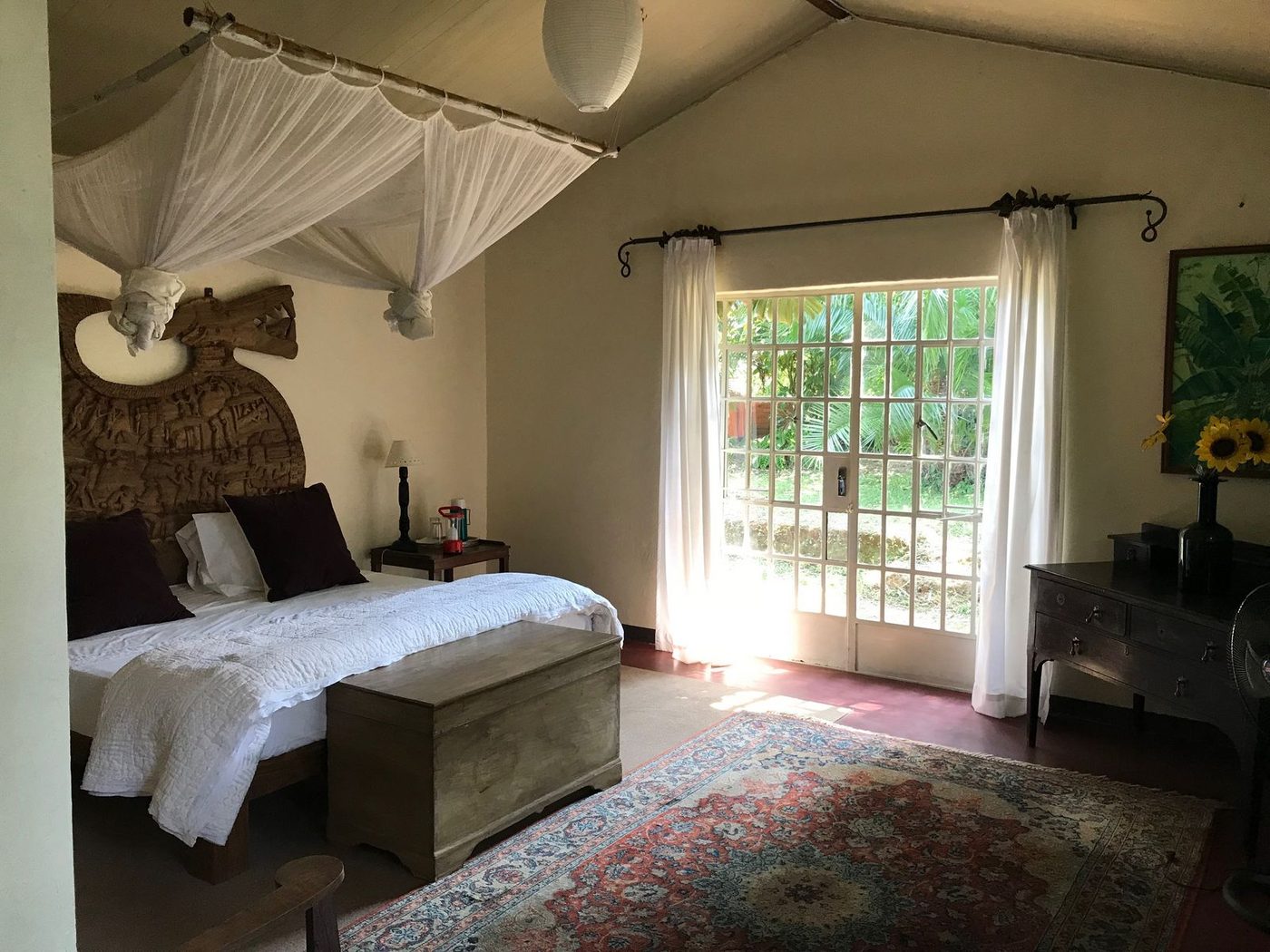
Where to stay. The Thyolo House is a five-room boutique on a historic property that was once part of the Conforzi Tea Estate, with an Italian-fusion kitchen run with garden-grown produce, a swimming pool, garden paths and highland views, and the kind of quiet mornings that birding on this scale requires. Owner Flavia Conforzi — an Italian-Malawian artist — keeps the place small on purpose. You can read more about the boutique rooms or browse the restaurant menu before booking.
Getting here. The Thyolo House is roughly 20 minutes from Limbe, 40 minutes from Blantyre's Chileka airport, and four hours from Lake Malawi's southern shore — making it an easy add-on to a wider Malawi itinerary or a focused birding week on its own.
Booking. For rooms or restaurant bookings at The Thyolo House, message us on WhatsApp on +265 88 420 2040 or email thethyolohouse@gmail.com. Bird guides, birding outings, tea visits, third-party estate access, drivers, and tours are not arranged through The Thyolo House; contact licensed local guides, specialist operators, or the relevant estate directly.
The forest above Conforzi has been holding this bird for longer than any of us have been alive. A morning spent listening to its slow whistle drop through the canopy is, in a quiet way, one of the great birding experiences in southern Africa — and it is still possible to have it largely to yourself. Come early. Stand still. Look up.