/ By The Thyolo House
Lodges in Thyolo: A Food Lover's Guide to Where to Sleep & Eat
A journal from a boutique lodge in the Thyolo highlands. These are notes from our corner of Malawi — places we love, walks we've done ourselves, operators we've watched do good work. The mountain treks, tea-estate tours, and day trips are all run by independent operators in Malawi; book those directly with them. Come stay with us before or after — we'll do the room, the meal, and the quiet.
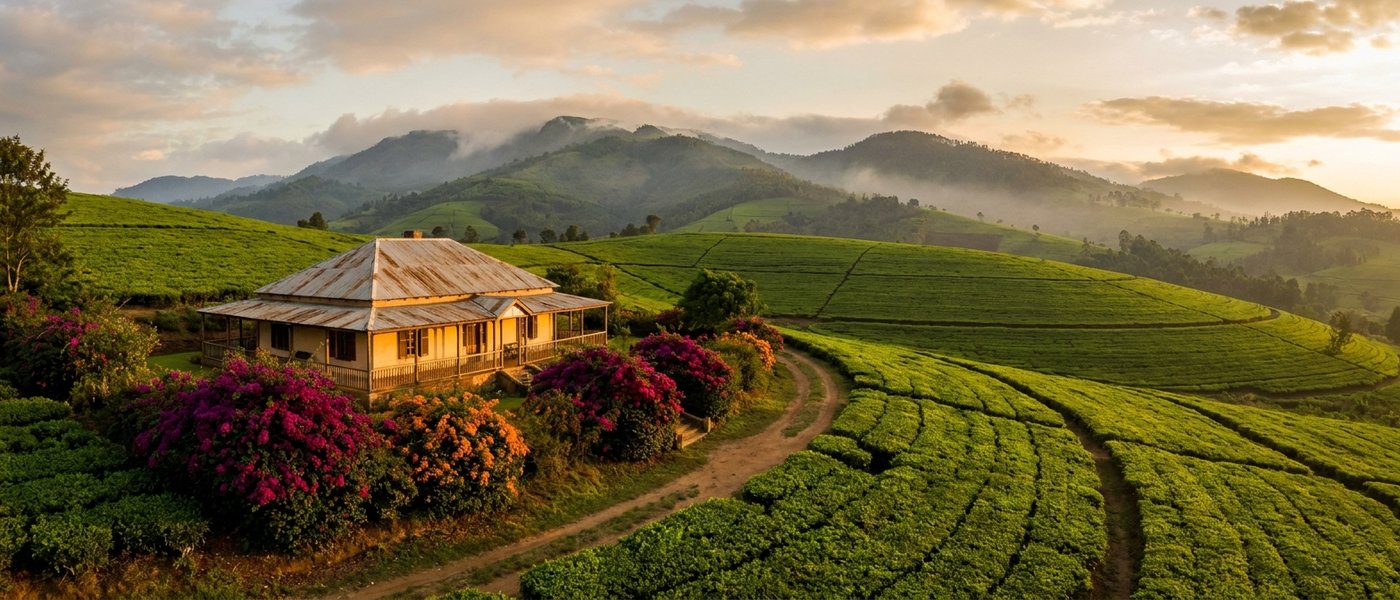
There's a particular kind of quiet that settles over the Shire Highlands in the late afternoon — the kind that smells of wet earth, citrus leaves, and something simmering on a wood stove half a kilometre away. If you've ever wondered why so many returning travellers map their Malawi trip around a few specific lodges in Thyolo, that quiet is part of the answer. The other part is what's on the plate.
Thyolo (pronounced cho-lo) has long been known for its tea. What's less talked about — and what's quietly turning the district into one of southern Africa's most interesting culinary detours — is the food culture growing up around the estates. Garden-to-table isn't a marketing line here. It's a logistical reality. The nearest supermarket is forty minutes away over twisting tar, and the kitchens that do well are the ones that learned long ago to look outside, not in town, for dinner.
This is a food lover's guide to where to sleep and eat in Thyolo, written for the traveller who measures a destination not just by its scenery but by its long lunches.
Why Thyolo Is Quietly Becoming Malawi's Food Country
For decades, Thyolo was treated as a working district — tea, macadamia, a little coffee — rather than a tourist one. Visitors flew through Blantyre, drove straight to Liwonde or Lake Malawi, and missed the highlands entirely. That has been changing, slowly, and the change is being driven less by hotels than by kitchens.
Three things make Thyolo unusually well-suited to a food-led stay:
- Altitude and soil. The Shire Highlands sit between roughly 800 and 1,200 metres. Tomatoes ripen with real sweetness, herbs grow year-round, and the cool nights mean salad leaves don't bolt. Tea grows here for the same reason espresso roasts well at altitude — flavour holds.
- Generations of estate cooking. The colonial-era estates built kitchens designed for long, hot lunches with guests who'd ridden in from outlying paddocks. That tradition of the long, slow midday meal has survived the handover of estates to second- and third-generation owners.
- A small but committed food community. The cooks, growers and estate managers in Thyolo mostly know each other. Eggs travel between farms, surplus chillies get traded for honey, and someone always seems to know which beekeeper is harvesting that week.
It also helps that Thyolo has always been a working agricultural district. For travellers, the appeal is the landscape, the food, and the small historic properties that have learned to host quietly and personally.
What Makes a Lodge in Thyolo Worth the Drive (It's Usually the Kitchen)
If you ask around Blantyre about lodges in Thyolo, you'll get a short, repeating list of names: Huntingdon House, Chawani Bungalow, Thyolo House, Game Haven Lodge, Palm Valley Lodge. The aggregator sites will quote you forty-one hotels in the district and a hundred-plus "private pool rentals" in the wider area. Those numbers are inflated by the way booking platforms count guesthouses and homestays. The headline properties — the ones travellers come back for — are still measured on the fingers of two hands.
What separates the ones worth the drive isn't the room count. It's the kitchen.
Huntingdon House — The Tea-Estate Classic
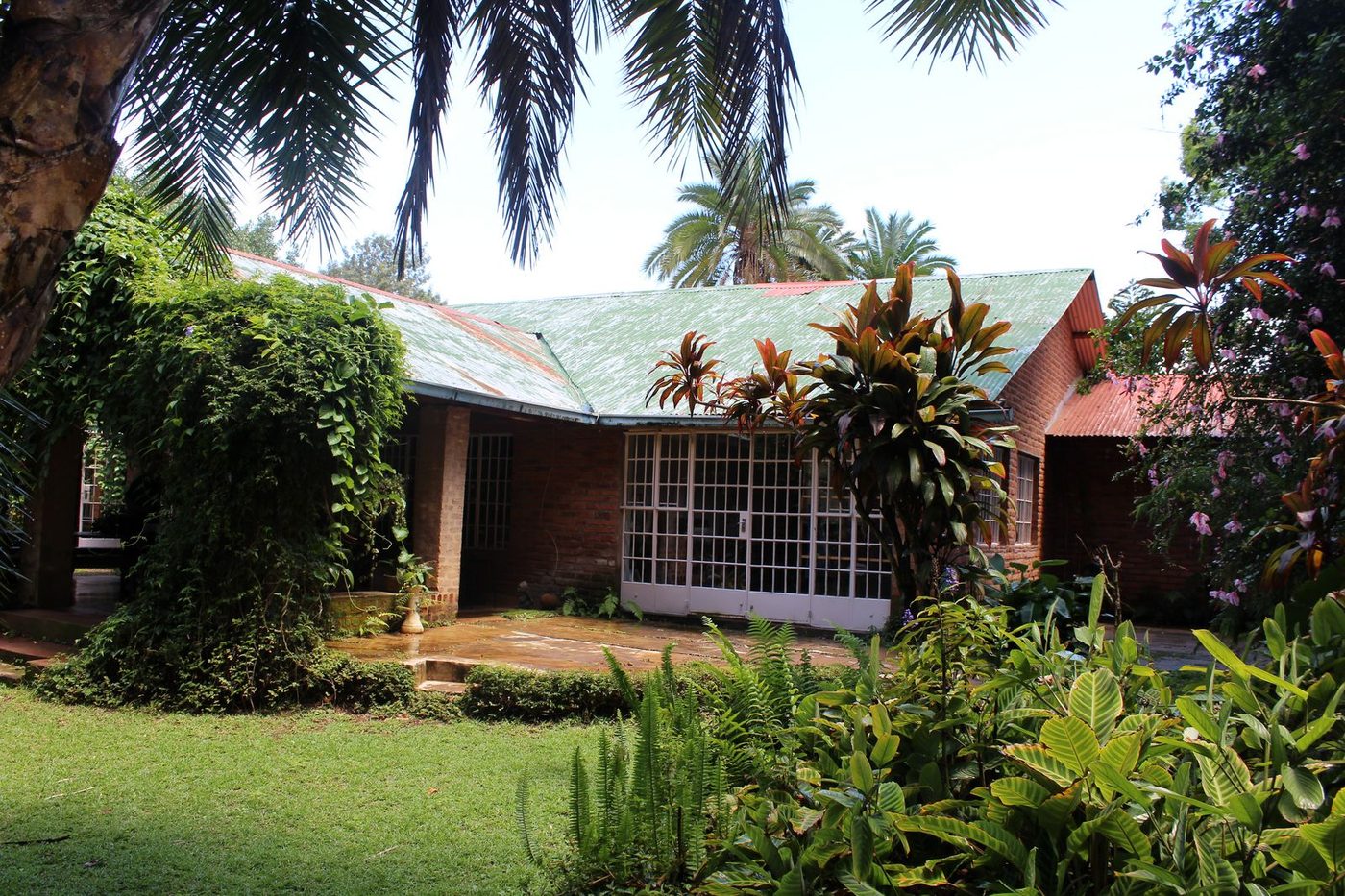
Huntingdon House sits inside the Satemwa Tea Country, in what was originally the 1928 family home of the Maclean Kay family. It is one of the district's established historic stays. Any estate activities, visits, walks, rides, or tours there should be confirmed directly with Huntingdon House or Satemwa, not through The Thyolo House.
Chawani Bungalow — Self-Catering with Help
Also on Satemwa, Chawani is a four-bedroom self-catering bungalow that sleeps nine. Staff are on hand to help with cooking and cleaning, but the kitchen is yours. It's the option for travellers who want to shop the Limbe markets on the way in, fill the larder, and cook surrounded by subtropical rainforest for a week. Family-friendly in the genuine sense — there's space, and there are no rules about bedtime.
Game Haven Lodge — A Buffer Between City and Country
About 25 km from Blantyre on the Thyolo Road, Game Haven sits inside the 500-acre Chimwenya Private Game Park. It's not on a tea country, and the food is more lodge-standard than estate-table, but it's a useful first or last night if you're flying in late or out early — you get rainforest and game without the full hour-plus drive south.
The Thyolo House — Italian-Malawian Fusion in Thyolo
And then there's The Thyolo House, which is the reason a lot of food-focused travellers now route through this district at all. Five rooms, a restaurant, and an Italian-Malawian kitchen run by Flavia Conforzi, an artist whose family history is tied to the Conforzi landscape. It is, by some distance, the most kitchen-led stay in Thyolo. More on that in a moment.
Inside The Thyolo House: Garden-to-Table in Thyolo
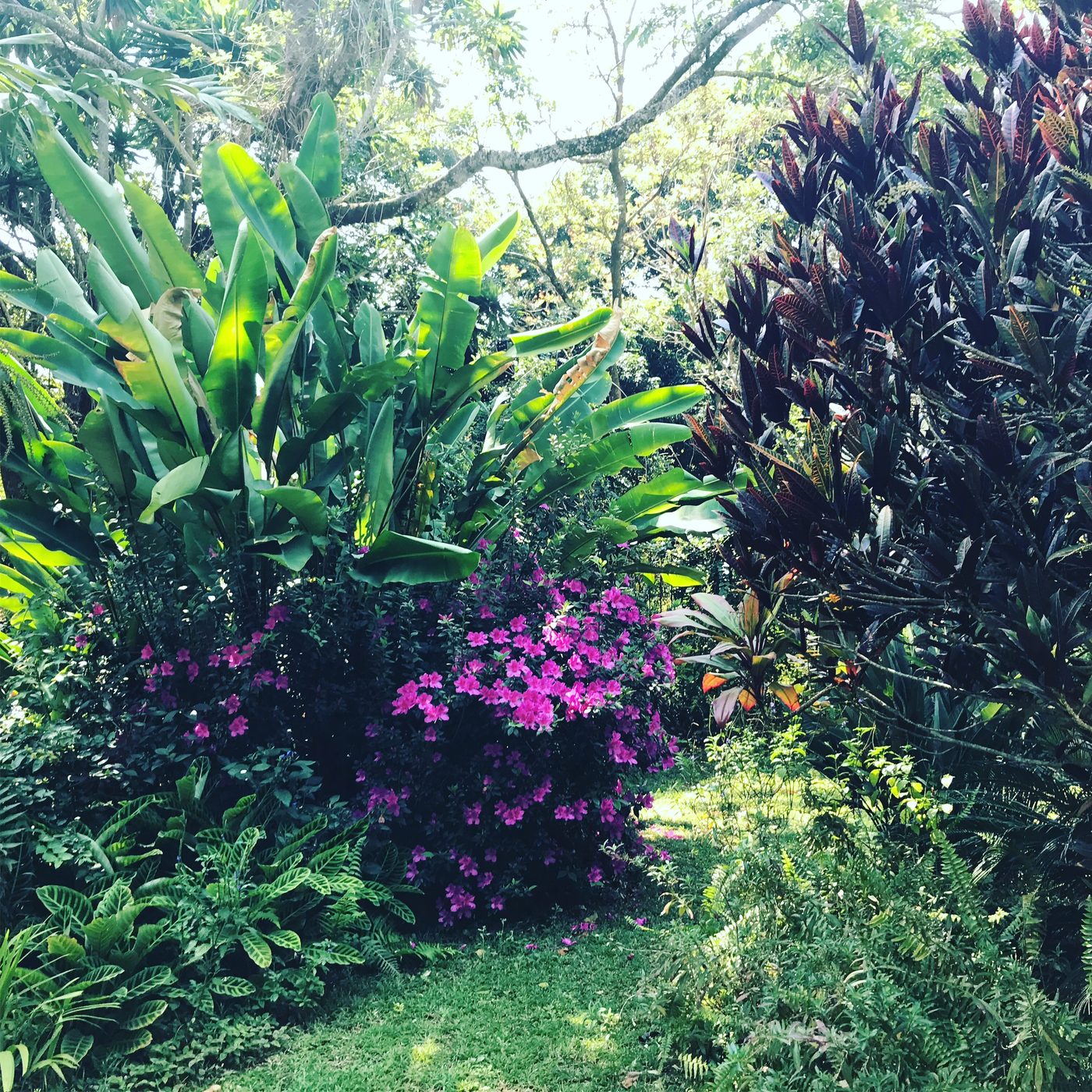
The Thyolo House occupies a renovated colonial farmhouse on a historic property that was once part of the Conforzi Tea Estate. Today it operates as a boutique hotel and restaurant, separate from the surrounding tea farms. From the gate to the front door is a slow drive past macadamia avenues and the kind of bougainvillea that looks deliberate but isn't.
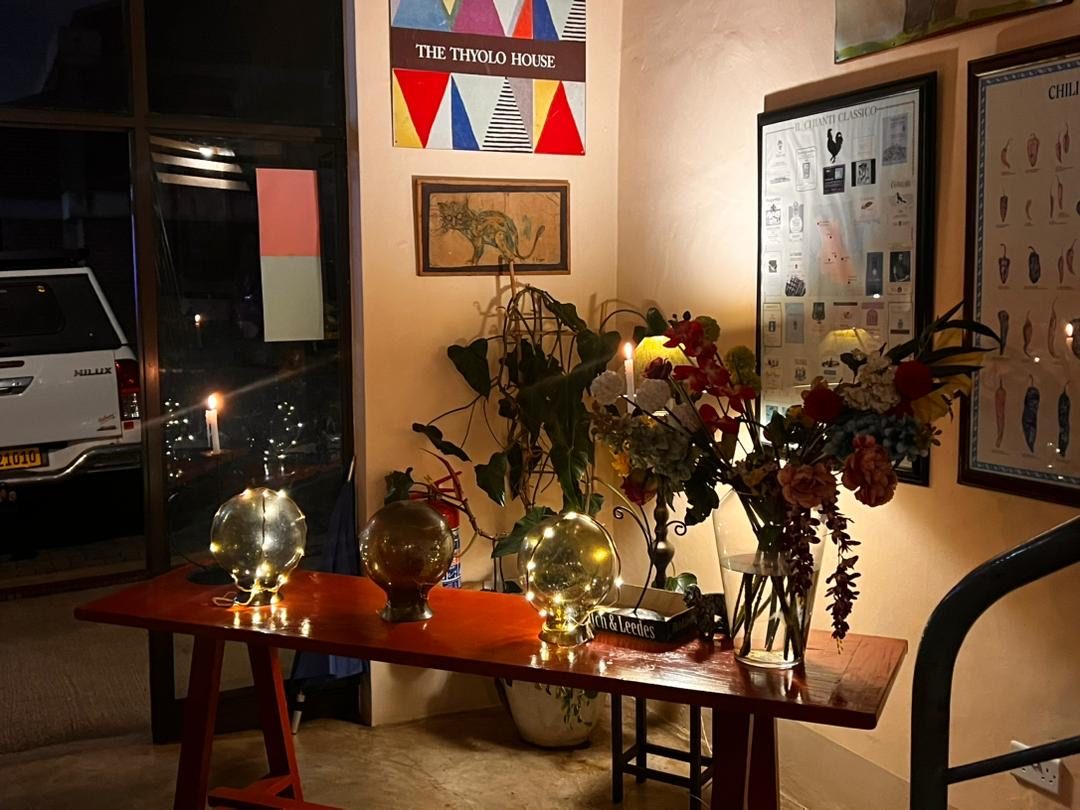
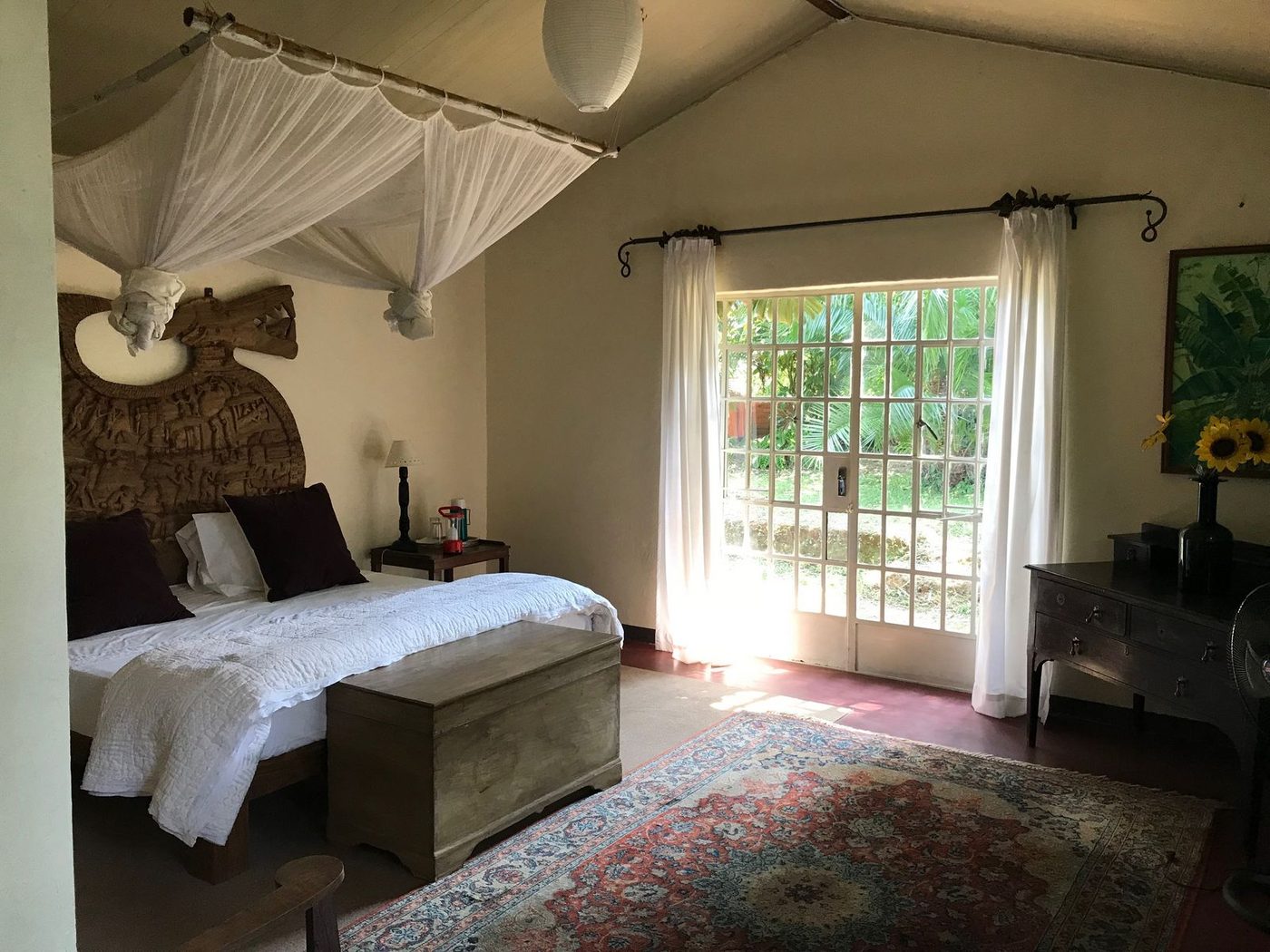
The house has five bedrooms, which is small enough that nobody is anonymous and large enough that you don't have to make conversation if you don't want to. Some travellers come for two nights and end up staying five. The pace of the place is the main thing it sells.
The food is the second.
Flavia is Italian-Malawian, and the kitchen reads as exactly that — pasta made the morning you eat it, often paired with vegetables that came out of the kitchen garden an hour earlier. The menu shifts with what's ready: green beans in November, the first tomatoes in late summer, citrus from the trees out by the pool in the cooler months. If you've ever wondered what Italian food on a Malawi tea country actually tastes like, this is the answer — and it's less rustic than the description suggests. The technique is Italian, the ingredients are local, and the resulting plates are quietly confident.
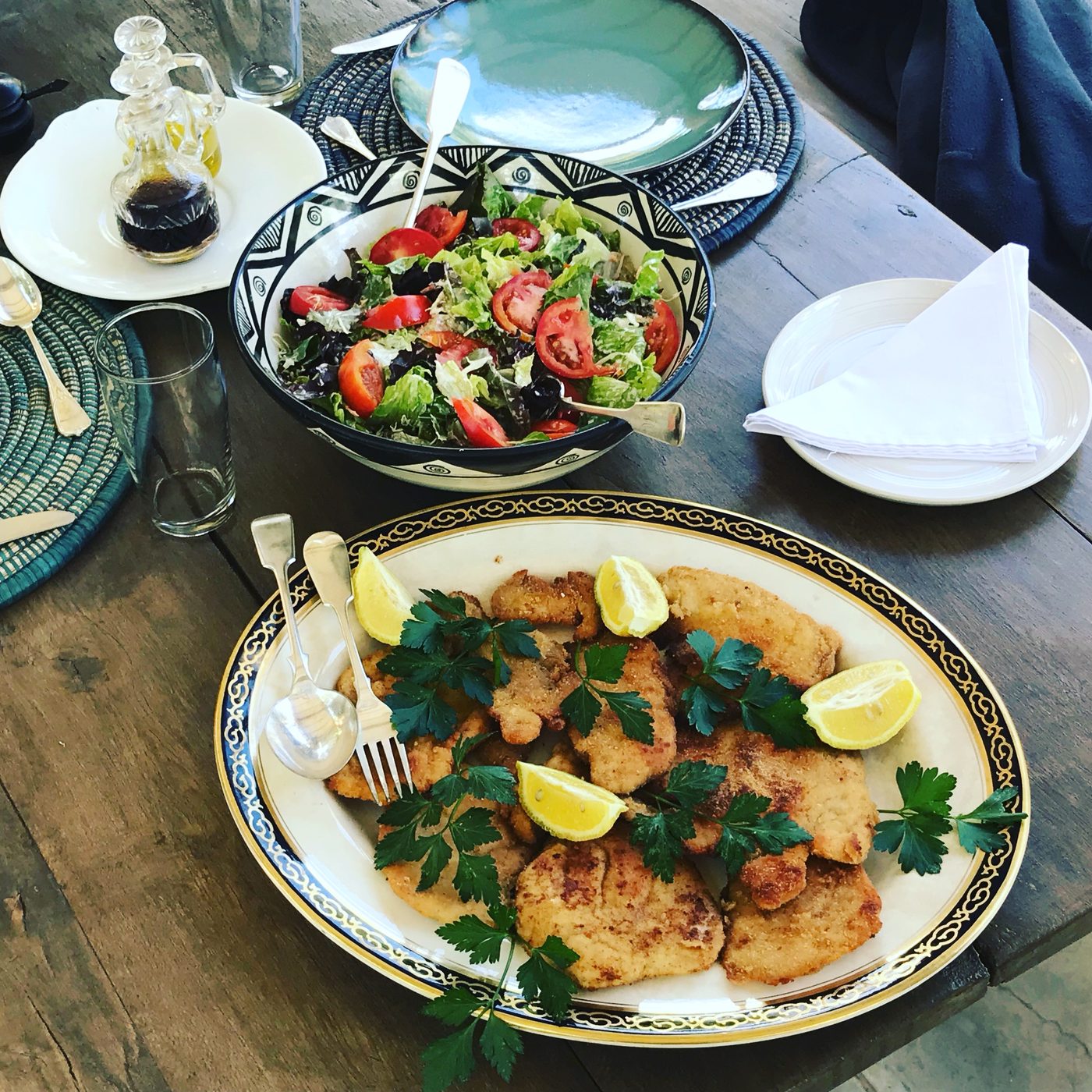
A few things that surprise first-time guests:
- Breakfast is not a buffet. It's a quiet, slow meal cooked to order, often eaten outside on the verandah or in the garden.
- Dinner is communal in feel even when tables are separate — the restaurant is small enough that the kitchen knows everyone's pace.
- The art on the walls is mostly Flavia's. Workshops are sometimes available for guests who want to spend an afternoon painting rather than walking.
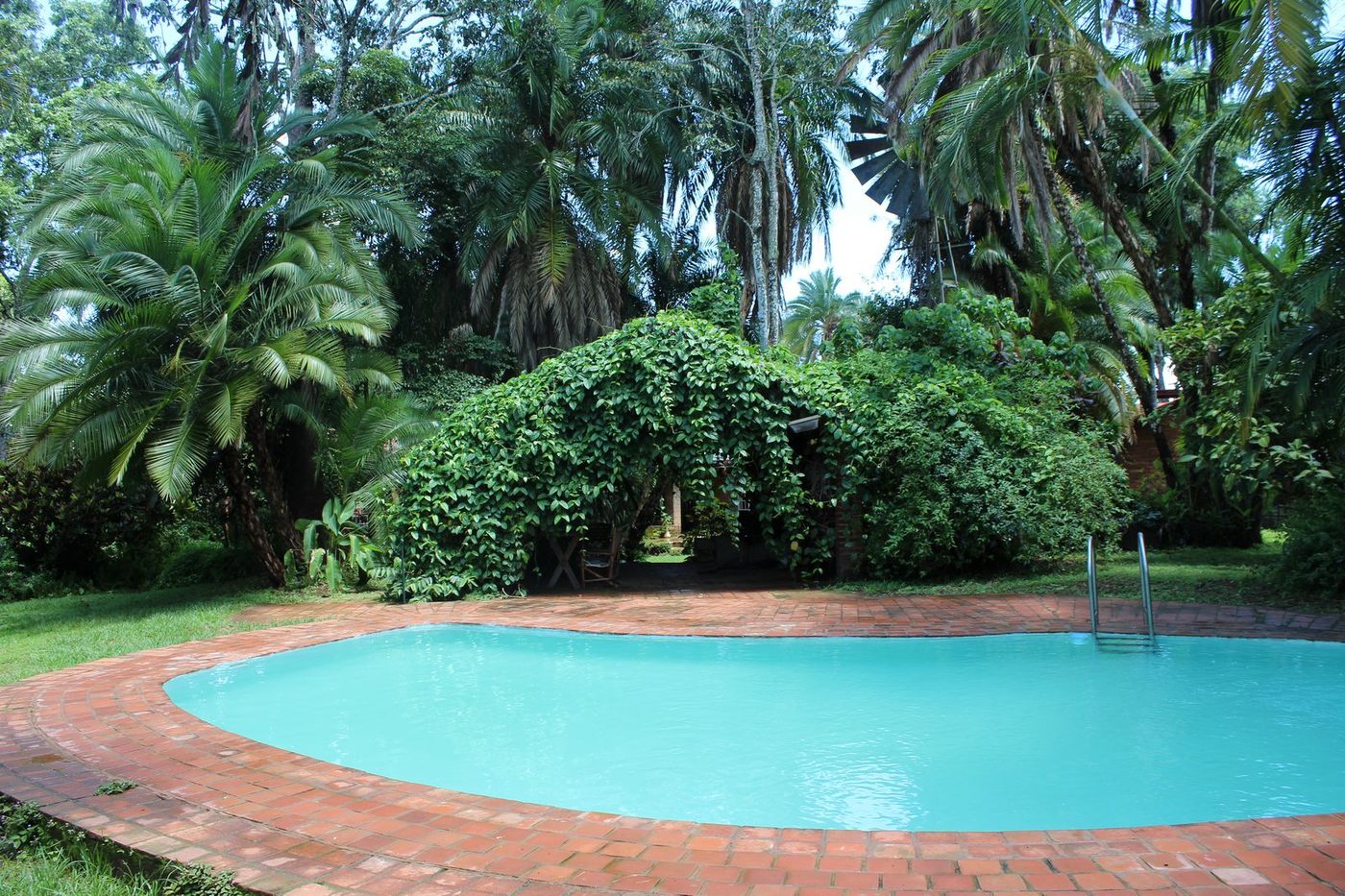
- There's a pool, which sounds incidental until you've spent a hot afternoon enjoying the gardens and realise it isn't.
For a fuller picture of how the Thyolo highlands developed and the family's role in it, the story of Thyolo Highlands is worth reading before you arrive — it explains a lot of what you'll see on the drive in.
A Day of Eating Through Thyolo — Long Lunches, Gardens, and Slow Afternoons
One of the quiet pleasures of basing yourself at a lodge in Thyolo is that you can build an entire day around what and where you eat, and still be back in time for sunset on the verandah.
Morning: A Slow Start in the Highlands
Start with a slow morning in the district, then save your appetite for lunch. If you want tea-country visits, birding, bikes, third-party estate access, guides, drivers, or any other external activity, arrange it directly with the relevant provider rather than through The Thyolo House.
Lunch: The Long One
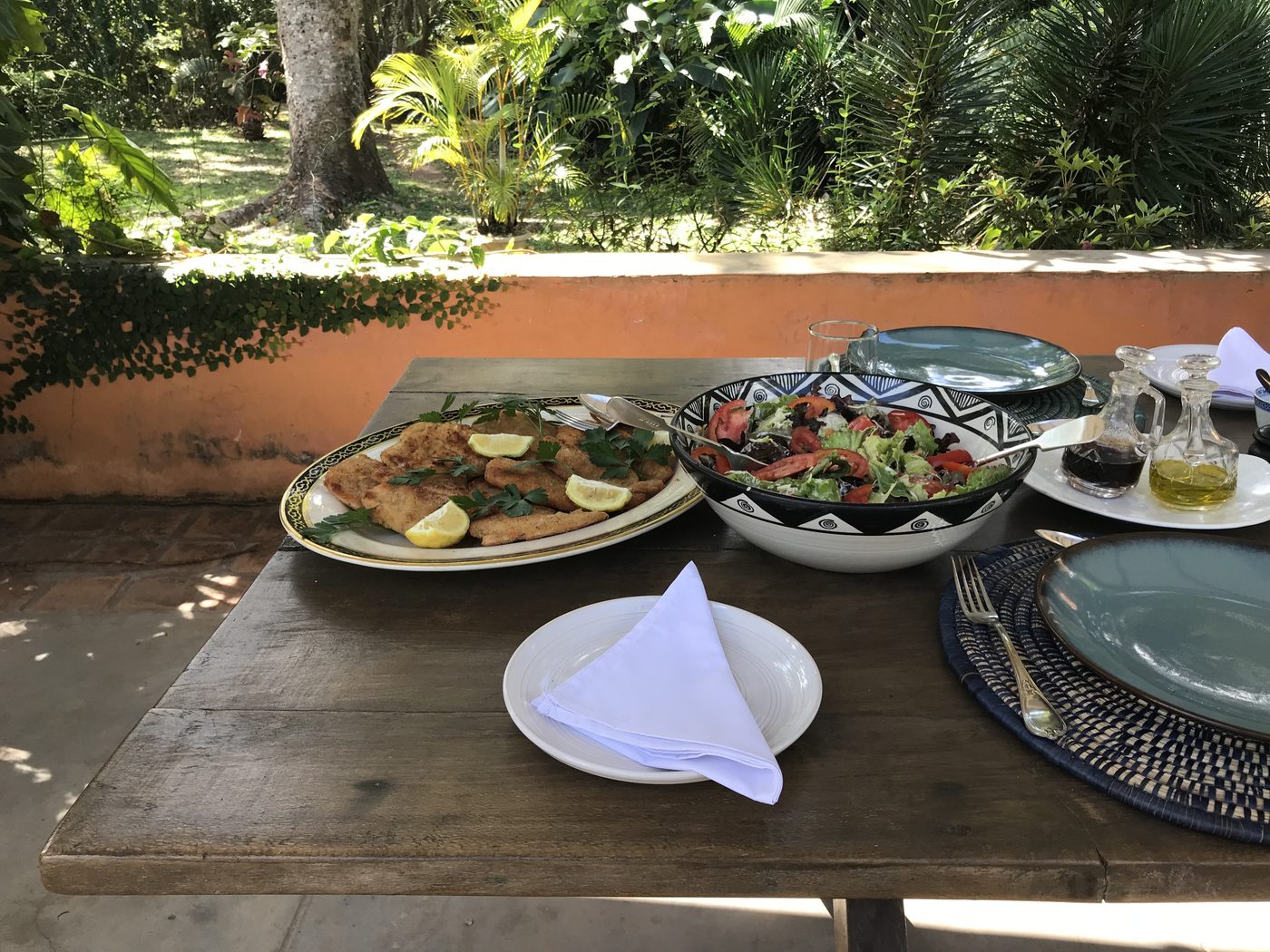
This is where Thyolo's food culture genuinely earns its reputation. Plan a long lunch and don't fight it. A proper guide to dining in Thyolo covers the options in detail, but the short version: at The Thyolo House, lunch is usually a primo and a secondo with garden vegetables and a glass of something cold, eaten under the bougainvillea. Allow two hours. Three if you're sensible.
Afternoon: Gardens, Pool, or Studio
The afternoon is for whichever of three things suits your mood: time in the gardens, a swim, or — if it is available during your stay — an art session in Flavia's studio. The Thyolo House does not provide guided garden time, forest access, estate walks, tea-tasting activities, tea-walk activities, drivers, guides, or third-party activities.
Evening: Highland Aperitivo
Dinner at a serious lodge in Thyolo tends to start with something cold on the verandah at sunset — a glass of gin, a Campari spritz, occasionally a homemade vermouth. It's an aperitivo culture quietly imported and kept alive by the Italian-Malawian families who've run estates here for decades. By eight you'll be at a small table indoors, eating something the kitchen probably wasn't planning to serve until the morning courier brought a particularly good crate of vegetables.
Practical Notes: Getting Here, Booking, and the Best Months to Come Hungry
Thyolo is straightforward to reach but worth a little planning, because the lodges that matter are small and book up unevenly through the year.
Getting Here
- From Blantyre: Roughly 40 minutes by car to The Thyolo House. The road is tarred all the way; the last few kilometres to the property are dirt but well-maintained.
- From Limbe: About 20 minutes — slightly closer than from central Blantyre.
- From Lake Malawi (Cape Maclear / Mangochi area): A four-hour drive. This makes Thyolo a natural lunch stop or, better, a two-night stay between the lake and a flight out of Blantyre's Chileka airport.
- From Liwonde National Park: Around 2.5 hours, which makes a tea-country wind-down after safari unusually easy to organise.
When to Come
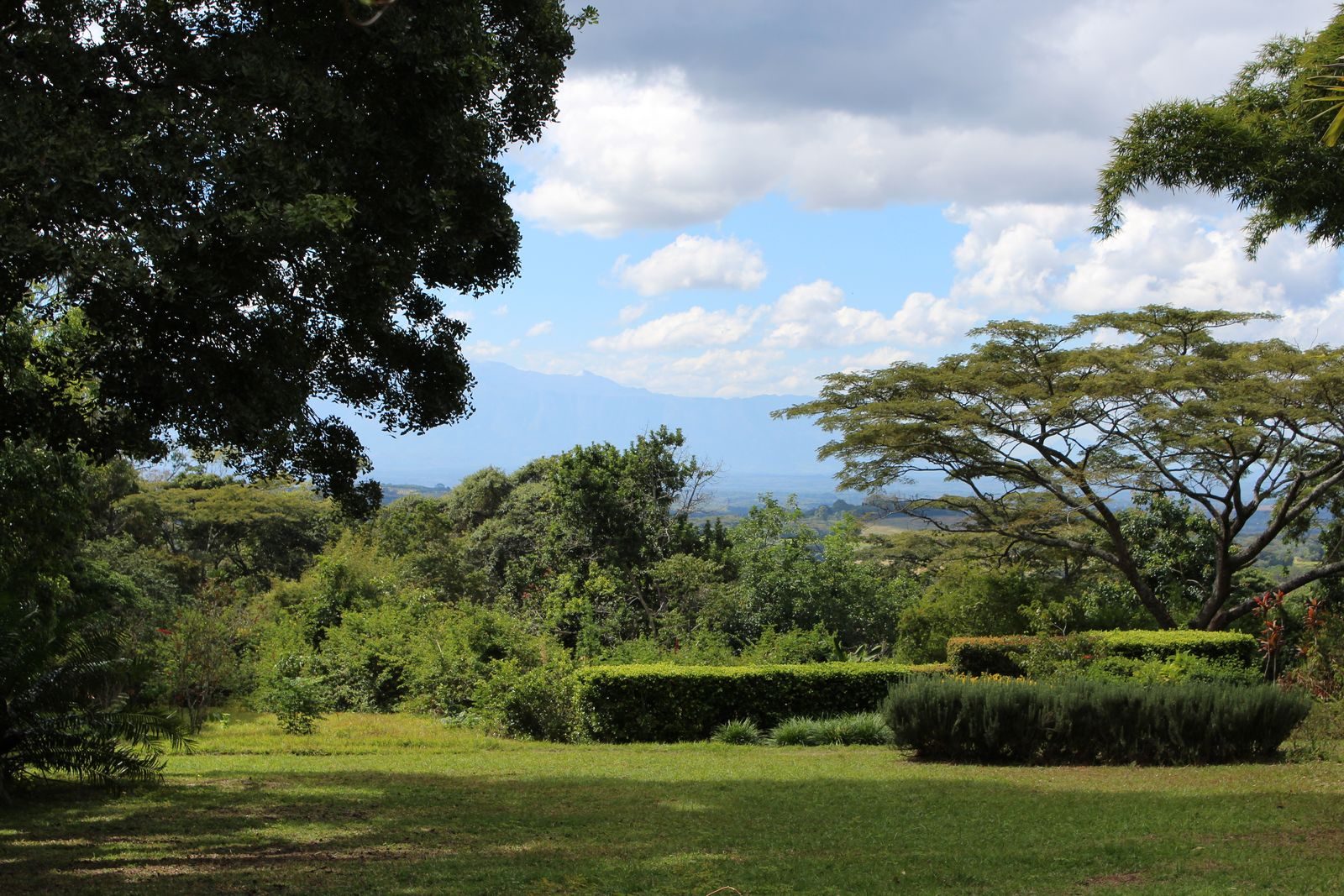
The honest answer for food: April to early September. The rains have eased, the kitchen gardens are at their richest, citrus is in season in the cooler months, and the air is clear enough that you can see across the highlands to Mulanje on a good day. October and November are hot and dry — still pleasant, but the gardens are tired. December to March is the green season: lush, occasionally wet, and quietly beautiful.
Booking and Costs
Lodges in Thyolo span an enormous price range on the booking platforms — anywhere from around $32 a night for budget guesthouses up to $260+ for the historic tea-country stays. The serious estate lodges (Huntingdon House, Chawani, Thyolo House) sit at the upper end and almost always include or significantly subsidise meals, which changes the comparison once you factor in three meals a day. Pricing for the 2025–2026 season hasn't been published in any consistent aggregator format — direct enquiry is genuinely faster.
What to Pack
- A light jumper for evenings — the highlands cool off after dark even in summer.
- Walking shoes that can handle slightly damp red earth.
- Binoculars if you care at all about birds.
- An appetite, and the willingness to let lunch take three hours.
Booking The Thyolo House
If a food-led stay in Thyolo sounds like the visit you want, the simplest thing is to message us on WhatsApp on +265 884 202 040 or email thethyolohouse@gmail.com. Tell us roughly when you'd like to come, how many of you there are, and whether you're combining the stay with the lake or a safari — we can confirm room, restaurant, pool, garden, and on-site availability. Take a look at the boutique rooms if you'd like a sense of the five spaces before you write.
Thyolo isn't a destination that sells itself loudly. It's a quiet district that rewards travellers who arrive hungry, stay long enough for the kitchen to learn their preferences, and leave with the smell of woodsmoke and highland air on their luggage. Of all the lodges in Thyolo, the ones that get remembered are the ones whose kitchens told the truth about where the food came from. There aren't many. That's the point.