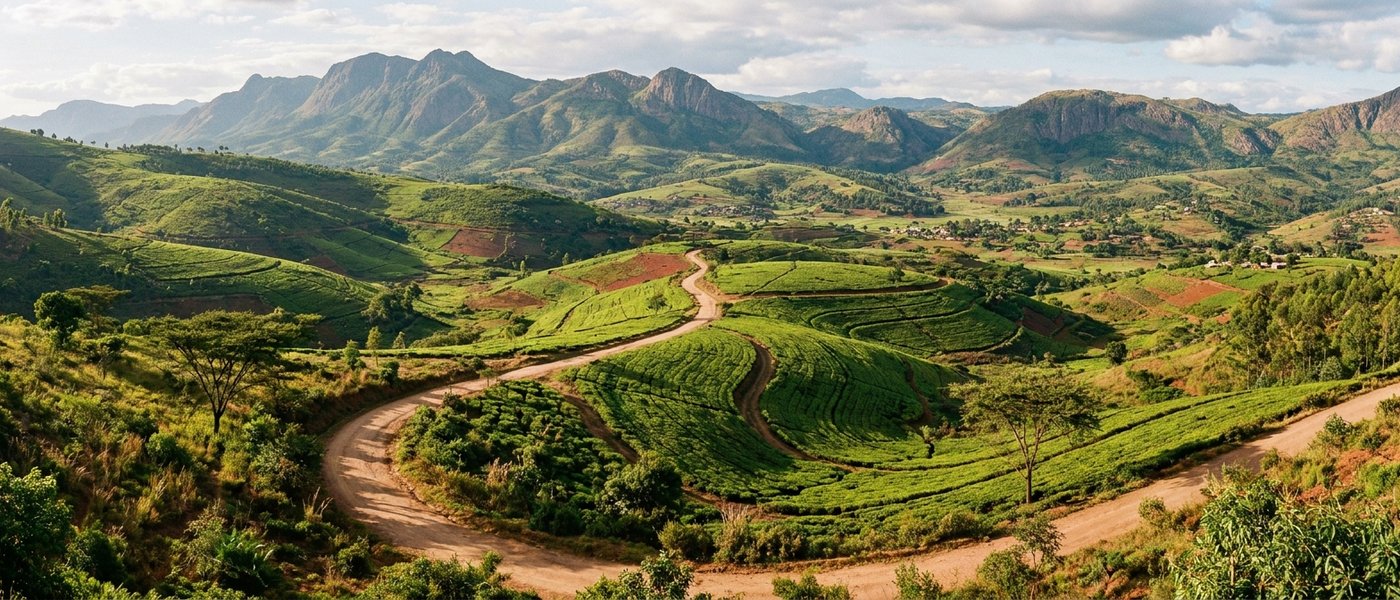
/ By The Thyolo House
Malawi Visa and Travel Tips: A Tea Country Host's Currency & Cash Notes
A journal from a boutique lodge in the Thyolo highlands. These are notes from our corner of Malawi — places we love, walks we've done ourselves, operators we've watched do good work. The mountain treks, tea-estate tours, and day trips are all run by independent operators in Malawi; book those directly with them. Come stay with us before or after — we'll do the room, the meal, and the quiet.
If you're flying into Malawi for the first time, the visa rules changed in January 2026 and the cash culture didn't — and both will shape your first 48 hours more than any itinerary. These are the malawi visa and travel tips I give guests at The Thyolo House before they board, the ones that save them a fluster at Chileka Airport and an awkward moment at a roadside fuel station in Limbe. I'm writing from a tea country in Thyolo, where guests arrive jet-lagged with the wrong notes in their wallets more often than I'd like, and I've learned which small details matter.
What follows is less a regulatory document and more a host's notebook: where the kwacha actually moves, where your card will be politely declined, and how to budget the first three days without overthinking it. Treat the visa section as a starting point — always verify your country's category on evisa.gov.mw before you fly — and treat the cash section as the part most travel articles get wrong.
The Visa Bit, Briefly — and Why Money Matters More Than You Think
From 2 January 2026, Malawi's Department of Immigration restored visa requirements for most non-SADC nationals, ending the brief 2024 waiver. SADC passport holders (with the exception of Angola) remain visa-exempt. Everyone else now falls into one of two categories on the official eVisa portal at evisa.gov.mw: "Visas in Advance" (Category 1, must be obtained online before flying) and "Visas on Arrival" (Category 2, payable in USD at the airport).
The fees are straightforward. A transit visa is $50. A single-entry visa valid for up to three months is $50. A six-month multiple-entry is $150, and a twelve-month multiple-entry is $250. eVisa processing takes three working days and you must print the approval before travel — Chileka's immigration desk will not pull it up for you on a phone.
Passports need a minimum of six months' validity beyond your departure date and at least one blank page. If you're arriving from a yellow fever country, the yellow fever certificate is checked on arrival and the rule is enforced without exception. I've watched it happen.
Here's where most guides stop and where the real malawi visa and travel tips begin: the visa fee is USD cash only. No credit cards. No Malawian kwacha. And the notes themselves must be pristine and post-2017 — torn, marked, scribbled-on, or heavily folded bills get refused at the immigration desk and, frankly, almost everywhere else that handles USD. If your bank handed you a slightly tired fifty, swap it before you fly. This single detail trips up more first-time visitors than any other.
I cover the broader arrival rhythm in a companion piece — a tea-country host's arrival notes — but the money side deserves its own walk-through, because Malawi's cash culture is the part you'll feel daily, not just at the border.
Kwacha vs USD: What Guests Arriving at Thyolo House Actually Use
The Malawian kwacha (MWK) is the currency you'll spend in, and as of April 2026 the rate sits at roughly USD 1 = 1,730–1,734 MWK. That number drifts, but it gives you a useful anchor: a coffee at a Blantyre café might be 4,000 kwacha (about $2.30), a casual lunch 12,000–18,000 (around $7–10), and a tank of fuel will run into six figures of kwacha quickly. Mentally dividing by 1,700 becomes a reflex within a day or two.
USD is useful in three specific situations and nearly useless everywhere else. It pays for visas on arrival. It's sometimes accepted at upper-end lodges and safari operators who price in dollars (we don't, but some do). And it's handy as an emergency reserve — a few clean hundreds tucked away mean you're never stuck.
For everything else — fuel, market vegetables, a beer at a roadside bar in Thyolo town, a tip for the gardener who carried your bags, a fundi to fix a flat tyre — you need kwacha, and you need it in smaller notes than you'd think. The 5,000 kwacha note (the largest in common circulation) is hard to break in rural areas. Ask your forex bureau or hotel for a mix that includes 2,000s, 1,000s, and 500s.
All foreign currency must be declared on entry, regardless of amount. There's a form on the arrival card. Tick it honestly. The declaration matters mainly if you intend to leave with a large balance — keeping the slip means you can convert leftover kwacha back at departure without questions.
ATMs, Cards, and the Quiet Truth About Rural Card Machines
This is the section I wish someone had written before my first Malawian trip. The country is overwhelmingly cash-based. Cards work — sometimes — at tourist hotels, established lodges, a handful of supermarkets in Blantyre and Lilongwe, and almost nowhere else. The "Visa accepted" sticker on a shop window is sometimes aspirational rather than current.
ATMs are widely available in Blantyre, Lilongwe, Mzuzu, and the larger towns. Standard Bank, National Bank of Malawi, NBS Bank, and FDH are the names you'll see most. Most accept Visa; Mastercard is more variable. A few practical realities to budget around:
- Withdrawal limits are typically 200,000–400,000 MWK per transaction (about $115–230), so you may need multiple withdrawals to fund a week of cash spending.
- Foreign card fees apply on top of your home bank's charges. Plan for a small percentage to disappear in fees each time.
- ATMs in smaller towns can run out of cash at month-end (around the 25th–30th, when salaries are paid). Withdraw earlier in the week if possible.
- The machines occasionally swallow cards. Use ATMs inside bank vestibules during working hours, not standalone ones at night, in case you need a teller's help.
Out in Thyolo, where The Thyolo House sits about forty minutes south of Blantyre, there are bank branches in Thyolo Boma but the rhythm slows considerably. We tell guests: do your major cash withdrawal in Blantyre or Limbe before you make the drive up to the tea country. Topping up in Thyolo town is fine, but treat it as a backup, not a plan. Limbe is twenty minutes from us by car and has reliable ATMs at the major supermarkets.
Card use at The Thyolo House works, but for any rural excursion — a drive to Mulanje for a hike, a trip to a smaller tea country, lunch at a roadside spot — bring cash. The card machine you're hoping for either won't exist or won't have a working line.
Where to Change Money Between Chileka Airport and the Tea Country
Chileka International Airport (BLZ) is the southern Malawi entry point and the one most guests at The Thyolo House use. It's a small, friendly airport about thirty minutes from central Blantyre. There's a forex bureau in the arrivals area — fine for an initial $100 or so to cover your transfer and first meal, though the rates are slightly worse than what you'll get in town.
My honest recommendation: change about $100 at the airport (enough for transfer + dinner + a margin of safety), then change a larger amount the next morning at a bank or established forex bureau in Blantyre. The rate difference isn't dramatic, but on $500 it adds up to a useful lunch.
Exchange only at banks or approved forex bureaus. Street changers will offer rates that look better and aren't worth the risk: short-counted bundles, counterfeit notes, and the legal exposure of an undeclared transaction aren't tradeoffs for a marginally better rate. In Blantyre, the reliable options sit along Victoria Avenue and inside the major supermarkets like Shoprite and Chipiku.
One more practical note: the country is, as government advisories from the US State Department, Australian Smartraveller, Canada, and Ireland's DFA all note, advising "a high degree of caution" because of violent crime. Theft is common in urban areas. None of this should put you off — Malawi remains one of the warmest, most welcoming countries on the continent — but it does mean you change money inside a building, not on a pavement, and you don't flash large kwacha bundles in public. A small fold in your front pocket and the rest in the room safe is the rhythm.
Tipping, Tea Country Tours, and Daily Cash Rhythms
Tipping in Malawi is appreciated but not aggressively expected. There's no fixed convention, which means a few small benchmarks help. At a restaurant, 10% is generous and very welcome — many places now include a 10% service charge on the bill, so check before adding. For a porter at a hotel, 1,000–2,000 kwacha per bag. For a guide on a permitted estate visit or a highland forest, 5,000–10,000 kwacha for a half-day depending on group size. For a driver who's looked after you well across a region, the equivalent of $10–20 a day in kwacha is a kind close to the day.
Tea-country visits at nearby estates should be confirmed and paid directly with the estate or operator. Bring small kwacha notes for any independently arranged guide tips or local cash expenses.
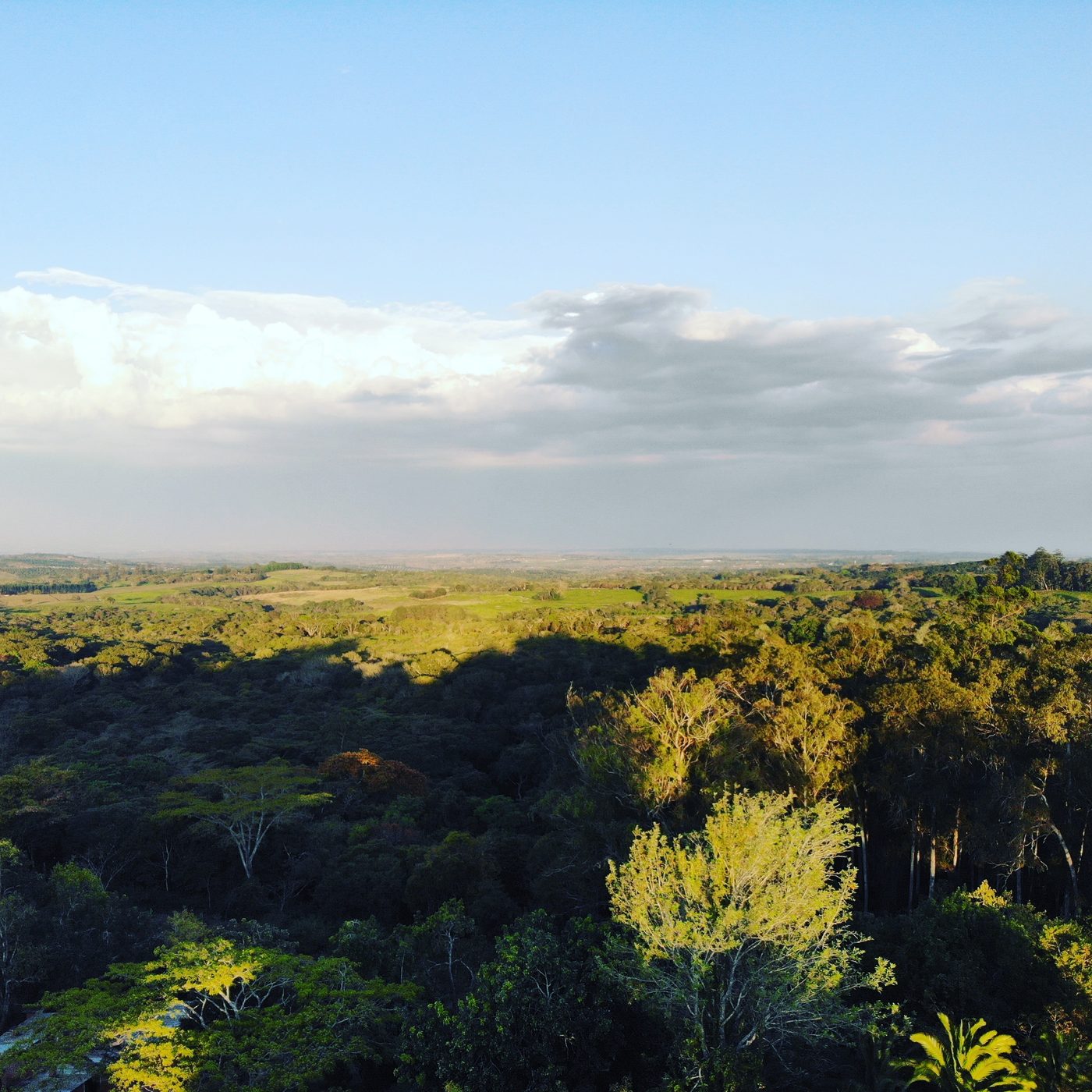
The daily cash rhythm is gentler than the briefing makes it sound. Most guests arrive with about $300–400 changed into kwacha, top up once mid-stay, and leave with a small remainder they either convert back or save for a future visit. The bigger expenses (room, dinner at the restaurant, longer transfers) go on card or are settled at the end. The cash is for everything in between: the cold beer at a tea shed, the basket of mangoes from a roadside seller, the impromptu detour fuel, the tip you didn't plan for.
A Sample Three-Day Cash Budget from a Thyolo House Host
To make this concrete, here's how I'd budget cash for a fairly relaxed three-day stay built around the estate, with one day venturing further. Numbers are in MWK, with USD equivalents in brackets at the April 2026 rate.
- Day 1 (arrival): Airport forex change of $100 ≈ 170,000 MWK. Transfer to Thyolo: 60,000–80,000 MWK (~$35–47) if using a hired driver, if using a hired driver booked directly with a transport provider. Dinner and a drink at the restaurant: paid by card at check-out, but keep 10,000 MWK for a tip. Running cash on hand: ~80,000 MWK.
- Day 2 (highland day): Garden morning at The Thyolo House. If you independently hire a guide elsewhere, budget tips separately. Coffee in Thyolo Boma: 4,000 MWK. Light snacks and a bottle of water from a local shop: 5,000 MWK. Small purchases (postcard, a packet of local tea): 10,000 MWK. Day total in cash: ~30,000 MWK ($17).
- Day 3 (Mulanje excursion): Fuel for a Mulanje drive: 50,000–70,000 MWK (~$30–40, varying with rate). Lunch at a Mulanje café: 20,000 MWK ($12). Forest entrance fee at Likhubula: 10,000 MWK. Guide tip if you hire one for a half-day: 10,000 MWK. Day total: ~110,000 MWK ($64).
Three-day rough cash requirement: about 220,000 MWK plus a buffer of 50,000 — so call it 270,000 MWK, or roughly $160. The card handles room and restaurant. The cash handles everything else. If you build that into your first ATM run (or your first proper forex change in Blantyre), you'll arrive at The Thyolo House without the small tension of "do I have enough" hovering in the background.
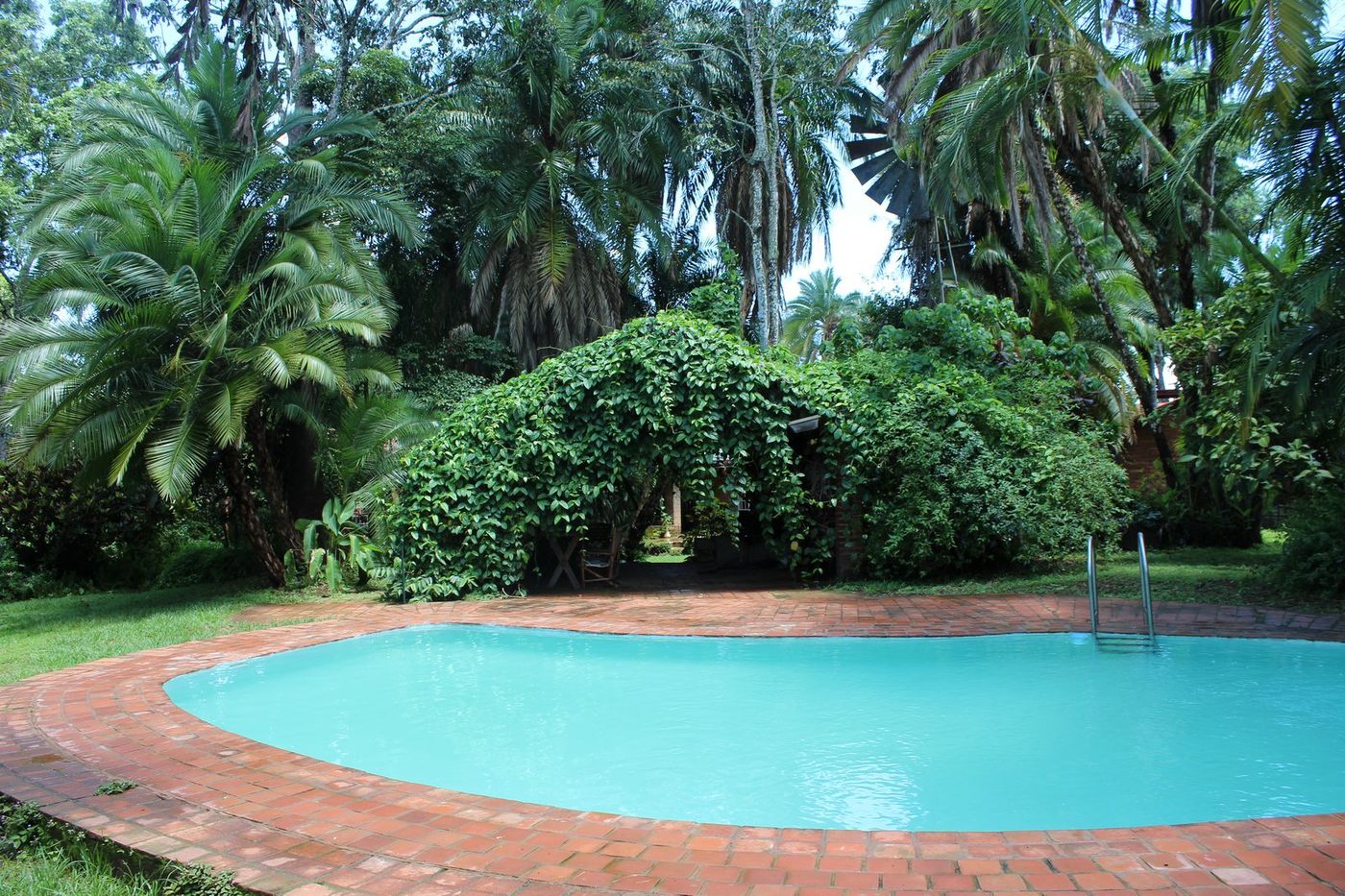
For a broader orientation to the country — climate, regions, what to pack, when to go — our complete travel guide for first-time visitors is the longer companion piece to this one. It covers the parts that come after the airport: the rhythm of the lake, the southern highlands, and the slow drives between them.
For rooms and restaurant bookings at The Thyolo House, message us on WhatsApp at +265 884 202 040 or email thethyolohouse@gmail.com. Transfers, drivers, guides, forex stops, and external activities must be arranged directly with the relevant providers.