/ By The Thyolo House
Mulanje Accommodation: A Quiet Base on the Tea Country Side
A journal from a boutique lodge in the Thyolo highlands. These are notes from our corner of Malawi — places we love, walks we've done ourselves, operators we've watched do good work. The mountain treks, tea-estate tours, and day trips are all run by independent operators in Malawi; book those directly with them. Come stay with us before or after — we'll do the room, the meal, and the quiet.
If you search for Mulanje accommodation, you will find a familiar list: a handful of lodges in Mulanje town, a couple of forest guesthouses at the trailheads, and the well-known Likhubula camp where most hikers start. It is a useful list, but it is not the whole map. There is a quieter way to base yourself near Mount Mulanje, one that uses the tea-estate side of the district as a starting point rather than the mountain villages. From a tea-highland base in Thyolo, the mountain is around forty minutes by road, the air is cooler, and the days settle into a rhythm that is harder to find at the foot of the trails.
This article is for travellers who are weighing where to stay. It is not a ranking. It is an honest look at what the tea-estate side offers, who it suits, and how to plan a visit that puts the mountain at the centre of your days without putting you in the middle of the trailhead traffic.
Why most Mulanje accommodation guides only show you half the picture
Most guides to Mulanje accommodation are written from the mountain outwards. They start at the trailhead and ask, in effect, "how close can I sleep to the start of the hike?" That is a sensible question if you are climbing to a peak hut and want to be on the trail by six in the morning. It is less useful if you are spending four or five days in the region and want to combine the mountain with tea estates, garden paths, market towns and a proper meal in the evening.
The guides usually feature the same dozen properties. Kara O Mula Country Lodge in Mulanje town is the best-known three-star, with a garden, pool, two bars and a conference centre roughly 1.5 miles from Mulanje Golf Club. AfricaWildTruck Eco Camp & Lodge, Italian-owned, sits on the eastern side of the mountain with a restaurant and small pool. Likhubula Forest Lodge, run by Chole Malawi, sits literally at the trailhead — five bedrooms and a campsite, dorm beds reported around eleven US dollars and a basic double with dinner and breakfast around seventy-two. Mount Mulanje Stopover in Peremwe and Mulanje Vista House fill the middle of the market. Game Haven Lodge near Chigumula leans more towards the Blantyre side, with a golf course and small safari operation.
It is a reasonable list. What it leaves out is the option of staying not in Mulanje town at all, but on the long ridge of tea estates that runs west of the mountain through Thyolo. From there, the mountain is close enough to be an independent visit and far enough to be quiet at night.
The tea-estate side: what staying 40 minutes from the mountain actually looks like
Drive west from Mulanje town for about forty minutes and the landscape shifts. The road climbs gently, the air loses a few degrees, and the hedgerows give way to long sweeps of clipped tea bushes. This is the Thyolo escarpment, the heart of Malawi's old tea industry. The estates here are working farms, not resorts. They were planted in the late 1800s and early 1900s and many of them are still run by families who came out three or four generations ago.
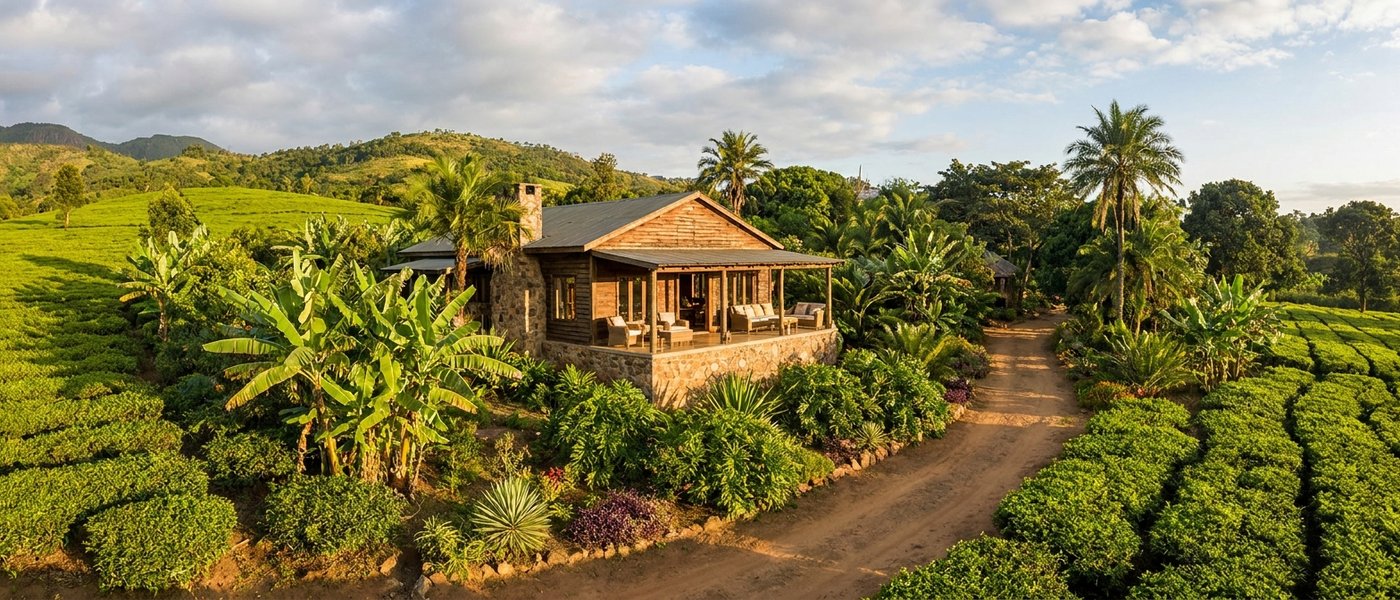
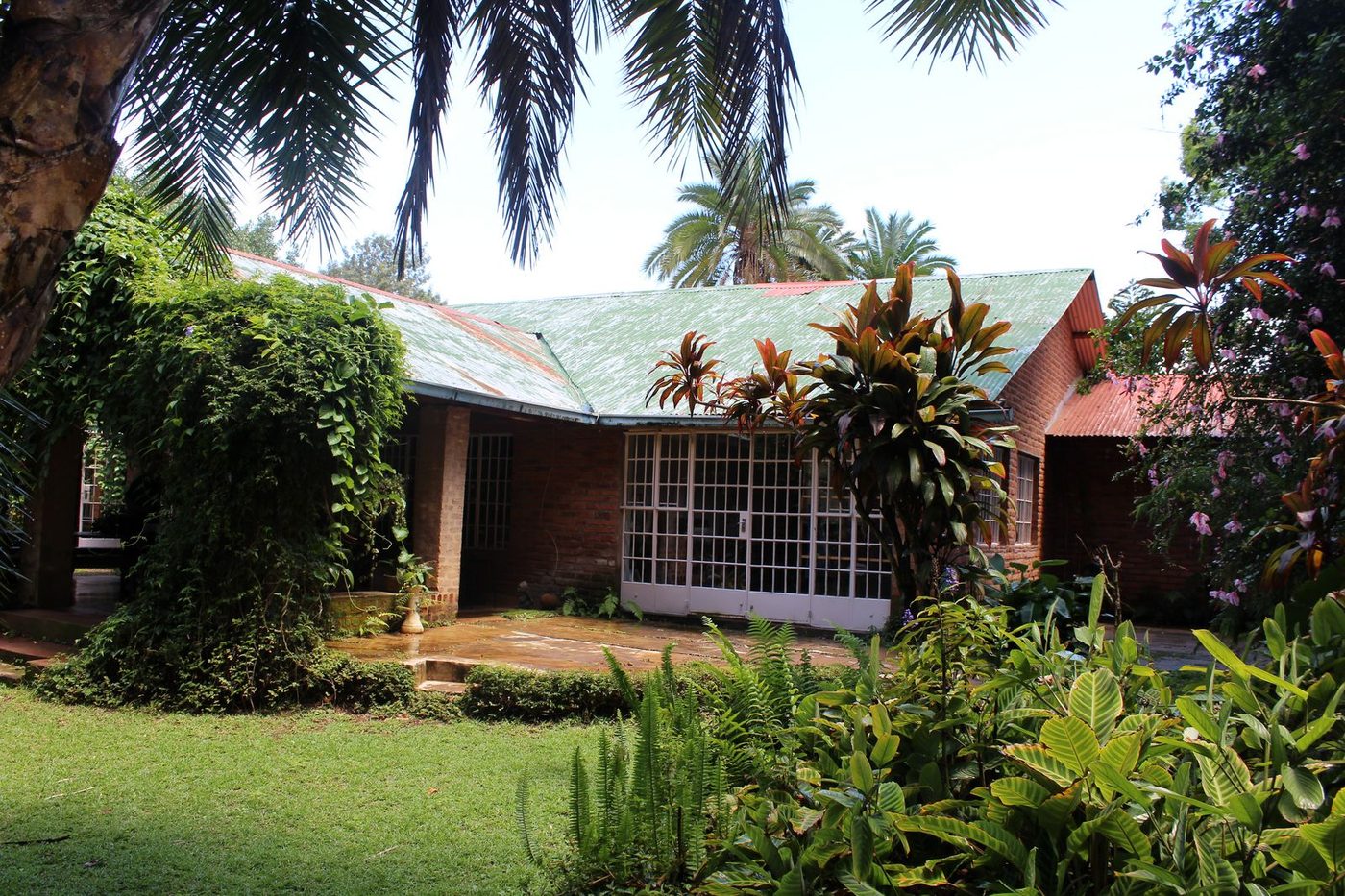
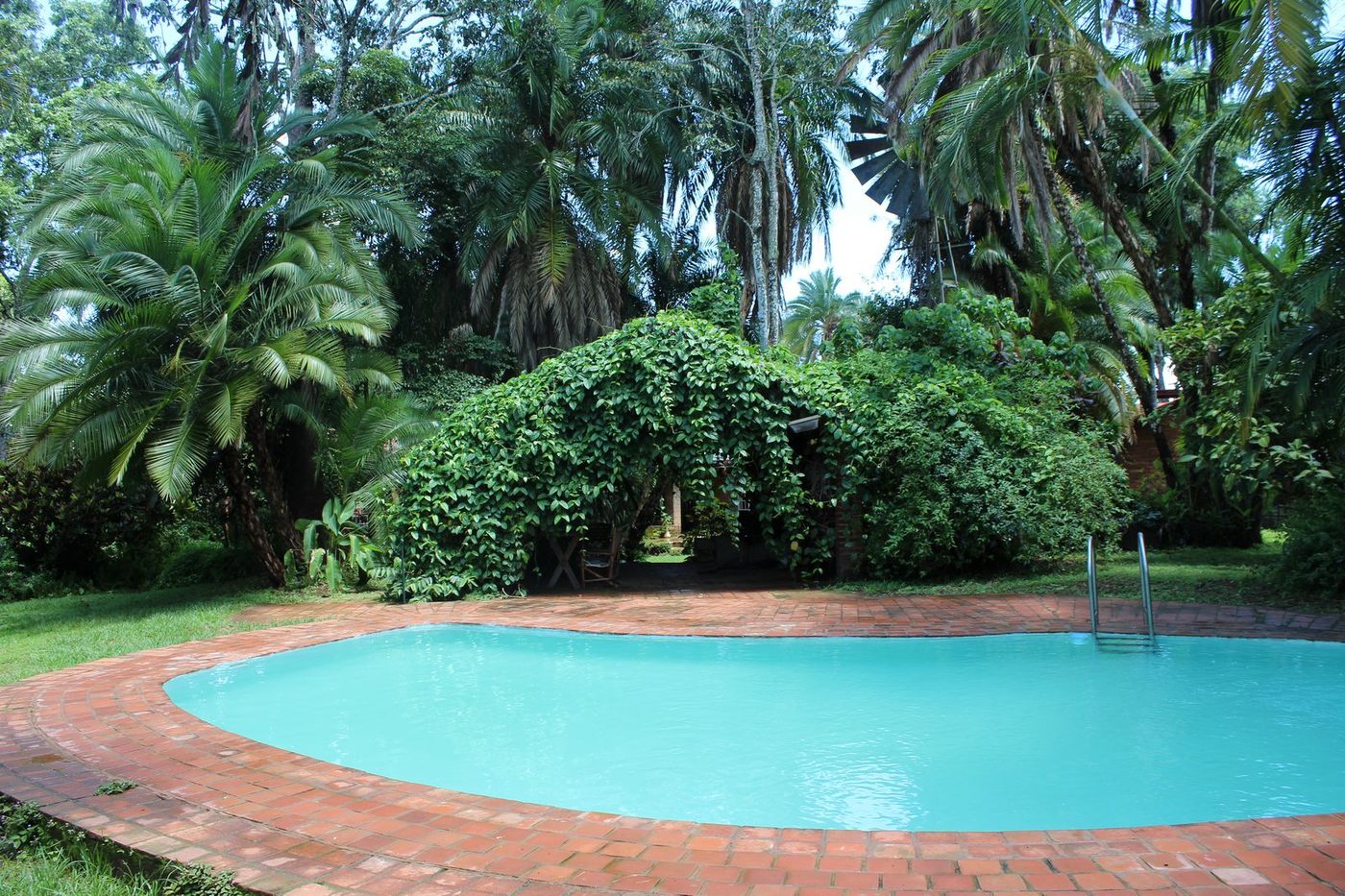
Thyolo Highlands, where the boutique rooms sit, is one of those. It is a Conforzi family property, planted with tea and macadamia, and it is the kind of place where the morning starts with mist on the fields and ends with the sound of pickers walking home along the rows. The property has been welcoming guests in a small way for years, and the formal boutique side — five rooms, a restaurant, a pool, gardens — has grown gradually around the original main house.
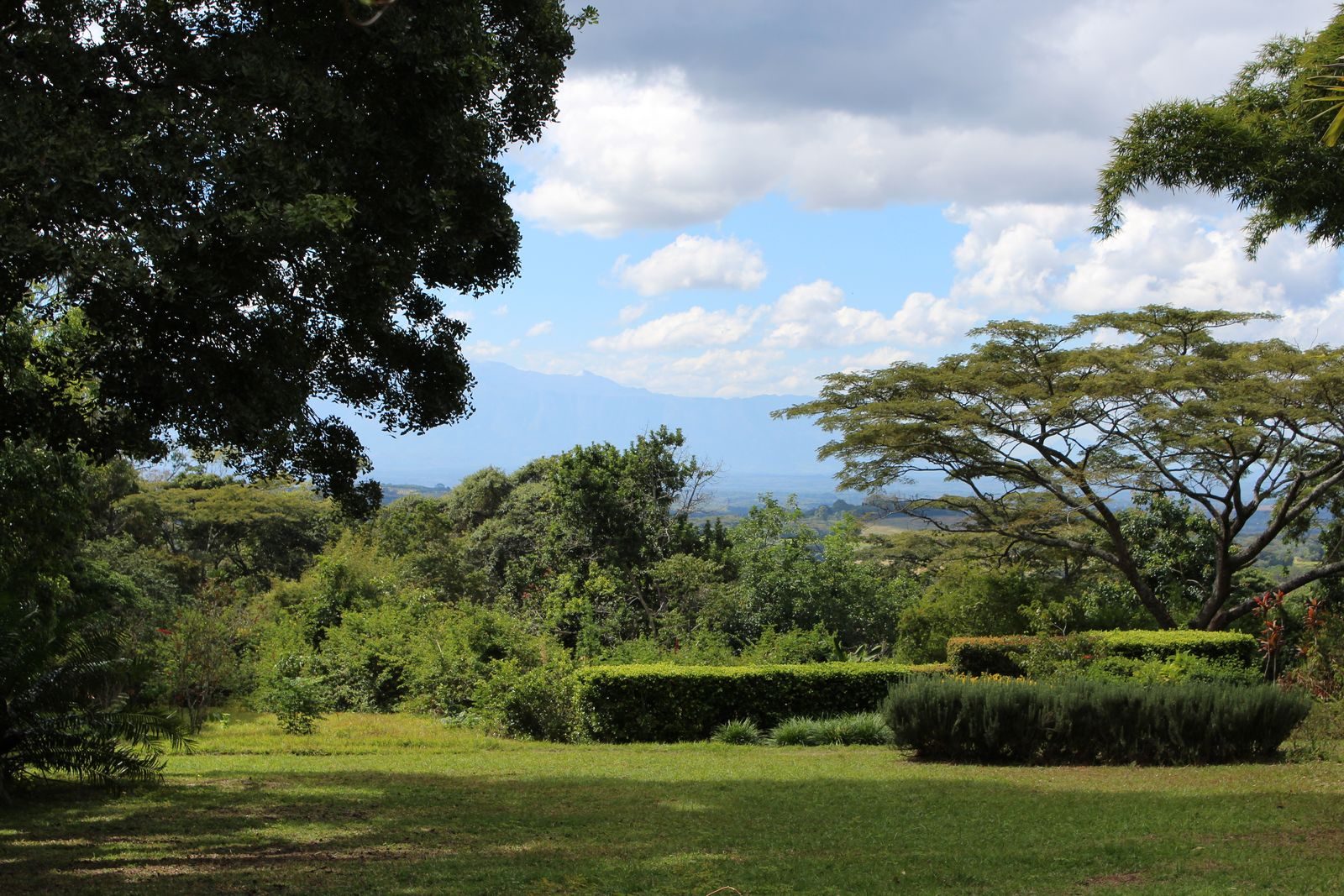
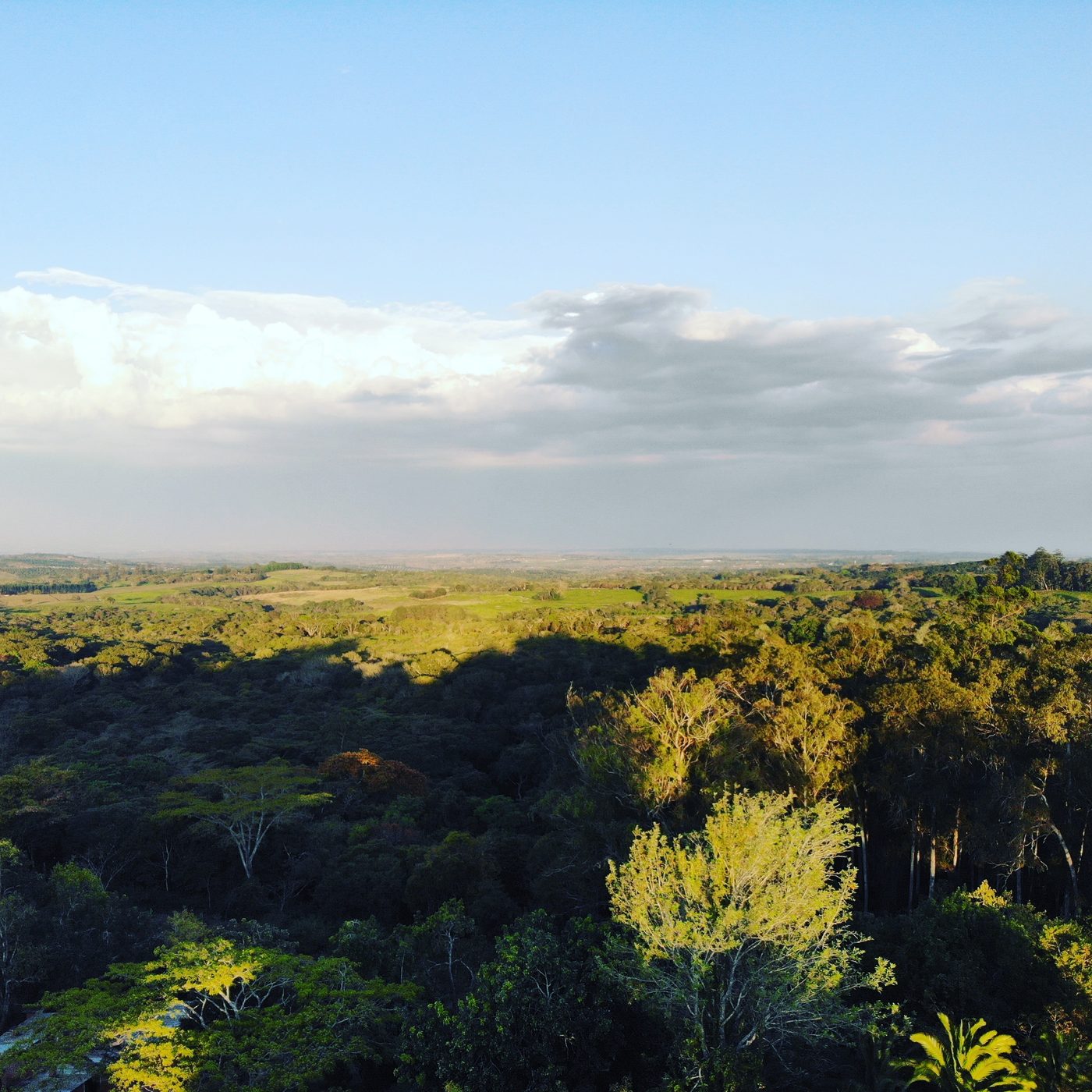
The practical experience of staying on the tea-estate side is different from staying in Mulanje town in a few specific ways. The first is altitude and temperature: Thyolo sits a little higher than the Mulanje town basin, and nights are noticeably cooler. The second is light pollution: there is almost none. On a clear night you can see the southern sky properly. The third is sound: the soundtrack is birds at dawn, distant thunder in the rains, and almost nothing else. The fourth, and probably the most important for travellers comparing options, is the proximity to the things you came for. From a Thyolo base you are forty minutes from the Mulanje trailheads, twenty minutes from Limbe, forty minutes from Blantyre's restaurants and supermarkets, and roughly an hour and a half from the Shire Valley game reserves if you stretch the day.
For a fuller comparison of all the options on this side of the country, our piece on lodges in Thyolo goes through the choices in more detail. And if you want to see how the tea-highland base stacks up against staying in Mulanje town itself, the companion guide on Mulanje accommodation: where to stay is the right place to start.
A typical day from a Thyolo base — Mulanje in the morning, tea country in the afternoon
The argument for this kind of Mulanje accommodation is best made by walking through a single day. Here is roughly how a guest of ours might spend a Thursday in May, the cool dry season.
Up at six-thirty, coffee on the verandah while the mist lifts off the tea. Breakfast at seven — eggs from the estate, fruit from the garden, bread baked that morning. In the car by eight, driving east along the M2 towards Mulanje. The road is good tarmac for most of the way, with the southern face of the mountain growing steadily in the windscreen. By nine the car is parked at Likhubula and you are on the path towards the Dziwe la Nkhalamba pools, a relatively gentle half-day walk through cedar forest and granite slabs. Arrange any mountain guide directly with the Mountain Club, MMCT, InfoMulanje, or licensed local providers — the trails fork in places where the signage is informal at best.
You are back at the car by one in the afternoon, hungry. Mulanje town has options for lunch but the better choice on a tea-highland day is to drive twenty minutes west, contact any tea-country property directly if you want an external visit, then return to your accommodation independently. By three you are reading in the shade of a mango tree, or in the pool, or asleep. By six you are on the verandah again, this time with a glass of something cold, watching the sun drop behind the western ridge.
This is not the only shape a Mulanje trip can take. If you are climbing to Chambe or Sapitwa and sleeping in the peak huts, you need to be at the trailhead at first light and a Thyolo base is the wrong choice for those nights. But for almost every other kind of visitor — day hikers, families, photographers, writers, people who came for the mountain but also for the country around it — a tea-highland base lets you do the morning on the mountain and the afternoon on something else without ever feeling rushed.
For ideas on what else to slot into those afternoons, our Mulanje independent visits guide covers the tea estates, the cultural sites and the smaller forest reserves that most visitors miss.
Who this kind of Mulanje accommodation suits (and who should stay closer to the trailhead)
It would be dishonest to pretend the tea-estate side is the right answer for everyone. Here is the honest split.
The tea-estate side suits you if:
- You are in the country for four or five nights and want to combine Mulanje with other things — tea country, food, gentler walks, rest days.
- You are travelling with family, including older parents or younger children, and want a quieter base with a pool and a proper kitchen.
- You are doing day hikes rather than multi-day climbs to the peak huts.
- You like the idea of cooking smells, garden ingredients, and a small dining room over a hotel buffet.
- You want to be able to drive to Blantyre or Limbe for an evening without it feeling like a major undertaking.
You should probably stay closer to the trailhead if:
- You are doing the classic Sapitwa climb and want to be on the trail before sunrise.
- You are travelling on a strict backpacker budget and dorm beds at Likhubula are the deciding factor.
- You want to spend three or four consecutive days on the mountain without driving in and out.
One more piece of context that increasingly matters: in July 2025, Mount Mulanje was inscribed as a UNESCO World Heritage Site under the name "Mount Mulanje Cultural Landscape," Malawi's third such site after Lake Malawi National Park and the Chongoni Rock Art. The listing recognises the cultural and spiritual significance of the mountain to the Yao, Mang'anja and Lhomwe peoples, and it protects the critically endangered Mulanje cedar along with a handful of endemics including the Mulanje dwarf gecko and the Mulanje striped-greenbul. The listing is also playing out against an ongoing controversy over a proposed bauxite mine on the Lichenya and Linje plateaus, which the Mount Mulanje Conservation Trust and a coalition of local chiefs have publicly opposed. None of this changes the experience of visiting the mountain today, but it is worth knowing that the place you are walking through is now formally a piece of world heritage.
Getting there: roads, drive times, and the Limbe–Blantyre–Thyolo–Mulanje loop
The practical geography of southern Malawi is small. Chileka International Airport in Blantyre is the gateway for almost everyone arriving from outside the region — it is about 42 miles, or 68 kilometres, from Mulanje town, and roughly 50 kilometres from Thyolo. From Chileka, you have two reasonable routes east.
The first is the direct M2 from Limbe through Thyolo and on to Mulanje. This is the road most visitors take. It is tarmac the whole way, mostly in good condition, and the drive from Limbe to a tea-highland base in Thyolo takes around forty-five minutes in a normal car. From there to Mulanje town is another forty minutes or so. If you are coming straight from the airport, plan on roughly an hour and a half to a Thyolo base, or two hours and twenty minutes to Mulanje town itself.
The second is the longer loop south through the Shire Valley, which is only worth doing if you are also visiting Majete or Lengwe. For a Mulanje-focused trip, the M2 is the right answer.
A few practical notes on driving:
- The M2 is a busy commercial road. Truck traffic between Blantyre and the Mozambican border crossings at Muloza and Marka can be heavy, particularly in the late afternoon. Plan to drive in the morning where you can.
- Fuel is reliable at the Puma and Total stations in Limbe, Thyolo town and Mulanje town. Top up in Limbe if you can — prices are usually better there.
- Self-drive is straightforward for anyone used to driving on the left. If you would rather not self-drive, book a driver directly with a transport provider before travelling.
- The cheapest months for accommodation across the region are February, May and October — the shoulder months when the rains are easing or the dry season is winding down.
What to ask before you book — rooms, food, and the practical details at The Thyolo House
Whether you stay at The Thyolo House or somewhere else on the tea-estate side, there are a few questions worth asking any property before you confirm. The list below is what we get asked most often, and the honest answers for our own place.
How many rooms, and what are they like?
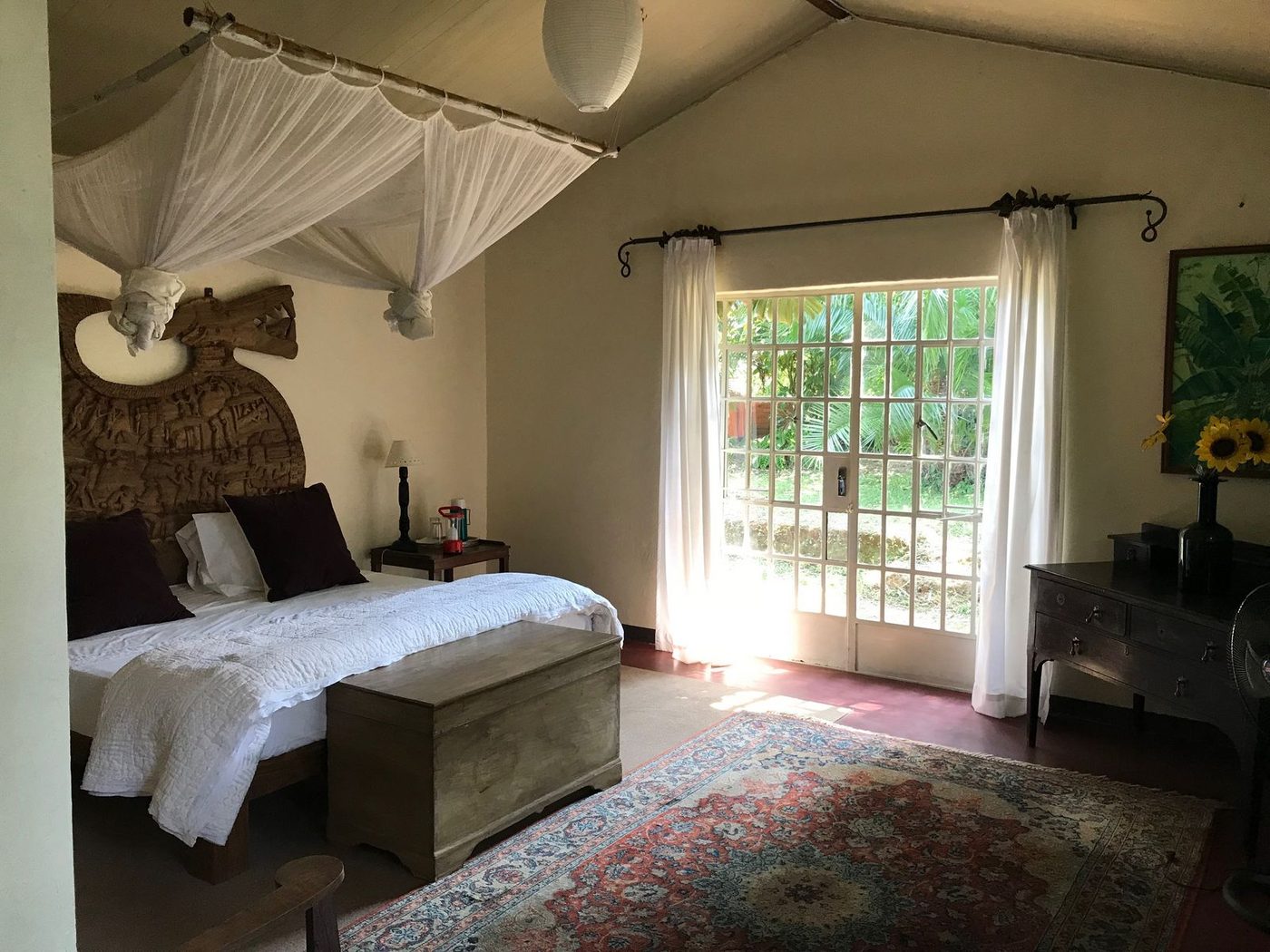
The Thyolo House has five rooms. They are deliberately different from each other — a heritage suite in the original main house, two pool cottages, and two garden rooms — because the building grew over decades and we have kept the character of each one. All are ensuite, all have proper beds and good bedding, and none of them feel like hotel rooms.
What is the food like?
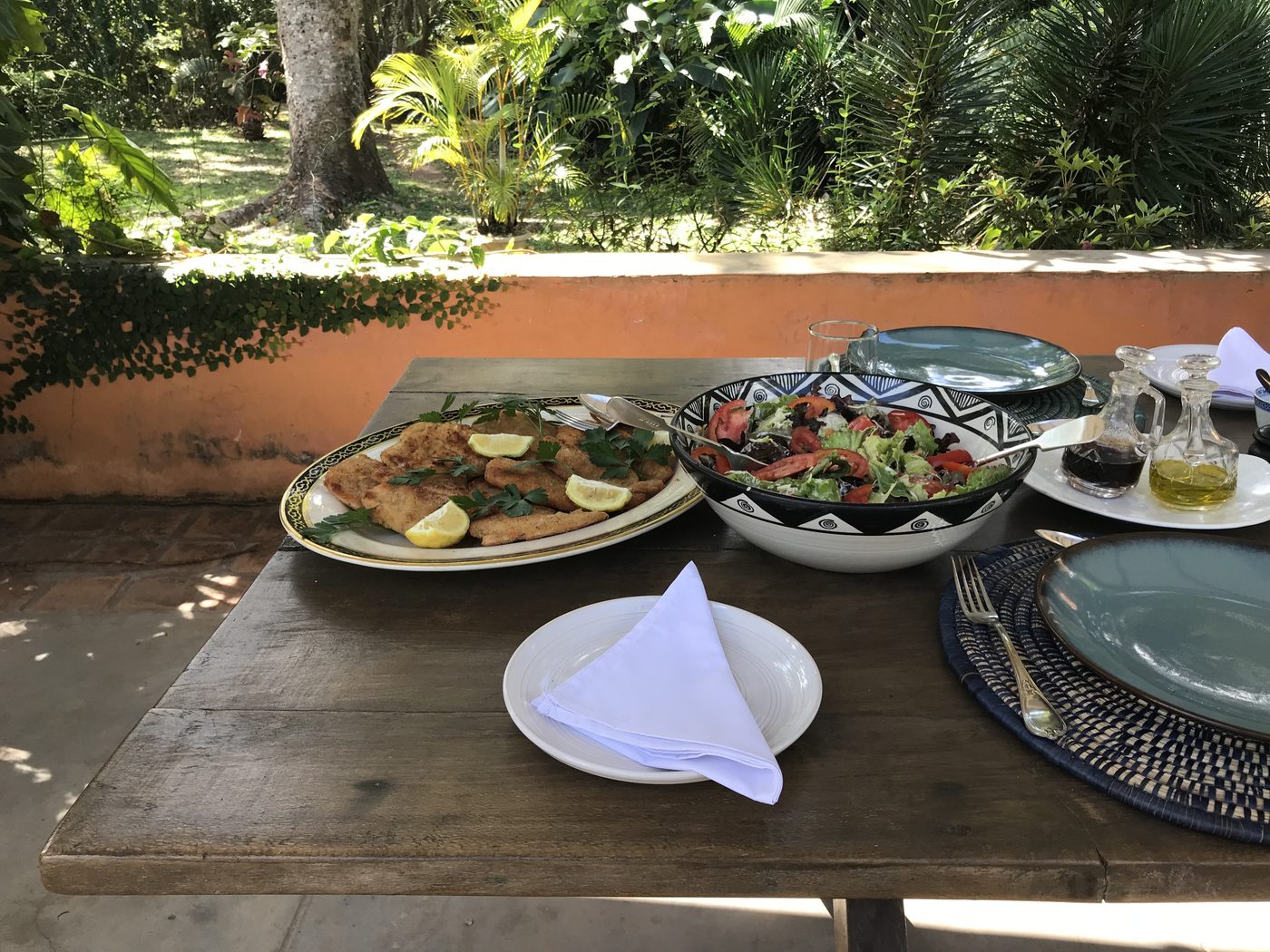
The kitchen is Italian fusion, run with ingredients from the house garden where possible. The owner, Flavia Conforzi, is an Italian-Malawian artist and the menu reflects both sides of that. Expect handmade pasta, slow-cooked meats, garden vegetables, and a short, well-chosen wine list. Breakfast is included; lunch and dinner are à la carte and served either in the restaurant or outdoors depending on weather and mood.
What is there to do on the property itself?
The swimming pool, garden spaces, restaurant, and occasional art workshops when Flavia is running them. Forest access, estate walks, guides, drivers, tea activities, and third-party activities are not provided or arranged by The Thyolo House. The estate is large enough that you can spend a full day here without leaving, which matters more on rest days between hikes than you might think.
How do I get in touch?
The simplest way is to message us on WhatsApp at +265 884 202 040, or email thethyolohouse@gmail.com. We answer most messages within a few hours during daylight in Malawi (CAT, UTC+2). Tell us when you want to come, how many people, and what kind of trip you have in mind — we can confirm room, restaurant, pool, garden, and on-site availability before you arrive. External routes, transport, guides, and activities should be arranged directly with the relevant providers.
None of this is meant to talk you out of staying in Mulanje town if that suits your visit. There are good lodges there and good reasons to choose them. But if you have been reading the standard Mulanje accommodation lists and feeling that something is missing — a quieter base, cooler nights, a kitchen worth coming home to, and a quiet highland property for garden time in the afternoons — the tea-estate side is the part of the map most guides leave out. It is forty minutes from the mountain, and a long way from anywhere else.