/ By The Thyolo House
7 Best Mulanje Day Trips: Waterfalls, Tea Estates & Forest Trails
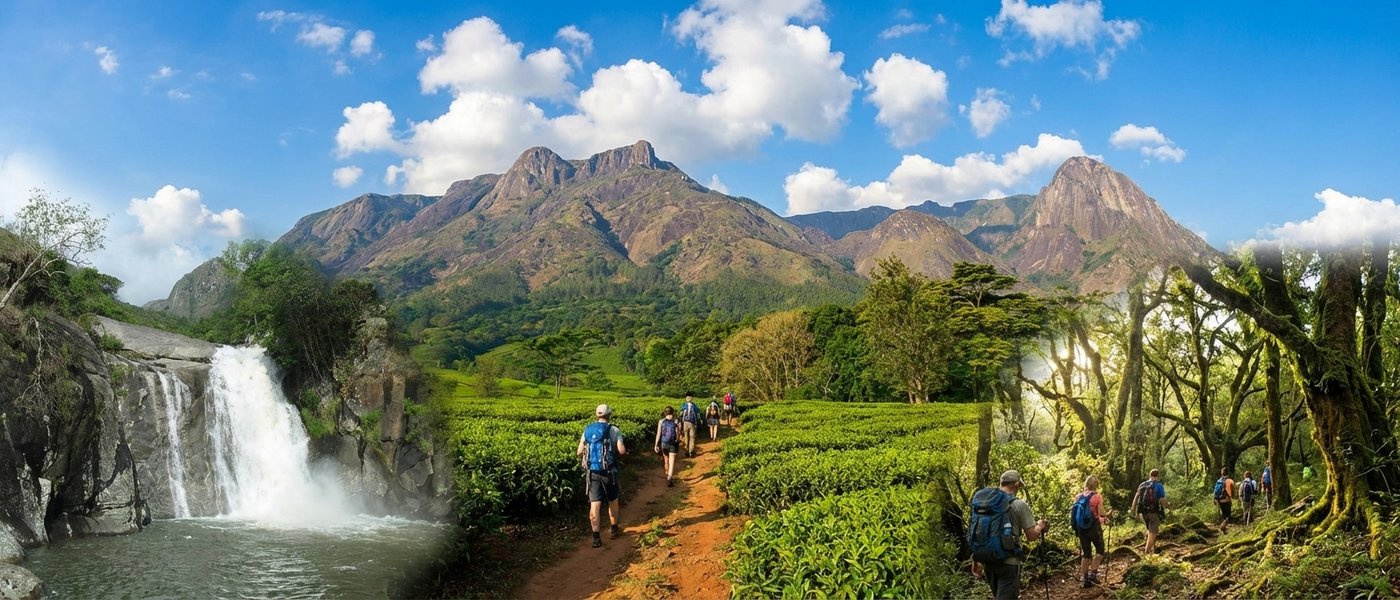
Mount Mulanje dominates the skyline of southern Malawi — a granite massif rising to 3,002 metres, crowned with 20 peaks and wrapped in mist for half the year. It earned its UNESCO World Heritage inscription in July 2025, and the attention is well deserved. But most visitors arrive, hike, and leave without realising that the lowlands around the mountain offer some of the best Mulanje day trips in the country. Waterfalls you can swim in, century-old tea plantations, indigenous forests sheltering rare birds, and a restaurant serving handmade pasta on a colonial estate — all within an hour's drive of Mulanje Boma.
We live in these highlands, and we've driven every one of these routes. This guide covers seven day trips radiating from Mulanje town, with honest distances, approximate costs, and the practical details you actually need. Whether you're spending a week in the region or just passing through on your way between Blantyre and the Mozambique border, at least a couple of these deserve a place on your itinerary.
Why Mulanje Is the Perfect Base for Day Trips in Southern Malawi
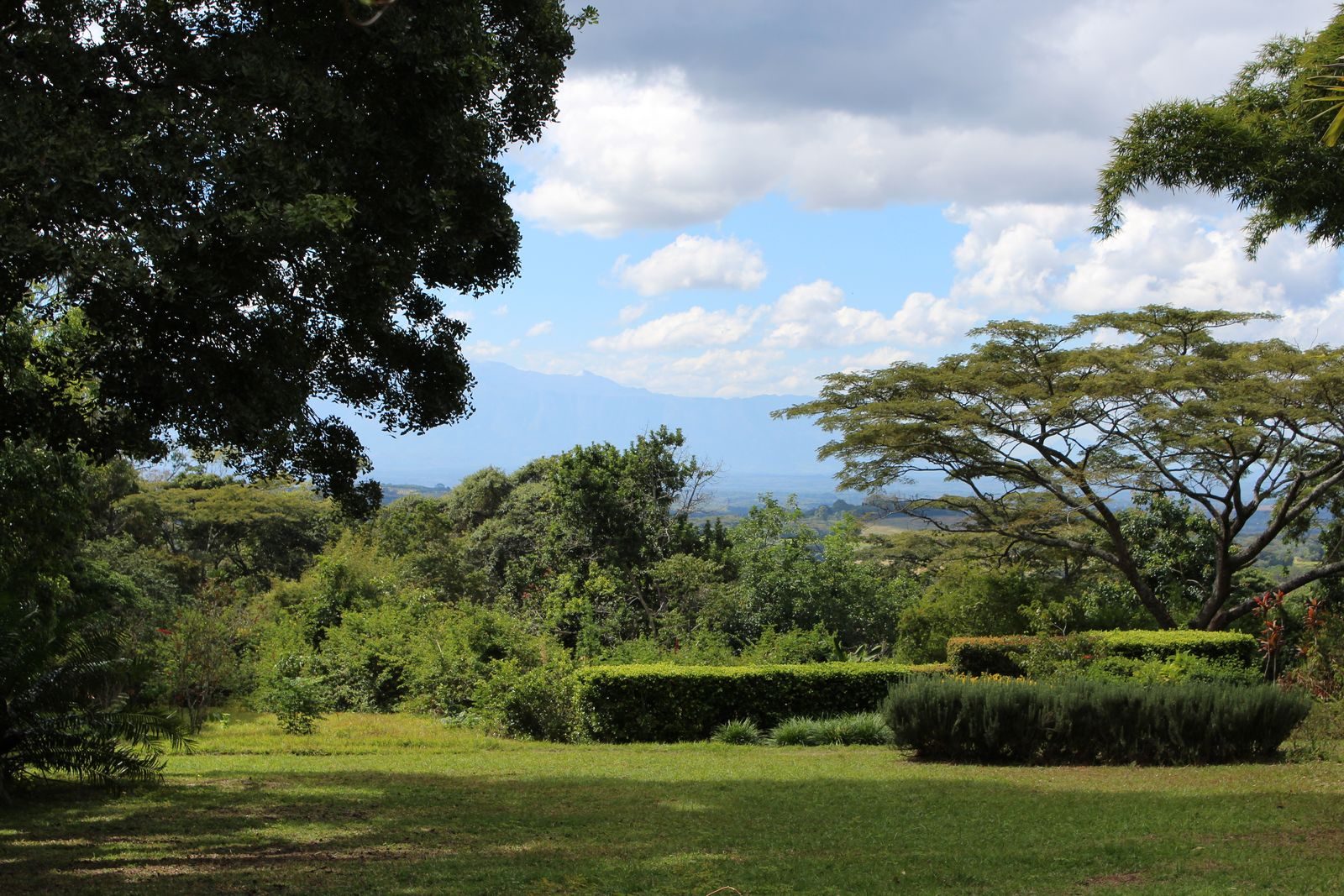
Mulanje town sits at a crossroads — geographically and in terms of what it gives you access to. The mountain itself draws hikers from across Africa, but the town is also within striking distance of Thyolo's tea country, the Shire Highlands, and Blantyre. The roads heading west, south, and north from Mulanje Boma each lead to a different kind of landscape, and none of the trips on this list takes more than 90 minutes of driving.
The practical advantage of basing yourself here — or nearby in Thyolo — is variety. You can spend a morning swimming beneath a waterfall, an afternoon walking through tea fields, and an evening eating Italian food surrounded by tropical gardens, all without covering enormous distances. The region is compact enough to explore thoroughly in three or four days, but interesting enough that a full week doesn't feel like a stretch.
The climate helps, too. At 600–1,000 metres of elevation, the lowlands around Mulanje are warm but rarely oppressive, and the highland areas are genuinely cool — especially in the dry season from May to October, when mornings can dip below 15°C. It's comfortable walking weather for most of the year.
1. Likabula Falls — The Easiest Waterfall Walk in the Region (4 km from Mulanje Boma)
If you only have time for one Mulanje day trip, make it this one. Likabula Falls sits at the foot of Mount Mulanje, just 4 kilometres from town, and the walk in is one of the most accessible hikes in southern Malawi.
The trail starts at the Likhubula park gate and follows a shaded forest path for roughly 4 kilometres each way — about 8 km round trip in total. Count on three hours for the return walk, including time to swim. The path is mostly flat and well-trodden, suitable for beginners and families with older children. You'll pass through indigenous woodland with patches of the endemic Mulanje cedar (Widdringtonia whytei), a conifer found nowhere else on earth and one of the reasons the mountain earned its UNESCO status.
What You'll Find at the Falls
The main waterfall drops into a large, deep natural pool known locally as Dziwe la Nkhalamba — the Pool of the Old People. The name comes from local folklore, and the swimming is excellent. The water is cool and clear, the rock pool is deep enough to dive in from the edges, and the forested backdrop makes it feel far more remote than it actually is.
Beyond the main falls, a secondary cascade creates its own smaller pool — quieter and usually less crowded. If you have the energy, continue another 30–60 minutes upstream along the Chapaluka tributary to reach an even more secluded swimming spot that most visitors never find.
Practical Details
- Entry fee: MK 1,000 per person, plus MK 500 for vehicle entry
- Guides: Unofficial guides approach aggressively at the gate. The official rate is $25/day, which is excessive for a three-hour walk on a marked trail. Negotiate MK 1,000 if you want a guide, or walk independently — the path is straightforward
- Parking: You can drive partway up in a non-4WD vehicle to the first tributary crossing, though the track is rough and it's at your own risk
- Best time: Weekday mornings. The falls get very crowded on weekends with local visitors
- Bring: Swimwear, a towel, water, and a packed lunch. There are no facilities at the falls
For the full trail breakdown, swimming tips, and suggested itinerary, see our complete guide to Likabula Falls.
2. Likabula Forest Reserve — Birdwatching and Indigenous Woodland (6 km)
The Likabula Forest Reserve covers the lower slopes of Mount Mulanje and protects some of the last remaining patches of mid-altitude rainforest in the region. It's separate from the waterfall walk — though the two can be combined into a full day — and the atmosphere here is different. This is dense, canopied forest, cool and quiet, where the light filters green through the trees and the birdsong is constant.
The forest is home to several species that birders travel long distances to see. White-winged apalis, bar-tailed trogon, and olive-headed weaver are all recorded here, along with butterflies that thrive in the forest-edge habitat. Even if birding isn't your primary interest, the walk through the reserve is beautiful — massive hardwood trees draped with moss, ferns growing from every surface, and the feeling of being wrapped in something ancient and undisturbed.
Planning Your Visit
The reserve is best explored with a local guide from the Likhubula Forestry Office. Walks typically last one to two hours and follow established trails. The terrain is uneven in places, so sturdy shoes are essential. Early morning — between 6:00 and 8:00 AM — is the optimal time for birding, when species are most active and the forest is at its quietest.
Combine the forest walk with a morning swim at Likabula Falls for one of the best full-day Mulanje day trips available. You'll be back in town by early afternoon with time to spare.
3. The Thyolo Tea Plantations — A Drive Through Malawi's Green Carpet (35 km)
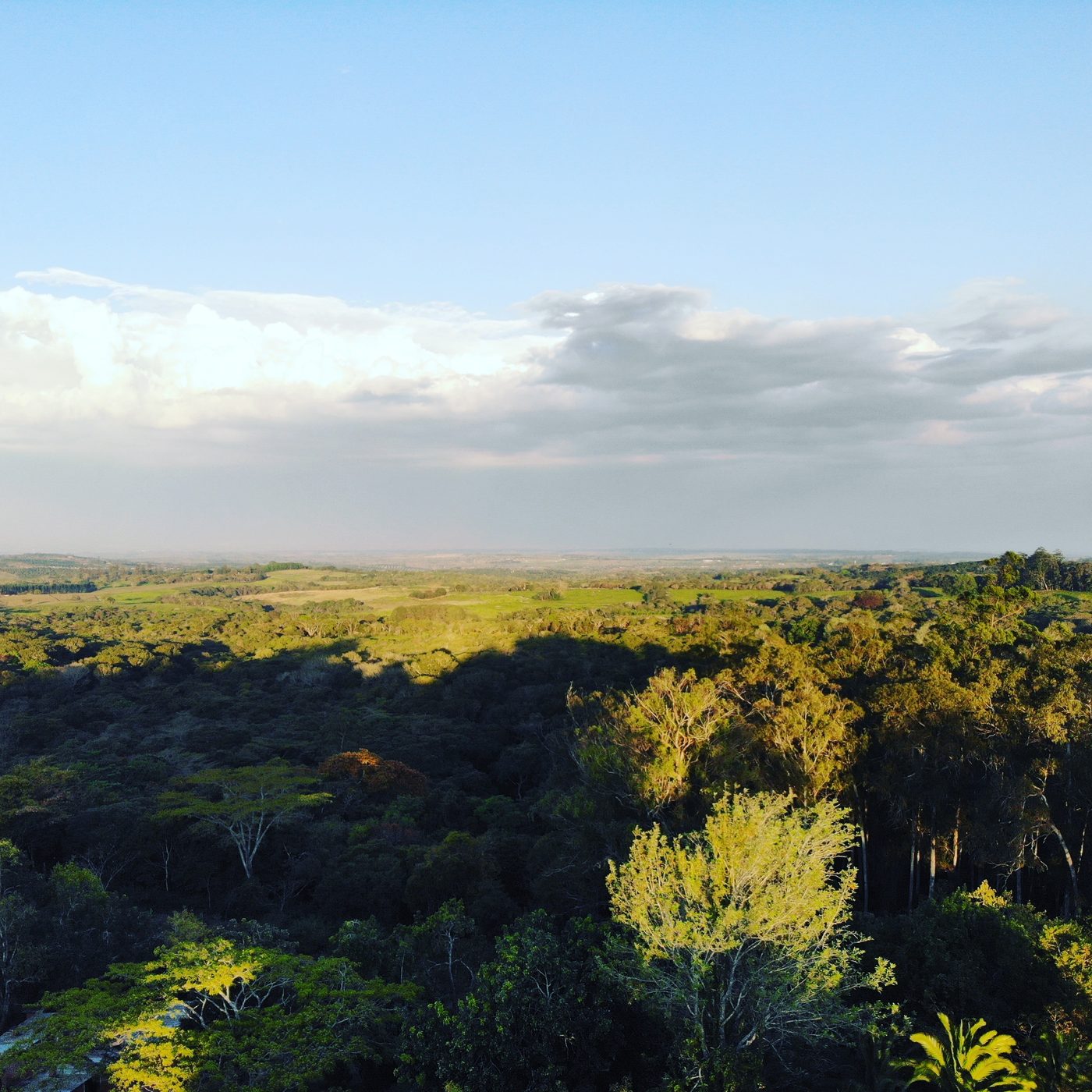
Head west from Mulanje towards Thyolo town and the landscape transforms. The scrubby lowlands give way to rolling hills blanketed in tea — thousands of hectares of Camellia sinensis clipped to waist height, covering the hillsides like a bright green quilt. It's one of the most photogenic drives in southern Malawi, and it takes less than an hour from Mulanje Boma.
Tea has been grown in Thyolo district since 1908, making it one of the oldest tea-producing regions on the African continent. The estates here — Satemwa, Conforzi, Lujeri — have histories that span more than a century, and the landscape reflects that continuity. Old shade trees tower over neat rows of tea bushes, colonial-era bungalows sit on hillside viewpoints, and the air smells of damp earth and fermenting leaves when you drive past a processing factory.
What to Do
You can simply drive through and soak up the scenery — the road between Mulanje and Thyolo passes directly through working plantations. But to get the most from the visit, stop at one of the estates for a guided tour. Satemwa Tea Estate, established in 1923, offers factory tours and tea tastings where you'll sample white, green, and black teas all grown on the same property. Book in advance — they don't take walk-ins.
For a deeper look at what Thyolo's tea country has to offer, including practical booking details and a full history of the region's plantations, read our guide to Thyolo tea estate tours.
4. Lunch at The Thyolo House on Conforzi Tea Estate — Italian Fusion Meets Garden-to-Table (40 km)
If you're going to stop for a meal on any of these Mulanje day trips, make it this one. The Thyolo House sits on the historic Conforzi Tea Estate — one of the few Italian-founded plantations in Malawi's tea country — and the restaurant here is unlike anything else you'll find in the region.
Flavia Conforzi, the fourth-generation Italian-Malawian owner, runs a kitchen that draws on both her heritage and her garden. The menu changes with the seasons, but expect handmade pasta, wood-fired dishes, fresh salads built from ingredients picked that morning, and desserts that have earned a quiet but devoted following among Blantyre's food-conscious travellers. This is garden-to-table dining in the most literal sense — many of the herbs, vegetables, and fruits come from the estate's own terraced gardens.
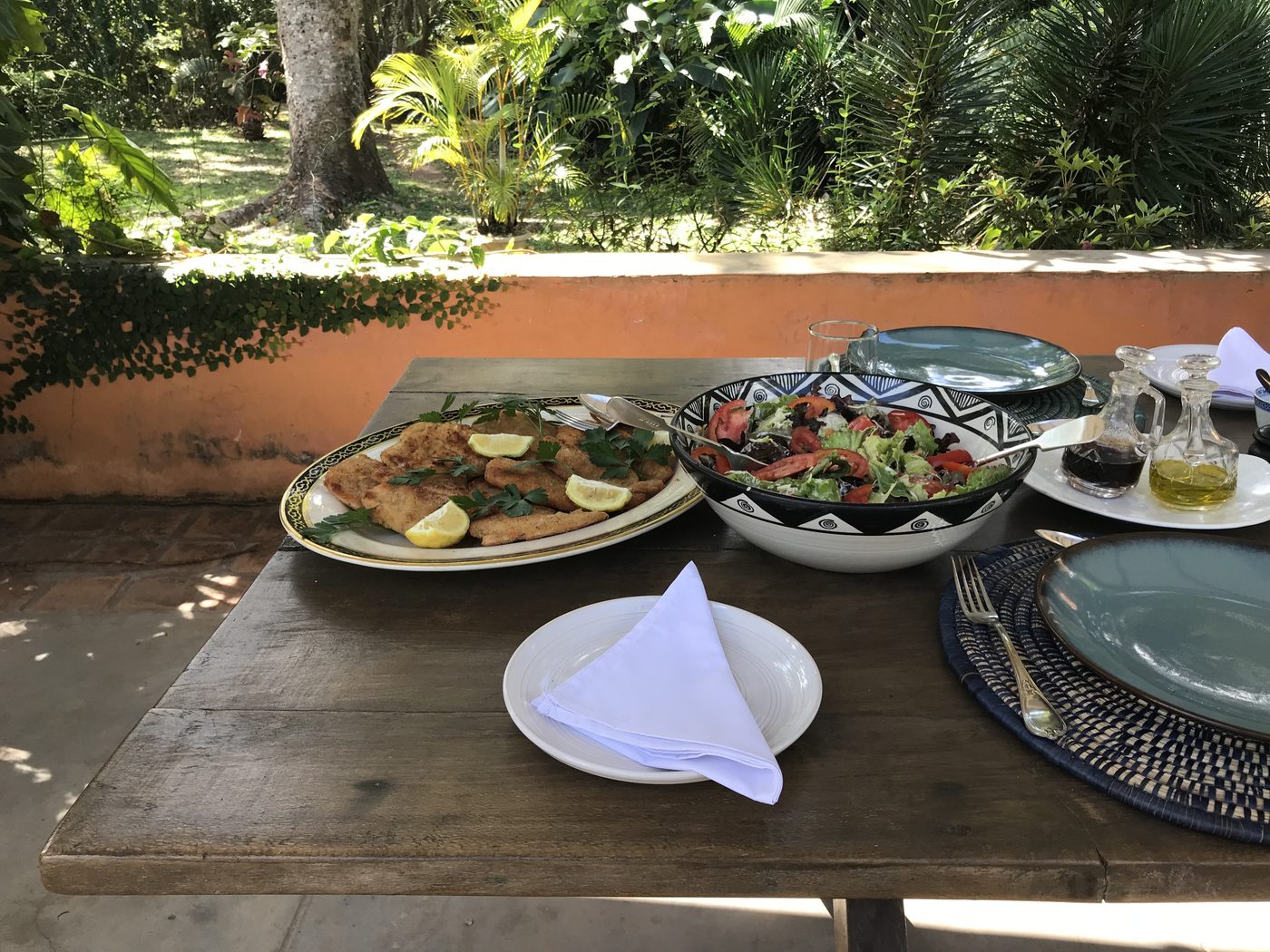
Beyond the food, the setting is worth the drive in itself. The property is wrapped in bougainvillea and tropical plants, with a swimming pool tucked into the gardens and views over the surrounding tea fields. Flavia is also a practising artist, and her work fills the walls — paintings and sculptures that blend African and European influences in ways that mirror the food on the table.
Making It More Than Lunch
A lunch stop at The Thyolo House pairs perfectly with a morning at Satemwa or a drive through the tea plantations. If you have more time, the estate offers tea plantation walks, indigenous forest trails, and art workshops — all accessible directly from the property. And if the afternoon stretches long enough, you might find it hard to leave. The five boutique rooms are there for exactly that reason.
Getting there: 40 km west of Mulanje Boma, roughly 50 minutes by car on tarmac and graded dirt roads. No 4WD required.
5. Lujeri Tea Estate Tour — See How Malawi's Tea Gets From Bush to Cup (18 km)
Lujeri is the oldest tea plantation in the Mulanje area and one of the region's most significant producers. The estate processes over 1.5 million kilograms of CTC black tea per year, much of it sourced from the Sukambizi Association Trust — a network of 5,700 smallholder tea farmers who grow on the land surrounding the plantation. It's a different model from the private estates in Thyolo, and a visit here gives you insight into the economic engine that supports thousands of families across the district.
What You'll See
Lujeri offers estate tours that cover the full production cycle — from the smallholder plots where tea is hand-picked, through the weighing and transport process, to the factory floor where withering, rolling, oxidation, and drying happen in a matter of hours. The scale is impressive. During peak season (December to March), the factory runs at full capacity, and the sight of fresh green leaf being processed into the familiar brown granules is genuinely fascinating.
The estate also has a lodge on-site for visitors who want to stay overnight, though most people visit as a half-day trip from Mulanje or Thyolo.
Practical Details
- Distance from Mulanje Boma: 18 km
- Duration: 2–3 hours for a full tour
- Booking: Arrange in advance through the estate office
- Best combined with: A morning at Likabula Falls or an afternoon drive through the Thyolo tea country
6. Mulanje Mountain Forest Reserve — Lower Slopes Without the Summit Commitment (8 km)
The full traverse of Mount Mulanje is a multi-day expedition — two to five days depending on your route, fitness, and ambition. But you don't need to summit Sapitwa to experience the mountain. The Mulanje Mountain Forest Reserve protects the lower slopes, and a day hike here gives you a taste of the massif's extraordinary landscape without the summit commitment.
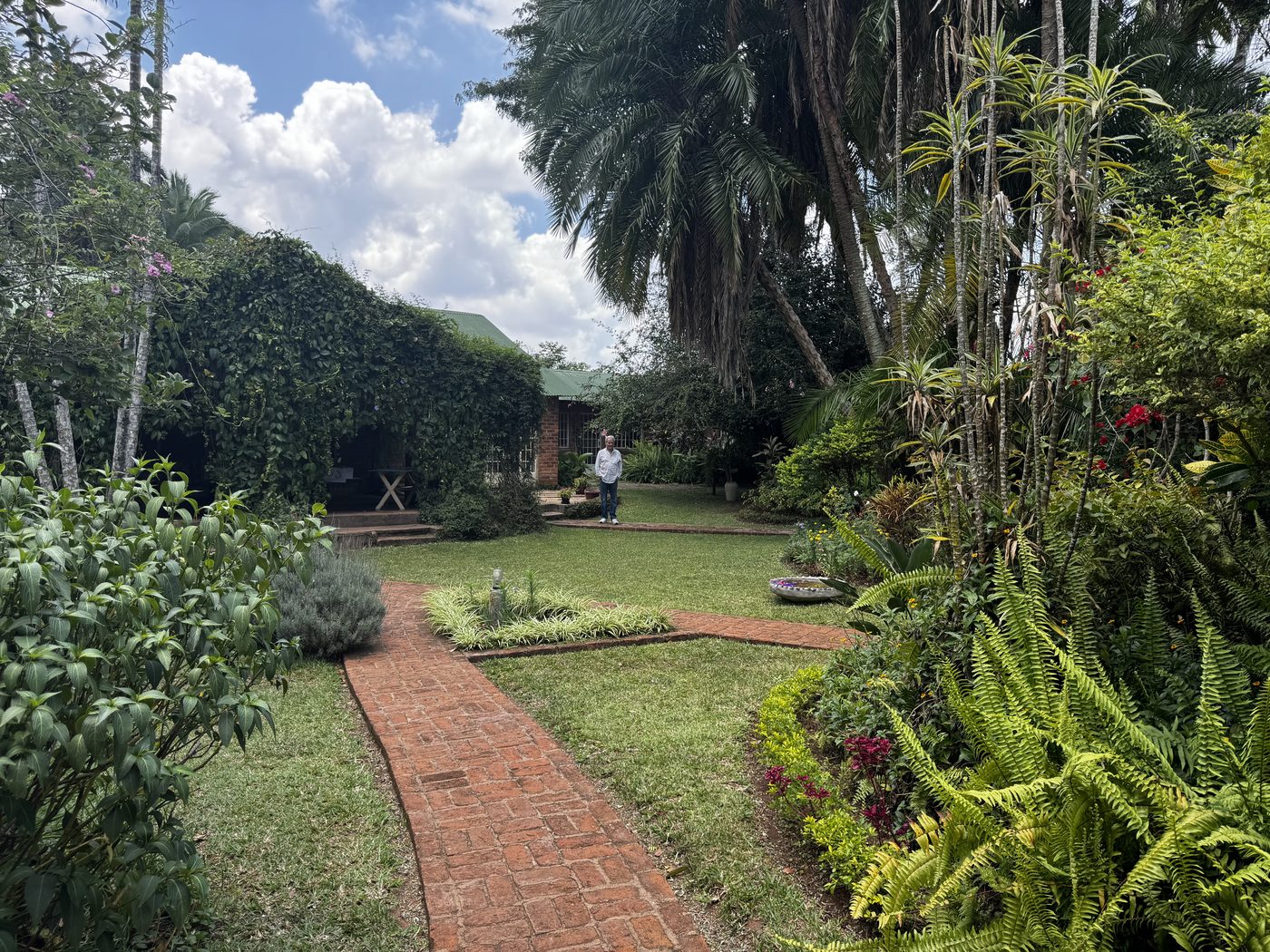
From the Likhubula entrance — 8 km from Mulanje Boma — several trails lead upward through zones of vegetation that change dramatically with altitude. The lower slopes are covered in dense indigenous forest: Mulanje cedar, yellowwood, and a tangle of ferns and epiphytes that create a closed canopy overhead. As you climb, the forest thins and the views open up across the plains below. On a clear morning, you can see the tea estates of Thyolo to the west and the Mozambique border to the east.
Routes for Day Hikers
The most popular day hike follows the path towards the Lichenya Plateau, turning back before the steep ascent to the huts. This gives you roughly four to five hours of walking through mixed forest and grassland, with plenty of opportunities to spot wildlife. Klipspringer antelope pick their way across rocky outcrops, black eagles ride thermals above the cliffs, and white-necked ravens circle the upper slopes.
Hiring a guide from the Likhubula Forestry Office is strongly recommended — the trails are less clearly marked than the waterfall walk, and the guides know the mountain's moods. Conditions can change quickly, with mist rolling in even on apparently clear mornings.
Fees
- Entry: MK 1,000 per person
- Vehicle: MK 500 entry
- Guide: Negotiate at the forestry office — expect MK 2,000–5,000 depending on route length
For trail maps, hut information, and multi-day itineraries, see our Mulanje accommodation and hiking guide.
7. Blantyre and Limbe — Markets, Museums, and City Life (70 km)
It might seem counterintuitive to list a city as a day trip from the mountains, but if you've been spending time in rural Mulanje and Thyolo, a day in Blantyre offers a welcome change of pace. Malawi's commercial capital is 70 km northwest of Mulanje — about 90 minutes by car — and it packs more into a small area than most visitors expect.
What to See
Limbe Market is the best produce market in southern Malawi. Sprawling, colourful, and unapologetically local, it's where you'll find everything from dried fish and chillies to chitenge fabric and hand-carved wooden utensils. Go on a Saturday for the full experience.
The Museum of Malawi in Blantyre has a small but well-curated collection covering the country's natural history, colonial period, and independence movement. It won't take more than an hour, but it adds useful context to everything you've been seeing in the highlands.
St Michael and All Angels Church — built in 1891 by Scottish missionaries using only local materials and no architectural plans — is one of the most remarkable buildings in Central Africa. The brickwork alone is worth the visit.
Mandala House, the oldest building in Malawi (1882), now houses a café and bookshop. It's a good place to pick up maps, local history books, and gifts.
Practical Details
- Distance from Mulanje Boma: 70 km
- Drive time: 90 minutes
- Fuel: Fill up in Blantyre — it has the most reliable fuel supply in the south
- Combine with: A lunch stop at The Thyolo House on the way back. The Conforzi Estate sits roughly halfway between Blantyre and Mulanje, making it a natural breaking point
How to Plan Your Mulanje Day Trips: Distances, Timing, and What to Pack
The beauty of these seven trips is that they cluster neatly around Mulanje and Thyolo, making it easy to combine two or three in a single day or spread them across a relaxed long weekend. Here's a quick reference:
| Day Trip | Distance from Mulanje | Time Needed | Difficulty |
|---|---|---|---|
| Likabula Falls | 4 km | 3 hours | Easy |
| Likabula Forest Reserve | 6 km | 1–2 hours | Easy–Moderate |
| Thyolo Tea Plantations | 35 km | Half day | Easy (driving) |
| The Thyolo House lunch | 40 km | 2–3 hours | Easy |
| Lujeri Tea Estate | 18 km | 2–3 hours | Easy |
| Mountain Forest Reserve | 8 km | 4–5 hours | Moderate |
| Blantyre & Limbe | 70 km | Full day | Easy |
Suggested Combinations
- Morning waterfall, afternoon tea: Likabula Falls in the morning, drive to Thyolo for a late lunch at The Thyolo House, and tour Satemwa Estate in the afternoon
- Forest and factory: Likabula Forest Reserve at dawn for birding, then Lujeri Tea Estate for a factory tour before lunch
- City and countryside: Morning in Blantyre and Limbe, then lunch at The Thyolo House on the way back to Mulanje — the estate sits right on the route
What to Pack
- Sturdy walking shoes — trails are uneven and can be muddy, even in the dry season
- A light rain jacket — highland mist and sudden showers are common year-round
- Sunscreen and a hat for open plantation walks and the mountain slopes
- Swimwear and a towel for Likabula Falls
- Binoculars for birding and mountain viewpoints
- Cash in Malawian Kwacha — park fees, guides, and markets are cash only
- A warm layer for evenings — temperatures drop noticeably after sunset at altitude
- Plenty of water — there are no reliable refill points on most trails
Getting Around
You'll need your own vehicle or a hired driver for most of these trips. Public transport connects Mulanje to Blantyre via minibus, but the tea estates, forest reserves, and trailheads are not served by regular transport. The roads between Mulanje and Thyolo are mostly tarmac with some graded dirt sections. A 4WD is not necessary for any of these day trips in the dry season, though it's helpful for the track up to Likhubula in the rains.
Where to Stay Between Day Trips
If you're planning to spend several days exploring these Mulanje day trips, where you sleep matters. The two main options are Mulanje town itself or the Thyolo tea country, and each has advantages depending on your priorities.
For mountain access: Stay in Mulanje. Basic guesthouses and the Mulanje Golf Club offer affordable rooms within walking distance of the Likhubula trailhead. Facilities are modest but functional.
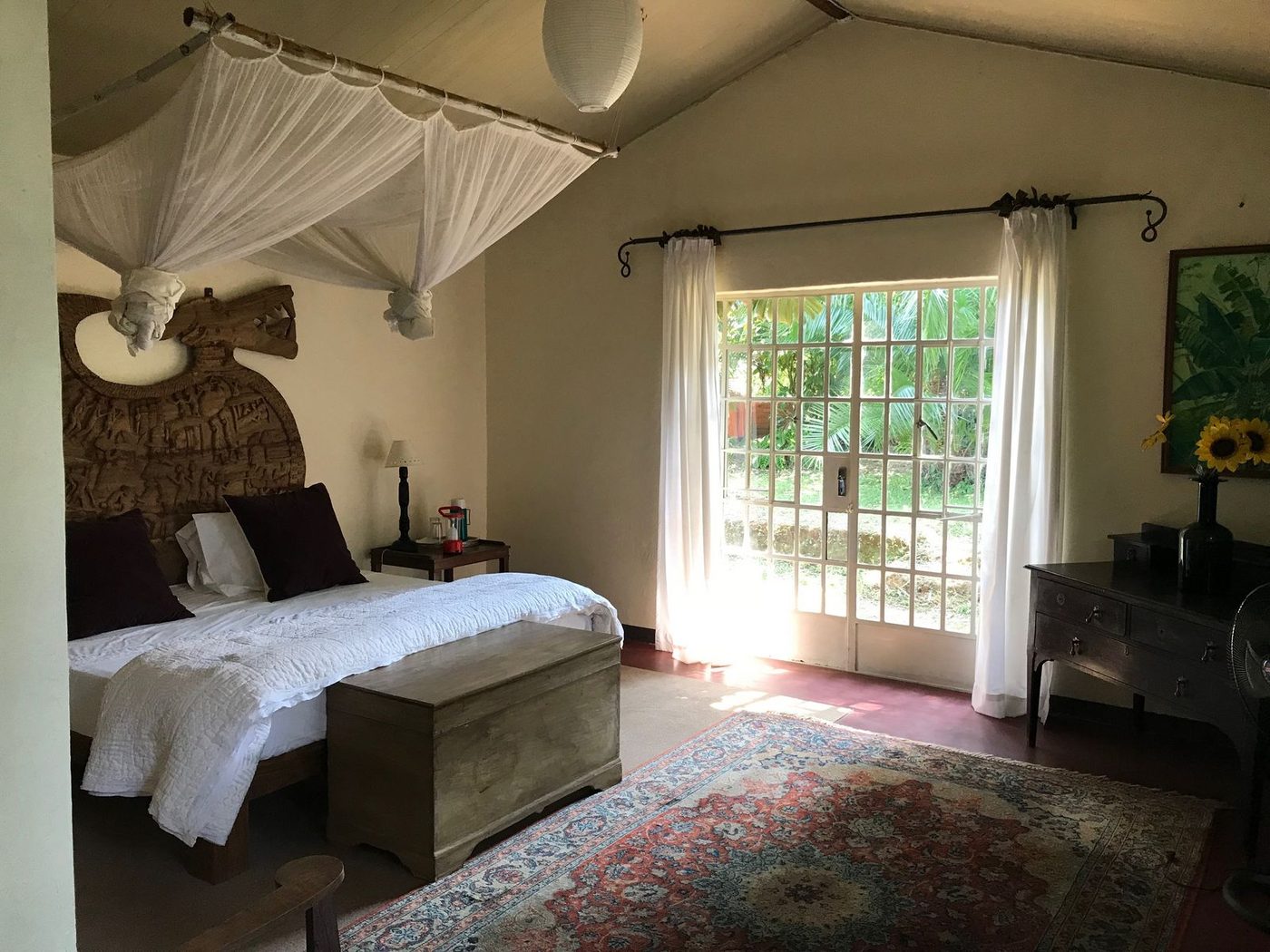
For comfort and food: Stay at The Thyolo House. The five rooms on the Conforzi Estate offer something you won't find in Mulanje town — restored colonial architecture, estate gardens, a pool, and a restaurant that serves the best food in the region. You're 40 km from Mulanje Boma but only 20 minutes from Limbe, making it a natural midpoint between the mountain and the city. Flavia and her team can help you plan your days, arrange guides, and recommend routes based on your interests and fitness level.
For the Satemwa experience: Huntingdon House on the Satemwa Estate is a luxury option with guided activities included. Expect to pay USD $250–500 per person per night. Book well in advance.
Southern Malawi doesn't have the name recognition of the lake, and that's precisely what makes it rewarding. The Mulanje day trips on this list take you through landscapes that most tourists in Malawi never see — working tea estates, indigenous forest, mountain trails, and communities that have been shaping this land for generations. Take your time with them.
If you'd like help planning your stay in the region, or want to book a room and let us take care of the details, message us on WhatsApp or email thethyolohouse@gmail.com. We'll help you build an itinerary that fits your time, your interests, and your appetite.
Planning a longer Mulanje adventure? See our complete Mount Mulanje hiking and accommodation guide for multi-day treks, hut bookings, and where to stay.