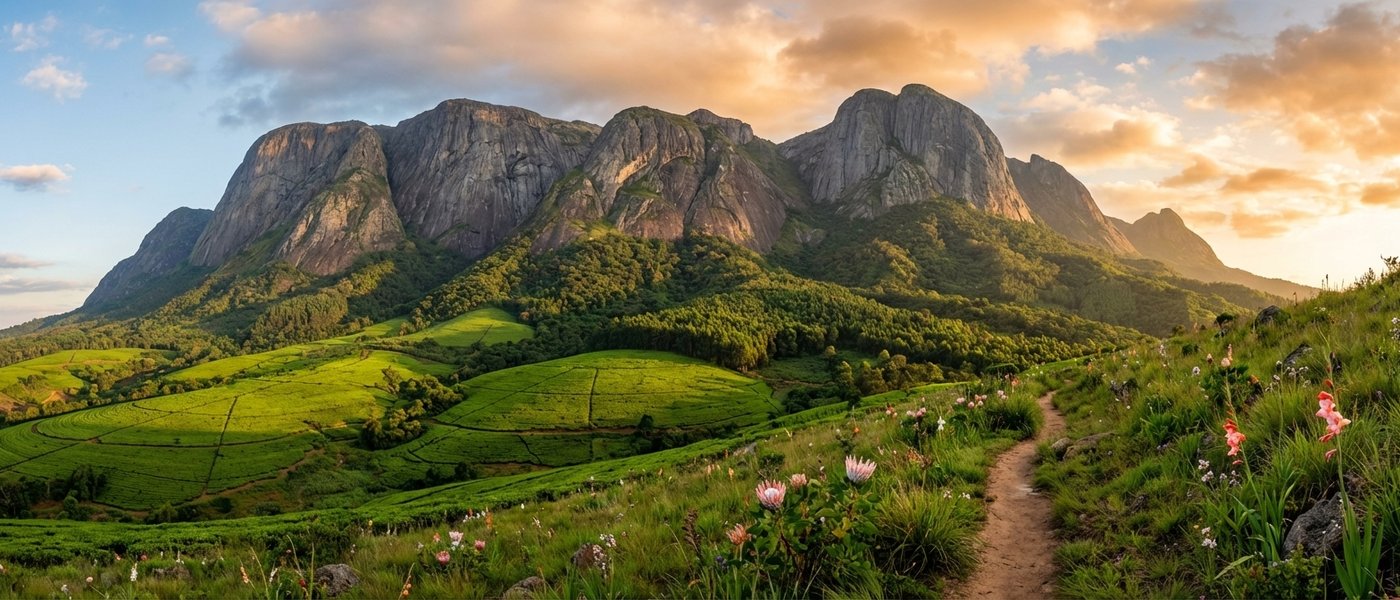
Mulanje Trips: A Complete Guide to Planning Your Visit

/ By The Thyolo House

Mulanje Trips: A Complete Guide to Planning Your Visit

mulanje tripsmalawi travelmount mulanjethyolo housesouthern malawi

Mulanje trips have a way of recalibrating you. The mountain rises out of the southern Malawi tea country like a vast granite cathedral, and within an hour of arriving you understand why the Yao, Mang'anja and Lhomwe peoples have considered it sacred for centuries. In July 2025, UNESCO finally agreed: the Mount Mulanje Cultural Landscape was inscribed on the World Heritage List, becoming Malawi's third UNESCO site after Lake Malawi National Park and Chongoni Rock Art. If you've been thinking about planning Mulanje trips, this is the moment — and this guide will walk you through everything you need to know to do it well.

From getting there and choosing hikes, to where to eat, sleep and recover afterwards, we've gathered the practical detail you'll actually need. We run The Thyolo House — a five-room boutique hotel on the historic Conforzi Tea Estate, forty minutes from Mulanje — and a steady stream of our guests use us as their base before or after the mountain. So consider this both a planning guide and an honest local view from just down the road.

Indigenous forest views from the Conforzi Tea Estate, with Mount Mulanje in the distance
The view towards Mulanje from the indigenous forest above the estate.

Why Mulanje Trips Belong on Every Southern Malawi Itinerary

Mount Mulanje is one of the largest inselbergs on earth — a single granite massif rising more than 3,000 metres above the surrounding Phalombe plain. Sapitwa Peak, at 3,002 metres, is the highest point in central Africa south of Kilimanjaro. But altitude is only part of the story. The mountain is home to more than 70 endemic species, including the critically endangered Mulanje cedar (Widdringtonia whytei), and supplies freshwater to roughly a million people in Blantyre and the surrounding districts.

The UNESCO inscription in July 2025 recognised the massif under cultural criteria — for its spiritual significance and living traditions, not just its biology. In August 2025, senior traditional chiefs held a press conference publicly affirming their support for the listing. CNN's "Inside Africa" featured the mountain in October 2025; France 24's "The Bright Side" covered it the month before. The world is, slowly, paying attention.

For travellers, that means Mulanje trips are increasingly a fixture on serious southern Africa itineraries. They pair beautifully with Lake Malawi to the north, Liwonde National Park to the west, and the tea-growing districts of Thyolo and Mulanje themselves. You can hike for a week or walk for an afternoon — the mountain accommodates both.

How to Get to Mulanje — From Blantyre, Lilongwe and Beyond

Most Mulanje trips begin in Blantyre, southern Malawi's commercial capital and home to Chileka International Airport (BLZ). From there, the town of Mulanje is roughly 65 kilometres east — a 90-minute to two-hour drive depending on traffic through Limbe and the condition of the M2.

From Blantyre or Limbe

The road is paved and generally good. Self-drive is straightforward in a regular saloon car for the lower routes; you'll want a 4×4 only if you're heading up the rougher access tracks to Likhubula or Lujeri. Minibus taxis run frequently from Limbe to Mulanje town for around MWK 5,000–8,000, but they are slow and crowded. We'd recommend a private transfer or rental car for a first visit. For a deeper breakdown, see our companion piece on how to get to Mulanje, Malawi.

From Lilongwe

Lilongwe to Mulanje is around 380 kilometres on the M1 — a five-to-six-hour drive in good conditions. Many travellers break the journey overnight in Blantyre or Thyolo. If you're flying domestically, Malawi Airlines and Ulendo Airlink both operate Lilongwe–Blantyre routes.

From Lake Malawi

From Cape Maclear or Monkey Bay, allow six to seven hours of driving via Zomba and Blantyre. From Mangochi, slightly less. This is where stopping at The Thyolo House makes practical sense: we're roughly four hours from the lake and 40 minutes from Mulanje, so you can break the trip, sleep well, and arrive at the mountain rested.

What to Do on a Mulanje Trip: Hikes, Forest Walks and Tea Estates

The classic Mulanje trip is a multi-day traverse staying in the mountain huts run by the Mount Mulanje Conservation Trust (MMCT). But there's a great deal you can do on shorter visits, too.

Lush gardens and tea plantation views at The Thyolo House
Views across the gardens at The Thyolo House, on the Conforzi Tea Estate.

Multi-day hikes

Sapitwa, the highest peak, is typically tackled over three days from Likhubula via Chambe Hut and Chisepo Hut. It's a proper expedition — steep granite slabs, exposed ridges, and weather that can change in minutes. A licensed MMCT guide is mandatory. Other popular routes include the Chambe-Lichenya circuit (two to three days, gentler), and the Skyline Path traverse from Likhubula to Lujeri (three to four days, beautiful, technical in places).

Day hikes and forest walks

If you have only a day, the Likhubula Forest Reserve at the foot of the mountain is wonderful. Williams Falls is a two-hour return walk through evergreen forest. Dziwe La Nkhalamba — the "pool of the elders" — is a sacred bathing site set into the rock and reachable in a half-day round trip. We've put together a fuller breakdown in our complete guide to Mulanje hikes if you want to plan in detail.

Tea estate visits

Mulanje and Thyolo together produce most of Malawi's tea, and the estates between them — Lujeri, Satemwa, and our own Conforzi — all welcome visitors. Tours typically include a walk through the plantation, a visit to a factory in production, and a tasting. From The Thyolo House, you can step straight onto the Conforzi estate and walk for hours.

The mining controversy — what you should know

It would be wrong to write a complete guide and skip this. Akatswiri Mineral Resources currently holds a bauxite mining licence covering the Lichenya and Linje plateaus on the south-eastern side of the mountain — described by Mongabay as roughly a third of Mulanje's remaining primary forest. A separate rare-earth exploration licence expired in September 2024 and is pending renewal, with an environmental and social impact assessment underway. The proposals are opposed by senior traditional chiefs, MMCT, mountain guides and porters, and conservationists, who argue mining would undermine the UNESCO criteria, threaten endemic species, and jeopardise the freshwater supply to Blantyre. As a visitor, the most useful thing you can do is travel here, support local guides and conservation initiatives, and add your voice to the case that Mulanje is worth more standing than mined.

Where to Eat and Recover: Why The Thyolo House Works as a Base

Mountains are kinder when there's a good bed and a proper meal at the end of them. Mulanje town itself has a handful of guesthouses and the long-established Mulanje Pepper Lodge, but most travellers we speak to prefer to stay 40 minutes back in Thyolo, where the air is cooler, the tea estates are quieter, and the food is, frankly, better.

The Thyolo House restaurant lit up at dusk
The restaurant at The Thyolo House — Italian fusion using garden-grown produce.

The Thyolo House sits on the Conforzi Tea Estate, an Italian-founded plantation dating back to the 1930s. Flavia Conforzi — Italian-Malawian, an artist by training — runs the property as a five-room boutique hotel and restaurant. The kitchen is unapologetically Italian fusion, drawing on the herb gardens, vegetable beds and seasonal produce of the estate itself. Cotoletta one night, slow-cooked pork chops with rosemary another, fresh pasta most days.

Italian cotoletta plated with seasonal vegetables at The Thyolo House
Cotoletta from the kitchen at The Thyolo House.

The setting matters too. There's a swimming pool for after the heat of the mountain, indigenous forest trails on the property, an art studio where Flavia runs occasional workshops, and bougainvillea-lined paths through the gardens. We're 20 minutes from Limbe and 40 minutes from Blantyre, which makes us an easy pre- or post-Mulanje base. If you're weighing options, our roundup of lodges in Thyolo has the wider picture.

Sample Itineraries — Day Trip, Weekend and Week-Long Mulanje Trips

The day trip (from Blantyre or Thyolo)

  • 07:00 — Depart Thyolo or Blantyre for Likhubula.
  • 09:00 — Arrive Likhubula Forestry Office, register, meet your guide.
  • 09:30–13:00 — Walk to Williams Falls or Dziwe La Nkhalamba, swim, picnic.
  • 14:00 — Lunch at a tea estate or in Mulanje town.
  • 17:00 — Back at The Thyolo House for a swim and dinner.

The weekend

  • Friday: Arrive at The Thyolo House, walk the tea plantation at sunset, dinner on the estate.
  • Saturday: Drive to Likhubula, full-day forest hike with guide, return for dinner.
  • Sunday: Slow morning, garden breakfast, visit Satemwa or Conforzi tea factory, depart late afternoon.

The week-long Mulanje trip

  • Days 1–2: Settle in at The Thyolo House. Tea estate tour, indigenous forest walk, pool afternoon.
  • Days 3–5: Three-day Sapitwa attempt or Chambe-Lichenya circuit with MMCT guide and porters, sleeping in mountain huts.
  • Day 6: Return to Thyolo. Long lunch, massage if available, restaurant dinner.
  • Day 7: Optional Zomba Plateau day trip or art workshop with Flavia before flying out.
The pool at The Thyolo House surrounded by tropical gardens
The pool — particularly welcome after a day on the mountain.

Practical Tips: Best Time to Visit, What to Pack and Local Guides

When to go

The best months for Mulanje trips are May to October — Malawi's cool, dry season. Skies are clear, paths are dry, and the high peaks are accessible. November to April is the rainy season; some trails close, river crossings become dangerous, and Sapitwa is regularly off-limits. June and July are coldest at altitude — expect frost in the huts and below-freezing nights.

What to pack

  • Proper hiking boots, broken in. The granite is unforgiving.
  • Layers — mornings can be 5°C on the mountain and 28°C at the foot.
  • Waterproof shell, even in dry season.
  • Headtorch with spare batteries. Mountain huts have no electricity.
  • Sleeping bag rated to at least 0°C for high-altitude huts.
  • Water purification tablets or filter — streams are clean but worth treating.
  • Cash in Malawian Kwacha for guide tips, hut fees and food on the mountain.

Guides and fees

Hiring a licensed MMCT guide is mandatory for all overnight hikes and strongly recommended for day walks. Standard rates are around MWK 30,000–50,000 per guide per day, with porters at similar rates. Hut fees are paid at the Likhubula Forestry Office. Cash only, in most cases. The Mount Mulanje Conservation Trust office in Mulanje town (P.O. Box 139, +265 1 466 179, info@mountmulanje.org.mw) is the best first point of contact for serious planning.

Safety

The mountain is real. Sapitwa has claimed lives, and even experienced hikers get lost in fog on the upper plateaus. Don't go alone, don't go off-trail, and don't go in poor weather. Tell someone where you're going and when you'll be back.

Booking Your Stay at The Thyolo House Before or After Mulanje

The heritage suite at The Thyolo House with vintage furnishings
One of our five rooms — the heritage suite.

We have five rooms, which means we book up. If you're planning Mulanje trips for the May–October peak, we'd suggest reaching out at least four to six weeks ahead. We can hold rooms for a one-night stop on the way to the mountain, a longer stay either side, or — most popular — a full base where you commute to the trailhead and return for dinner each evening.

Easiest is to message us on WhatsApp at +265 884 202 040, or email thethyolohouse@gmail.com. Tell us when you're hoping to come, how many of you, and whether you want us to help arrange transfers, MMCT guides or tea estate visits. We'll come back with availability and a plan.

Mulanje is an extraordinary place — older than memory, sacred to the people who live around it, freshly recognised by the world, and quietly under threat. Mulanje trips done well leave you changed by the mountain and connected to the people working to protect it. We'd be glad to be part of your visit.