/ By The Thyolo House
Thyolo Tea Estate Tours: A Nature Walker's Forest-to-Field Route
Why Thyolo Tea Estate Tours Are Best Done on Foot (Not by Vehicle)
Most visitors arrive in Thyolo expecting a tea estate tour to look like a wine-country drive — pull up at a tasting room, sample a flight, take a photo of the view, leave. That model exists here, and it has its place. But the best thyolo tea estate tours, in my experience as someone who lives on one of these estates, are the ones done on foot, slowly, ideally in the first three hours after sunrise. Tea country in southern Malawi was laid out by walkers — pluckers, supervisors, factory runners, missionaries — and the landscape only reveals itself at walking pace.
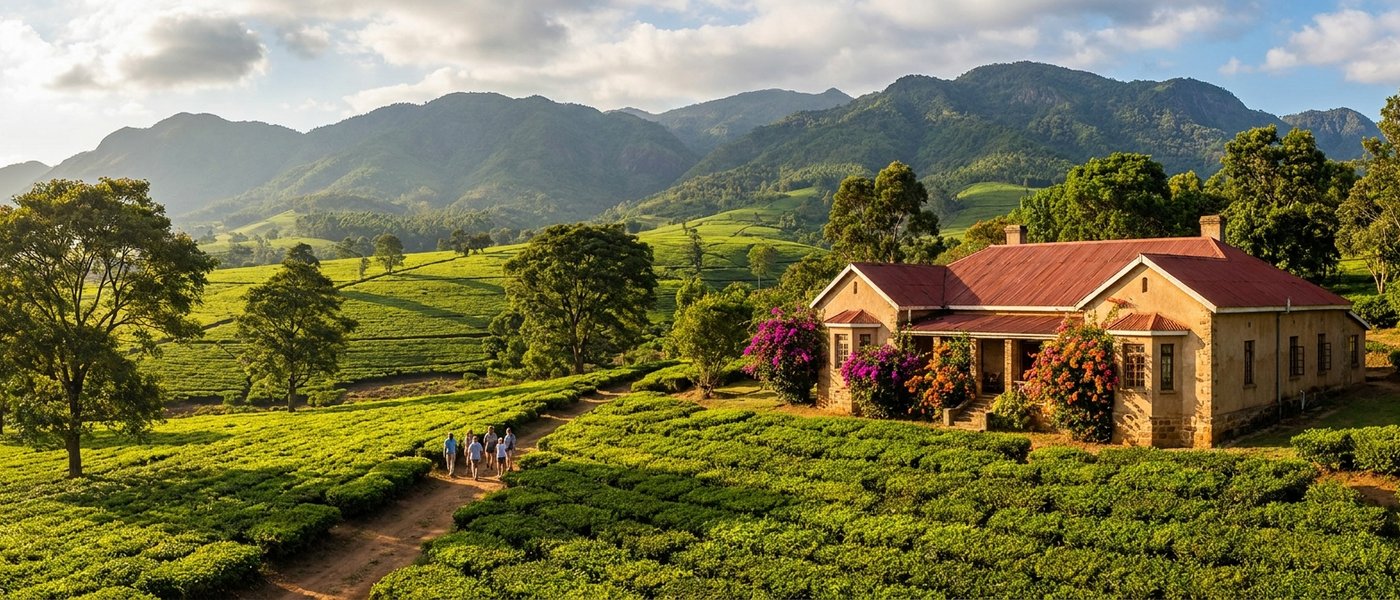
Thyolo district has been growing tea since 1908. The estates sit on a corrugated plateau between Blantyre to the north and Mount Mulanje to the east, and the three commonly named producers — Satemwa, Conforzi, and Lujeri — together form one of the densest concentrations of working tea land in southern Africa. From a vehicle, the experience flattens into a green blur. On foot, you start to read the place: which slopes are old plantings and which are new, where indigenous forest patches survive between tea blocks, how the morning mist settles into the valleys, which paths the pluckers actually use to get to the factory.
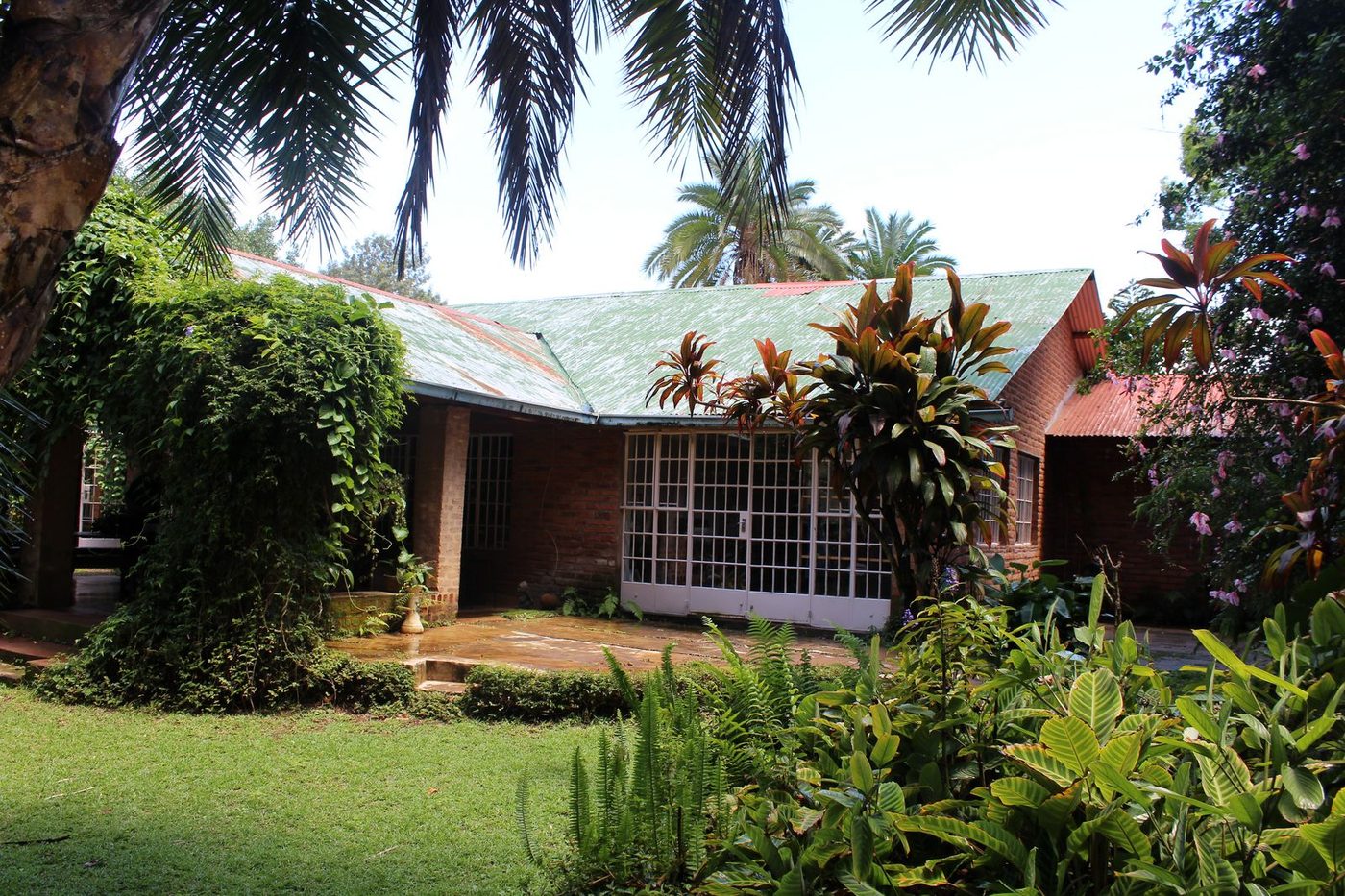
This is a route guide written from where I live and work — The Thyolo House, a five-room boutique lodge and Italian-fusion restaurant set on the Conforzi Tea Estate. It is, as far as I know, the only accommodation directly on a working tea estate in Thyolo, which means our guests can step out of the front door and walk into the tea without driving anywhere. What follows is the slow morning route I most often suggest, with notes on what to look for, when to come, and how to think about a tea estate tour as something closer to a forest walk than a factory visit.
The Forest-to-Field Route — A Slow Morning From the Conforzi Estate
The route I describe below takes about three hours at a relaxed pace, with stops. It begins at the lodge gate, climbs through a strip of indigenous riverine forest, breaks out into the oldest section of the Conforzi plantings, traces a contour line along an upper ridge with views across to Mulanje on a clear morning, and loops back through a newer tea block planted in the 1980s. You walk roughly seven kilometres in total, almost all on estate roads or pluckers' paths — no bushwhacking, no technical sections.
0–30 minutes: into the forest patch
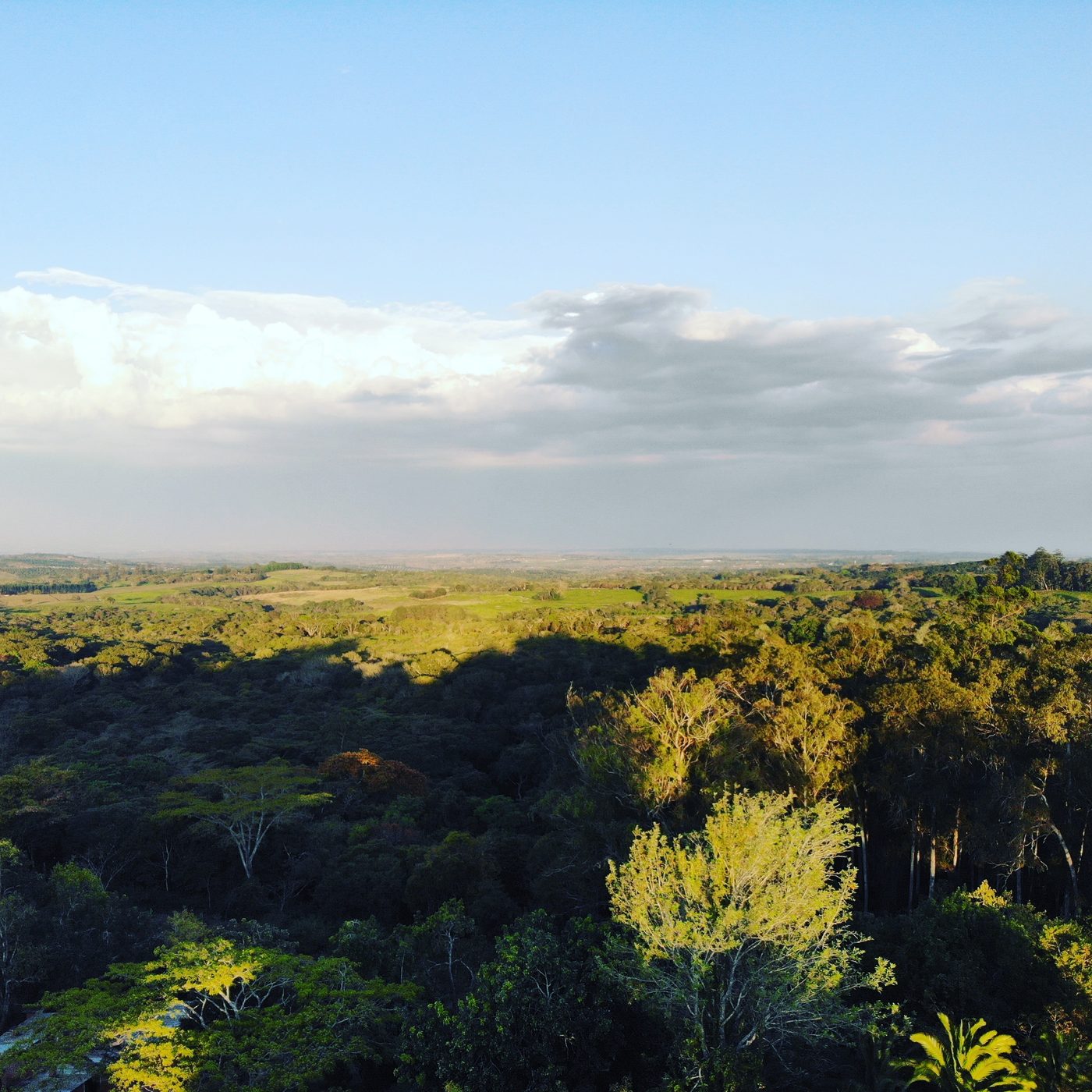
You leave the lodge by the kitchen garden gate and drop down toward a small seasonal stream. The first twenty minutes are the most surprising for guests who arrived expecting wall-to-wall tea: this is closed-canopy indigenous forest, with strangler figs, wild bananas, and the kind of damp leaf-litter smell you usually associate with the Mulanje massif rather than a tea estate. The Conforzi family has held these forest patches off-limits to clearing for decades — they shelter the springs that feed the lower tea blocks, and they're a refuge for birds and small mammals that have nowhere else to go in cultivated country. There's more on the history of the estate in our piece on the story of Conforzi Tea Estate, which is worth reading the night before you walk.
30–90 minutes: into the old tea
You emerge from the forest onto a graded estate road that immediately opens out into tea on both sides. The plantings on your left are some of the oldest on Conforzi land, with the gnarled, woody main stems and dense canopy that mark tea bushes left in place for many decades. In picking season, you'll meet pluckers here — usually women, working in small groups, fingers moving faster than the eye can track, throwing the two-leaves-and-a-bud over their shoulders into the basket on their backs. They're paid by weight, and they're working, so a nod and a quiet morning greeting is the right etiquette. Don't photograph anyone without asking first; if you don't speak Chichewa, your guide will translate.
90–180 minutes: the ridge and the loop home
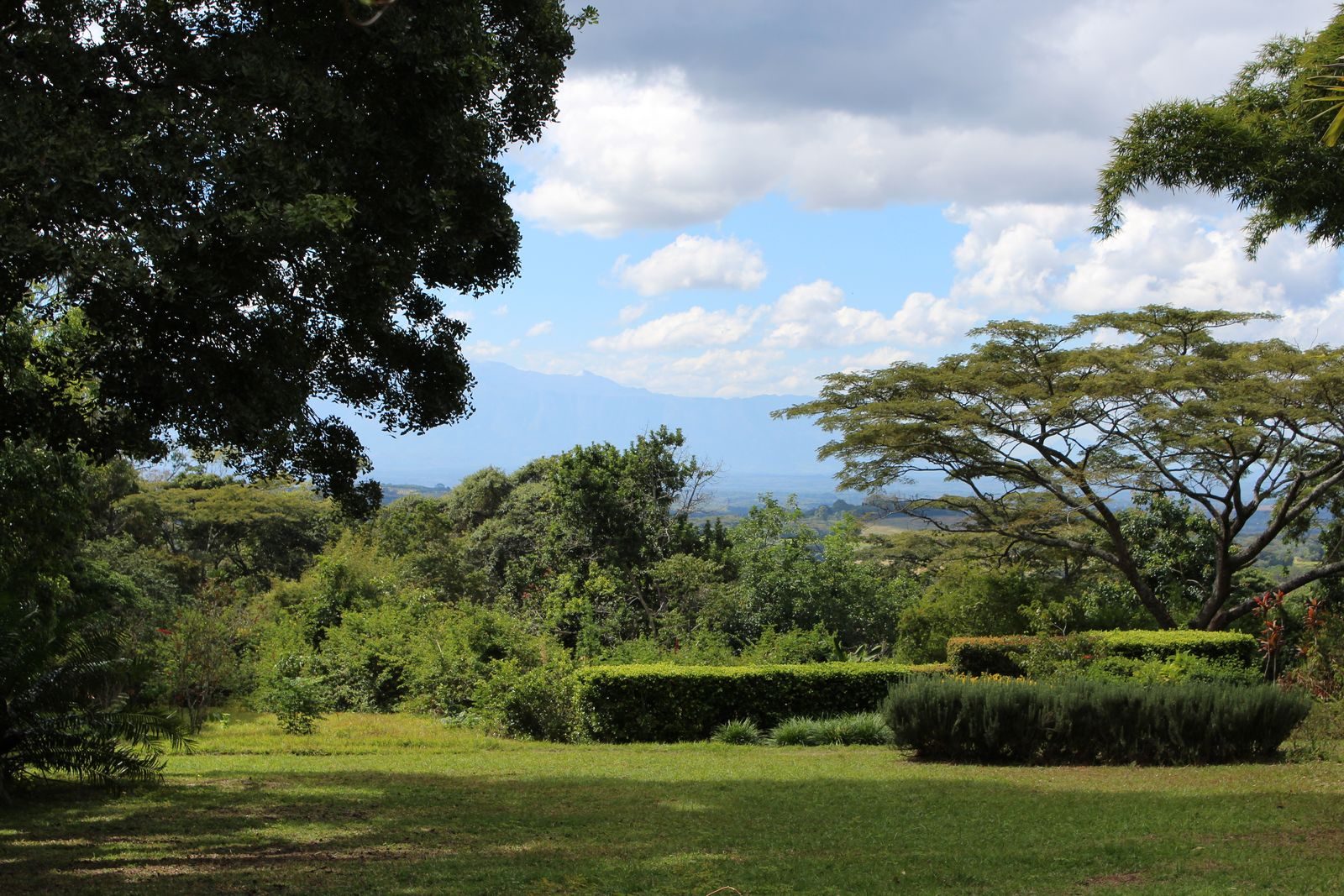
The road climbs gently for another forty minutes onto an upper ridge. On a clear morning — most often in May, June, and the start of July — you'll see the western buttresses of Mount Mulanje rising abruptly above the tea, with the Lujeri Tea Estate's plantings forming a darker green band against the foothills. From here, the route loops back through a newer block, planted in the 1980s with improved clonal varieties, and drops you back at the lodge in time for a late breakfast or an early swim.
What You'll See Between the Tea Rows: Birds, Butterflies and Indigenous Patches
A working tea estate is, ecologically, a strange hybrid. The tea itself is a monoculture — Camellia sinensis, kept pruned at waist height for picking convenience — but the matrix around it is anything but. The forest patches, eucalyptus windbreaks, stream lines, and the gardens around the manager's compounds all create edge habitat that supports a surprising amount of wildlife.
Birds
The forest-edge sections of this walk are where Thyolo earns its reputation among birders. The Thyolo alethe, a near-threatened thrush endemic to a handful of forest patches in southern Malawi and northern Mozambique, has been recorded on the estate, though it's elusive and you need patience and quiet. More reliably, you'll see paradise flycatchers with their absurdly long tail streamers, livingstone's turacos crashing through the canopy in flashes of green and crimson, and various sunbirds working the flowering shrubs at the forest edge. We've written a longer birdwatching guide to the Thyolo forests and tea estates for guests who want to plan a dedicated birding morning.
Butterflies and small things
Between October and December, after the first rains, the butterfly activity in the forest patches can be extraordinary — charaxes, swallowtails, and dozens of smaller species working the damp earth along the stream lines. Bring a hand lens if you're the kind of walker who likes to look closely at moss, fungi, and ground orchids. The estate paths cross several small wetland patches that are quietly rich.
What the tea itself is doing
Don't ignore the tea. It is, after all, why the landscape exists in its current form. Look at the difference between a recently plucked block (flat, pale-green table) and one that hasn't been picked for three weeks (taller, darker, with the new flush rising above the maintenance level). Notice the shade trees planted at intervals — usually Grevillea robusta, the silky oak, which fixes nitrogen and shelters the tea from frost on cold nights. The geometry of the planting is older than most of the people working it.
How a Working Tea Estate Year Shapes What You Walk Through
Tea in Malawi follows a strong seasonal rhythm, and what you see on a walk through Thyolo in February is genuinely different from what you see in September. Knowing the rhythm helps you choose when to come and what to expect.
The peak flush — December to April
The rains begin in November or early December and run through March or early April. This is the peak flush: the tea grows fast, the pluckers are out in force, and the factories run continuously. Q2 of any year — April, May, June — is when Malawi as a whole posts its highest tea volumes; in Q2 2025, national production hit 13.4 million kilograms. The landscape during the flush is at its most vivid green, but you should expect heavy afternoon showers and slippery red-earth roads. Mornings are best.
The dry months — May to October
From May onward, the rains taper off, the tea grows more slowly, and the factories run on shorter schedules. Q3 production for the country drops sharply — 4.7 million kilograms in Q3 2025, against 13.4 million the previous quarter. For a visitor, though, the dry months are easier: clear mornings, cool nights, reliable views to Mulanje, no mud. June through August is when most of our international guests come, and it's when I'd send a first-time visitor.
The economics behind the green
It's worth knowing what you're walking through. Tea generates roughly eight percent of Malawi's foreign exchange and employs more than sixty thousand people directly — about eleven percent of national formal employment. Q3 2025 export earnings rose to around seven billion kwacha despite the seasonal drop in volume, a reminder that the industry is more complex than the green hillsides suggest. Global tea prices fell four percent in 2025 and are projected to fall a further two percent in 2026, according to the World Bank's Commodity Markets Outlook, which is squeezing producers across Kenya, Uganda, Rwanda and Malawi. The walks are beautiful; the business behind them is not easy.
Practical Notes — When to Come, What to Wear, How to Book From The Thyolo House
If you're planning a thyolo tea estate tour and want to actually walk it rather than drive it, here are the practical notes I give guests at check-in.
When to come
- Best months for clear views and easy walking: May to early September. Cool mornings, dry paths, Mulanje visible on most days.
- Best months for seeing the estate in full production: December to April. Wet, green, and busy — but bring decent rain gear and accept that afternoons may be a write-off.
- Months to avoid if you only have one chance: Late October and early November, when it's hot, dry, dusty, and the new rains haven't yet broken.
What to wear
- Sturdy walking shoes or trail runners — not sandals. The estate roads are graded but uneven, and tea-block paths are narrow.
- Long trousers if you're sensitive to grass-seed or the occasional safari ant column.
- A hat and sunscreen — at 700 to 1,000 metres of elevation, the sun is stronger than it feels.
- A light raincoat between November and April; a fleece for early mornings between June and August.
- Binoculars if you have them. A small notebook if you're that kind of walker.
Costs and how to book
For comparison: Satemwa, the most-visited estate in the district, charges around USD 10 per person for a guided tea tasting with a professional taster — you work through five or six teas and learn to slurp and aerate properly. A full guided estate tour with factory visit at any of the major Thyolo or Mulanje estates typically runs USD 15 to 25 per person, depending on group size and whether the factory is in production that day. Factory tours at Conforzi need to be booked one to two days ahead because the factory is a working production line, not a visitor centre, and the schedule depends on whether tea is being processed that day.
The walking route I described above is something we arrange directly for guests at our boutique rooms as part of their stay. Guided walks on the Conforzi land are included; tastings, factory visits, and excursions to Satemwa or Lujeri can be arranged with a day's notice. We've put together a longer piece of practical visit tips for tea farms in Malawi if you want to think through a multi-estate trip.
Pairing Your Tour With a Tea-Country Lunch, a Forest Nap and a Pool Swim
A morning tea-estate walk wants the right kind of afternoon attached to it. The mistake most day-trippers make is to drive in from Blantyre, walk for two hours, and drive straight back, missing the part of the day when the estate is most itself — the long, slow afternoon when the heat thickens, the cicadas start up, and the shadows lengthen across the tea.
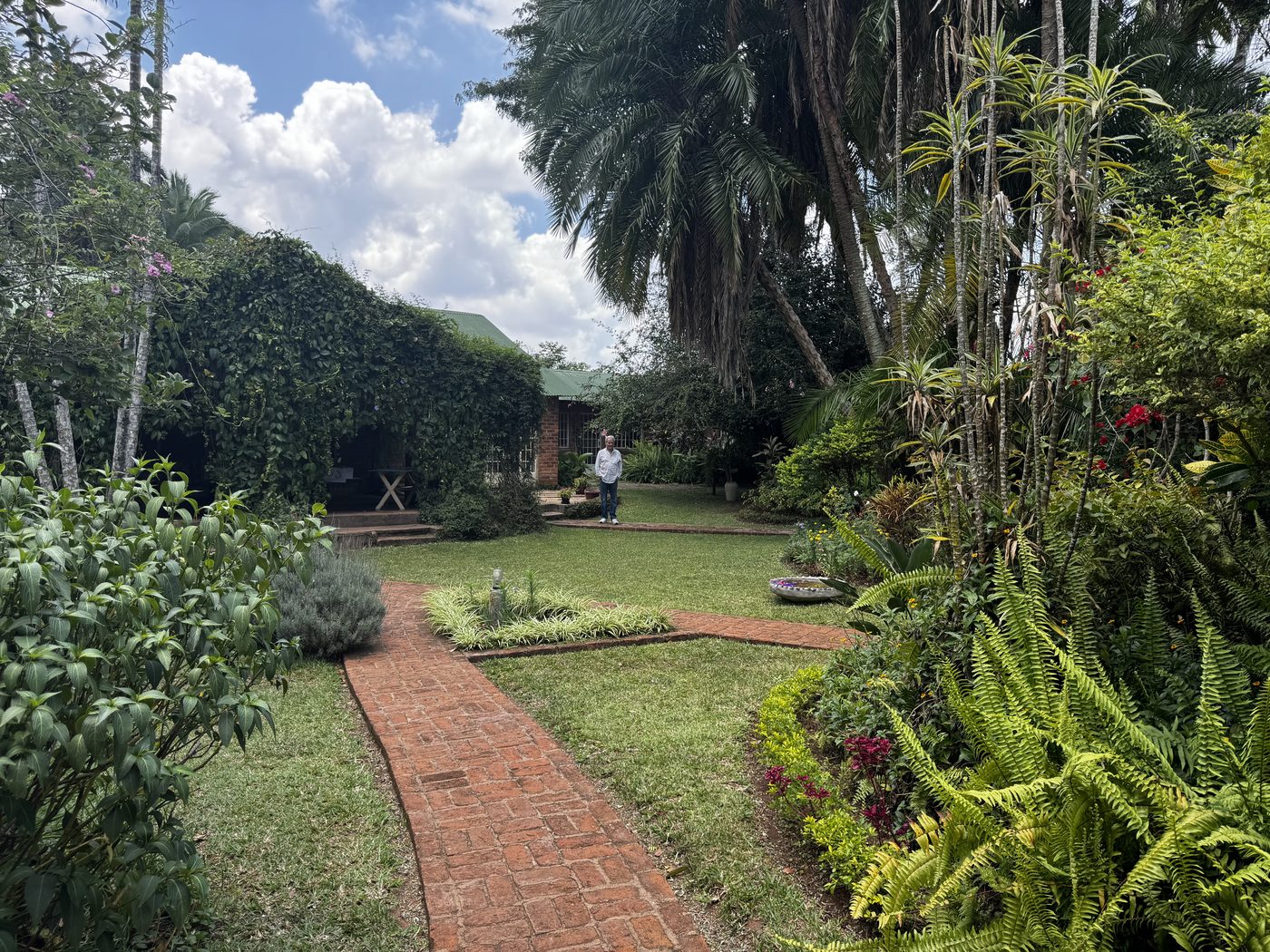
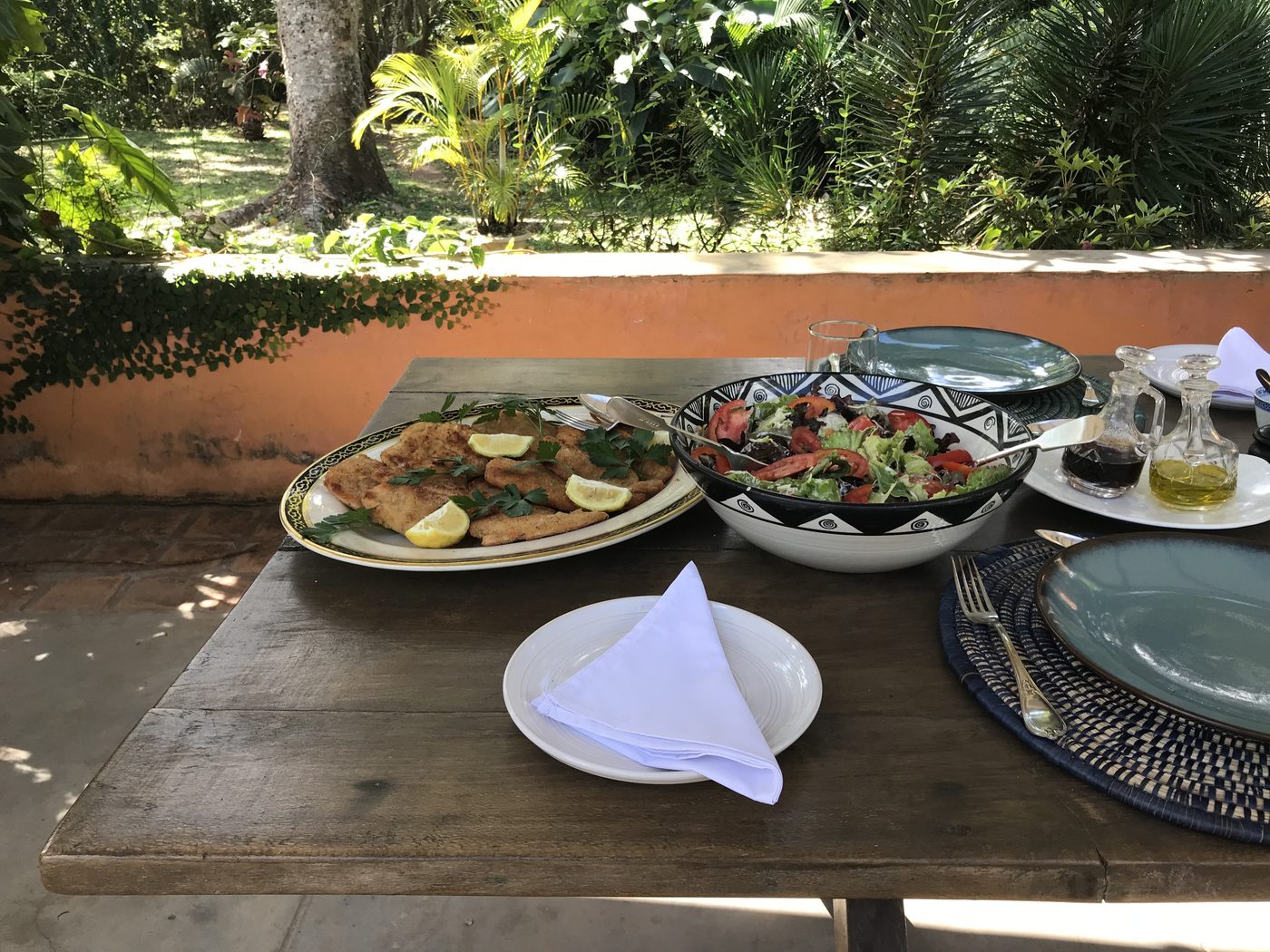
The shape I'd suggest, and the one our guests most often settle into, looks something like this. Walk in the morning, three hours including stops, finishing by ten or eleven. Sit down to a long, late breakfast or an early Italian-fusion lunch — our kitchen at The Thyolo House works almost entirely with what comes out of the garden and the surrounding farms, with pasta made in-house and ingredients from our vegetable beds and the dairies down the road. Spend the early afternoon either in the pool, in a hammock under the indigenous trees behind the main house, or in the small art studio where Flavia, who owns the place, sometimes runs informal workshops between cooking shifts.
By four in the afternoon, the light has shifted and the tea takes on the deeper, longer-shadowed green that is the hardest thing to photograph and the easiest thing to remember. This is the moment for a second, shorter walk — twenty minutes out to a viewpoint where the plantings drop away toward the Shire Valley, then twenty minutes back for a drink before dinner.
Getting here
The Thyolo House is about twenty minutes from Limbe, forty minutes from Blantyre, and around four hours from the southern end of Lake Malawi at Cape Maclear or Mangochi. Chileka International Airport is about an hour away. Most international guests come by hire car or with a driver arranged through their tour operator — Adventure Life, Rainbow Tours, Wilderness Explorers Africa, Malawian Style and several others all include Thyolo and Satemwa in their southern Malawi itineraries, with 11- to 13-day Malawi trips running in the USD 5,500 to 10,500 range.
To book a walk or a stay
If you'd like to arrange a thyolo tea estate tour as part of a stay with us — or just come for a guided walk and lunch as a day visit — the simplest thing is to message us on WhatsApp on +265 88 420 2040 or email thethyolohouse@gmail.com. Tell us roughly when you'd like to come, how many of you there are, and whether you want the full forest-to-field route or something shorter. We'll arrange a guide, organise the factory or tasting visits at Conforzi or one of the neighbouring estates if you want them, and have lunch waiting for you when you walk back in.
Tea country in Thyolo is best understood as a landscape you move through, not a stop on a list. Bring decent shoes, a slow pace, and the afternoon free. The rest of it will come to you.