/ By The Thyolo House
Where to Stay After Likabula Falls: A Slow Tea-Country Pairing
A journal from a boutique lodge in the Thyolo highlands. These are notes from our corner of Malawi — places we love, walks we've done ourselves, operators we've watched do good work. The mountain treks, tea-estate tours, and day trips are all run by independent operators in Malawi; book those directly with them. Come stay with us before or after — we'll do the room, the meal, and the quiet.
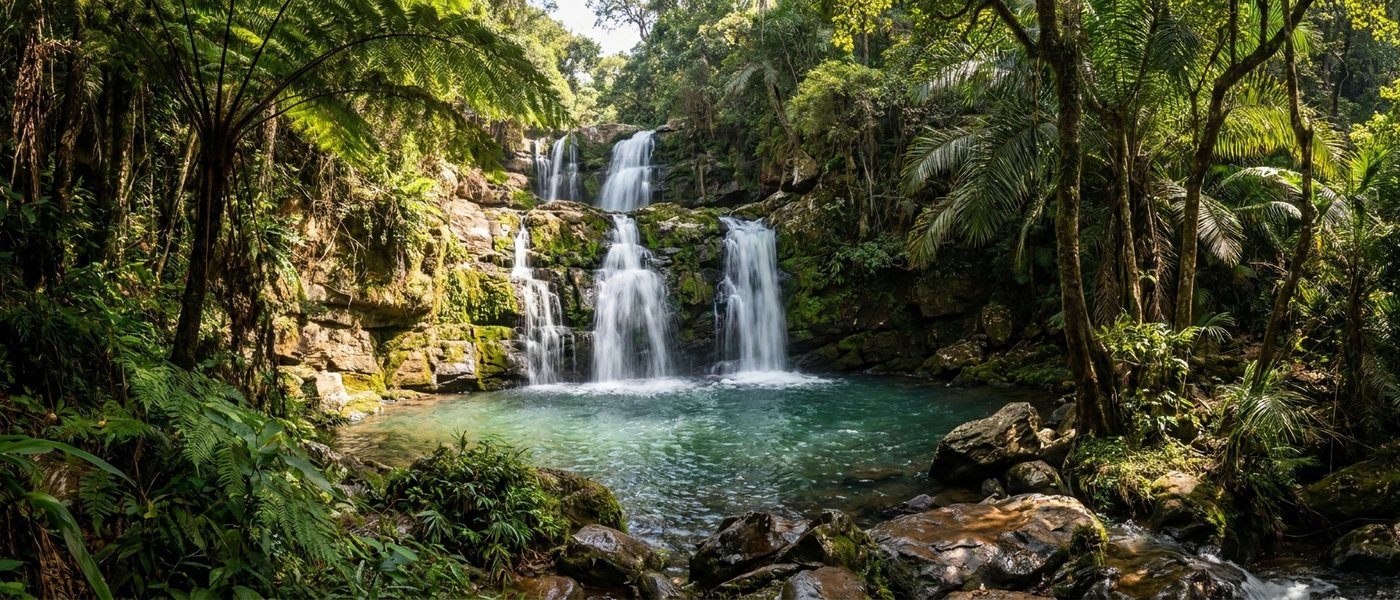
The question of where to stay after Likabula Falls usually arrives somewhere between the second river crossing and the walk back to the car park. Your boots are wet, the sun has dropped behind Mulanje's western shoulder, and the idea of driving on to Blantyre in the dark — through trucks, market traffic and that long stretch of unlit road — starts to feel like a waste of a good day. The hike itself is short and generous; the falls trail from Likhubula Forest Station takes about an hour each way through forest and over the Likhubula River. But it leaves you in that particular state hiking days leave you in: pleasantly emptied, hungry in a slow way, ready for a long shower and somewhere quiet to sit. The question isn't really where to sleep. It's what kind of evening you want next.
There are good answers right at the park gate — CCAP Likhubula House and Likhubula Forest Lodge both sit within walking distance of the trailhead and make sense if you're climbing higher on the mountain the next morning. There are answers in Mulanje town, fifteen minutes down the road, where Kara O'Mula's renovated colonial building still has the bones of the 1905 District Commissioner's residence. And then there's the slower answer, the one this piece is really about: pairing the waterfall day with a night in Thyolo tea country forty minutes west, in the Thyolo highlands, where the rhythm shifts from mountain to garden and the evening turns into something you'll want to write home about.
The drive from Likabula to Thyolo — what 40 minutes of tea road actually looks like
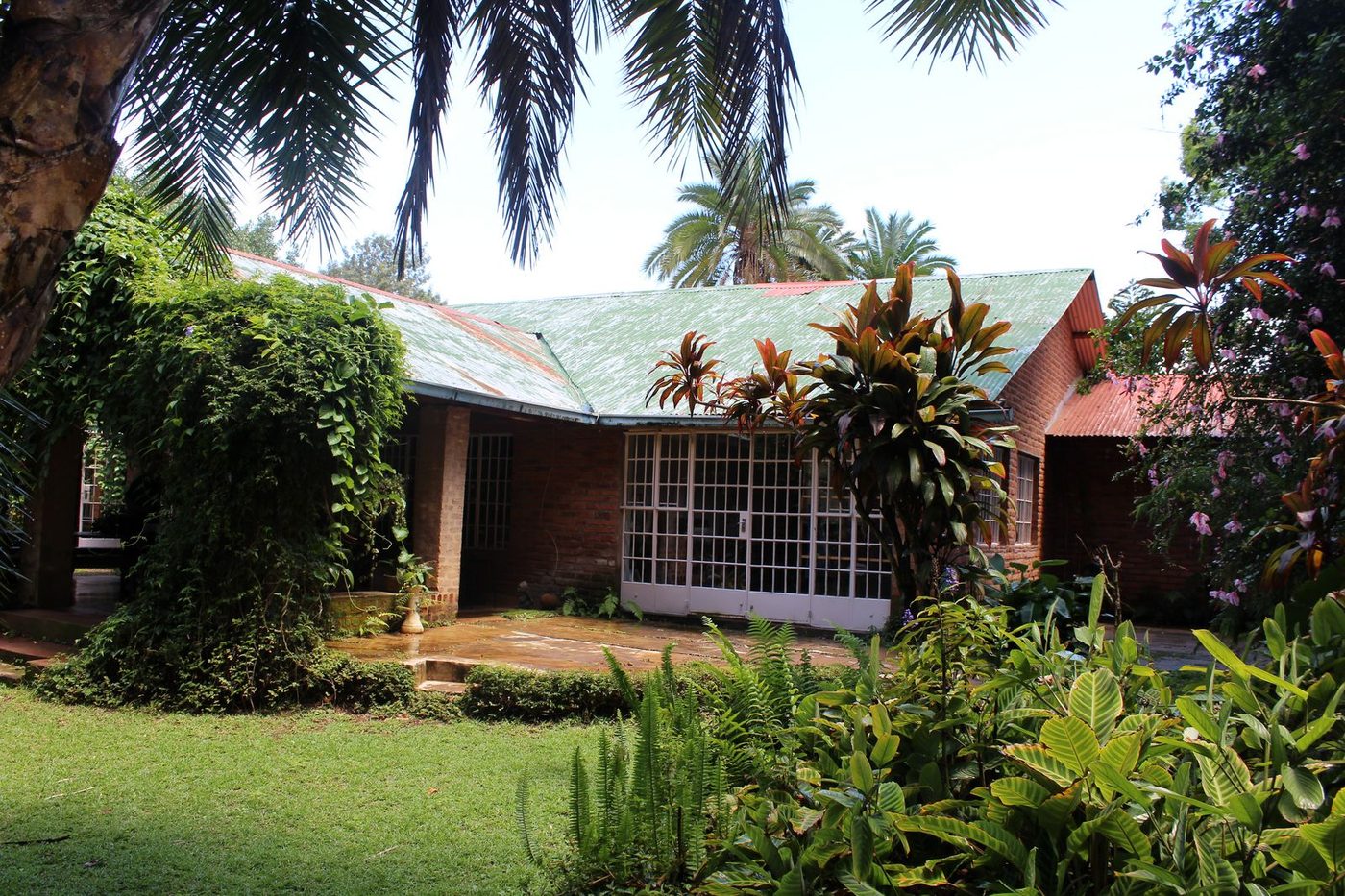
From the Likhubula Forest Station car park, you head back down the dirt access road to the M2, turn west toward Mulanje town, then pick up the road that runs through Thyolo district. On a good afternoon, with no rain and no roadworks, the drive is around forty minutes — call it an hour if you stop for a packet of roasted maize from a roadside seller, which most people do. The landscape changes more than you'd expect for such a short stretch. Mulanje's granite mass sits in your rear-view mirror; ahead, the country opens into the long, combed lines of tea plantations that define this part of southern Malawi.
The road is mostly tar, with a few stretches of patchwork and the usual goats. You'll pass tea pluckers walking home in the late afternoon, baskets balanced and full, and small trading centres where school children spill out of classrooms in green and white uniforms. By the time you turn off onto the Thyolo Highlands access road, the air has cooled a few degrees — Thyolo sits a little higher than the Likhubula valley — and the light has that particular quality that makes Italian visitors here say, every time, that it reminds them of late afternoons in Tuscany. It doesn't, really. But you understand what they mean.
Why a tea country is the right wind-down after a waterfall day (and what makes The Thyolo House work for it)
A waterfall hike is a particular kind of physical day. It's not strenuous — Likabula Falls is genuinely family-friendly, and the gradient is gentle — but it's wet, sometimes muddy, and you finish it with that low-grade buzz you get from moving through forest for two hours. The wrong place to spend the evening is somewhere that adds more stimulation. You don't want a busy bar or a restaurant with a wedding on. You want quiet, food that arrives on a plate without ceremony, and a bed that doesn't share a thin wall with the next room.
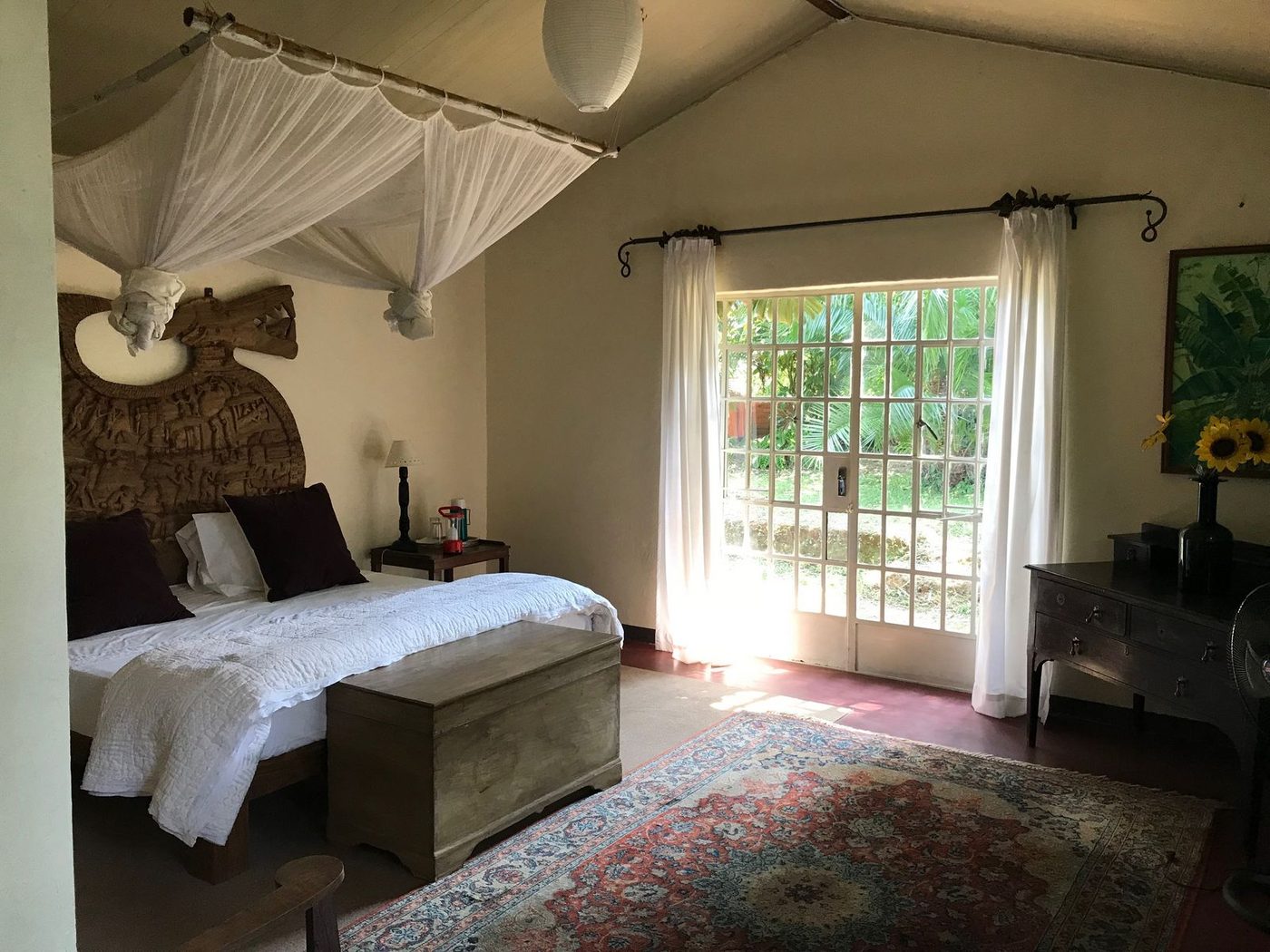
This is the case for a tea country. The Conforzi family has worked this land for three generations, and the boutique property on it — the boutique rooms at The Thyolo House — runs to five rooms, full stop. That number matters. It means there's never a crowd at breakfast, no one queuing for the coffee machine, and the kitchen has the bandwidth to cook properly for everyone who's staying. Flavia Conforzi, who runs the place and is also a working artist, treats the property less like a hotel and more like a private home that happens to take guests. That sounds like marketing copy until you stay there and notice how unusual it actually is in this part of Malawi.
If you're researching where to stay after Likabula Falls and the words "boutique" or "tea-country stay" come up in the search results, this is what they're pointing at. It's not a resort. It's not a lodge in the safari-camp sense. It's a historic highland property with a beautifully restored main house, a garden that supplies the kitchen, and an indigenous forest patch behind the house that you can walk into in under five minutes.
The arrival routine — boots off, pool, garden, then the kitchen turns on
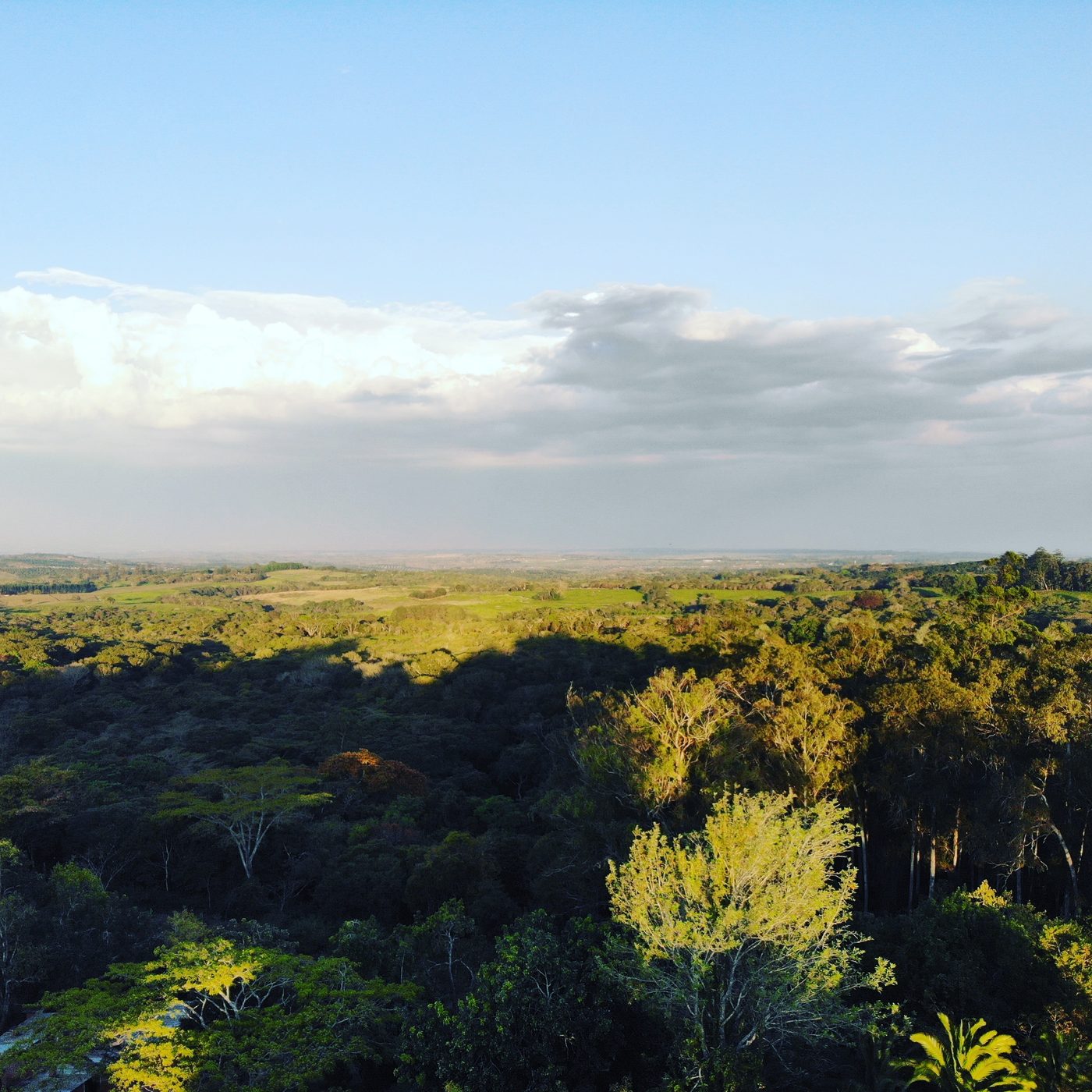
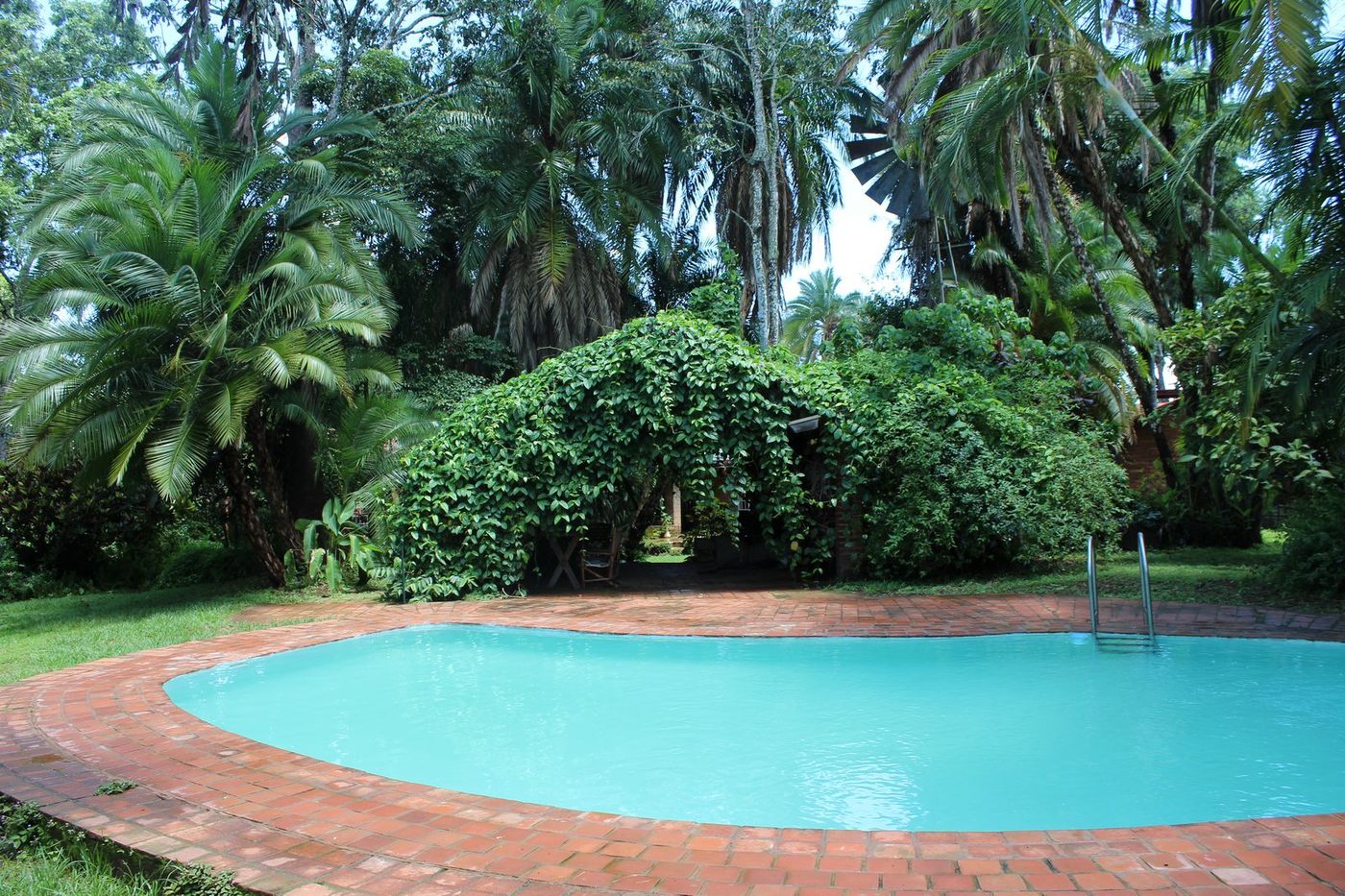
The sequence after a Likabula day tends to follow itself. You pull in, the dogs come to say hello, and someone takes your bag. The first thing most guests do — and we genuinely recommend this — is leave the muddy boots on the veranda and walk straight through to the pool. The pool sits in the garden, surrounded by bougainvillea, and the water is cold in the good way after a hike. Twenty minutes there, with a cold Carlsberg or a glass of something from the bar, and the day's accumulated heat and sweat are gone.
After the pool, there's usually a window before dinner — an hour, maybe ninety minutes — that's the best time of the day in the highlands. The light goes amber, the garden cools, and you can do almost nothing in particular. Some guests see the tea country fields right at the edge of the property. Others sit on the veranda with a book. There's a small art studio attached to the main house where Flavia works, and if she's painting that evening she'll usually be happy for you to wander in. None of this is scheduled. The estate doesn't run an activities desk. The rhythm is whatever yours happens to be.
Around six, the kitchen starts. You can usually smell it before you see anything happening: garlic, rosemary, sometimes the slow heat of pork or beef from the wood-fired side of the kitchen. This is a deliberate signal that dinner is on its way. There's no buzzer, no announcement. You just wander toward the main building when you're ready.
Dinner on the veranda — the garden-to-table Italian menu Flavia's kitchen builds around a hiking day
Dinner at The Thyolo House is the part most guests remember. The menu is Italian-Malawian — Flavia is half Italian, half Malawian, and the cooking reflects both — and almost everything that isn't dairy or wheat comes from the garden you walked past on your way in. Tomatoes, basil, rosemary, lemons, salad leaves, courgettes in season, the chillies, all of it. The proteins come from local farms: pork from neighbours up the road, beef from the house cattle, sometimes guinea fowl or chicken. Trout, when available, comes from Zomba.
The kitchen is good at reading a table. If you arrive after a hiking day, you'll usually find that the courses are paced a little more generously and the portions a little more honest. A pasta course tends to land first — fresh tagliatelle with whatever's good that week, or a slow-cooked ragù that's been on since the afternoon. Then a main course: maybe a cotoletta done properly, with a lemon wedge and rocket from the garden, or pork chops with rosemary and roast potatoes. Dessert is usually something simple — a panna cotta, a tart, gelato made on the property. Coffee is real espresso, made on a machine Flavia takes seriously.
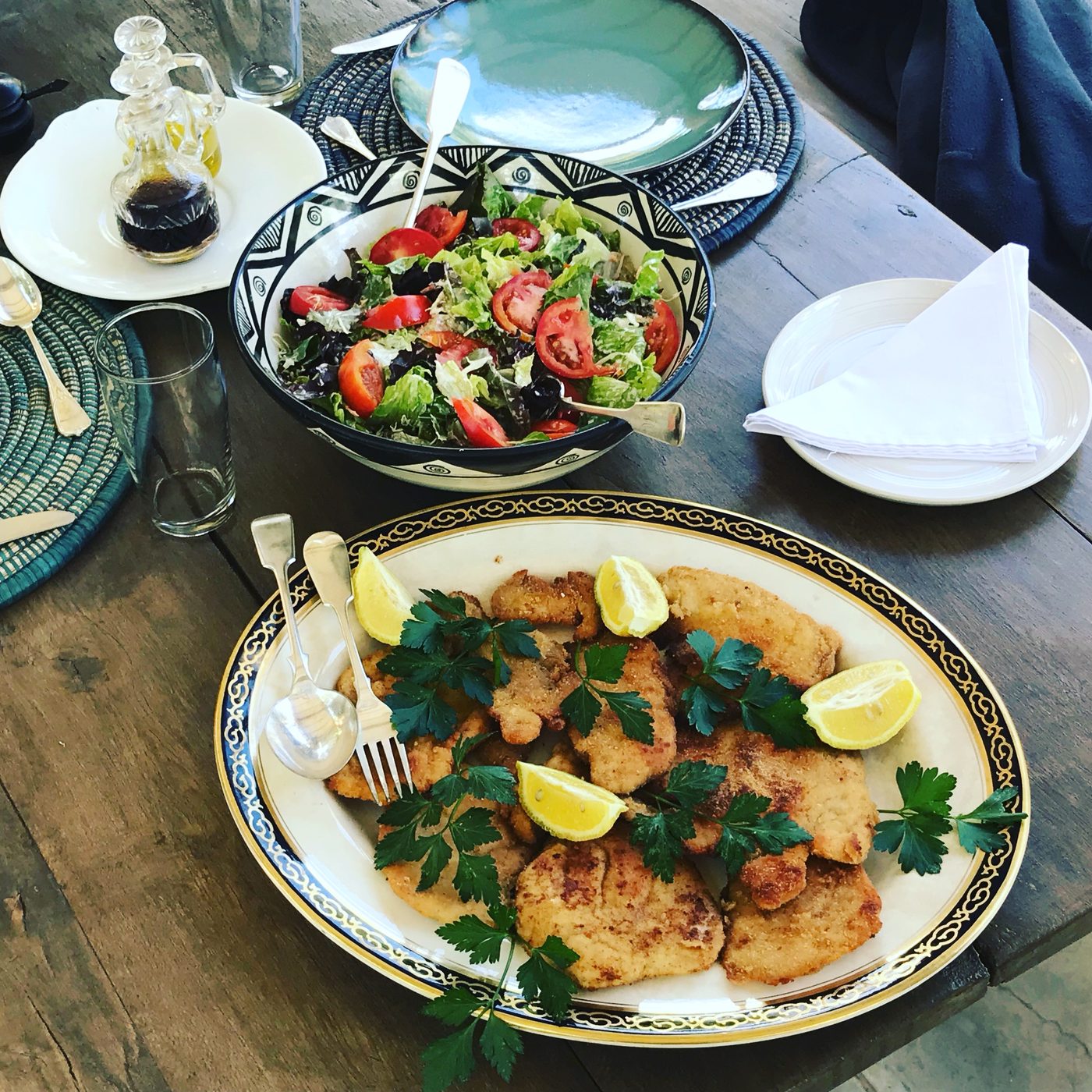
The wine list is short and considered. There's usually a South African red that works with the heavier dishes, a white that holds up to the pasta, and a few Italian bottles Flavia brings in when she can. None of it is showy. You can eat well here without spending what you'd spend at a similar restaurant in Cape Town or Nairobi.
The veranda is the room that matters. It runs the length of the main house, faces the garden, and at night it's lit with hurricane lamps and the spill from inside. If the evening is warm — which it usually is, even in cool months — you'll want to eat out there. If it's cold, the dining room inside has a fire going.
"After Likabula we'd planned one night and stayed three. The hike was the excuse; the dinners were the reason." — guest note, May 2025
The morning after — garden paths, tea plantation loops, and the art studio on a slow second day
Most guests who come for one night end up extending. There's a pattern to it. They arrive after the falls, eat dinner, sleep deeply, and wake up to the kind of morning that makes you reluctant to leave. Breakfast on the veranda — Italian coffee, fresh fruit from the garden, eggs done properly, bread from the kitchen — runs until you stop wanting it.
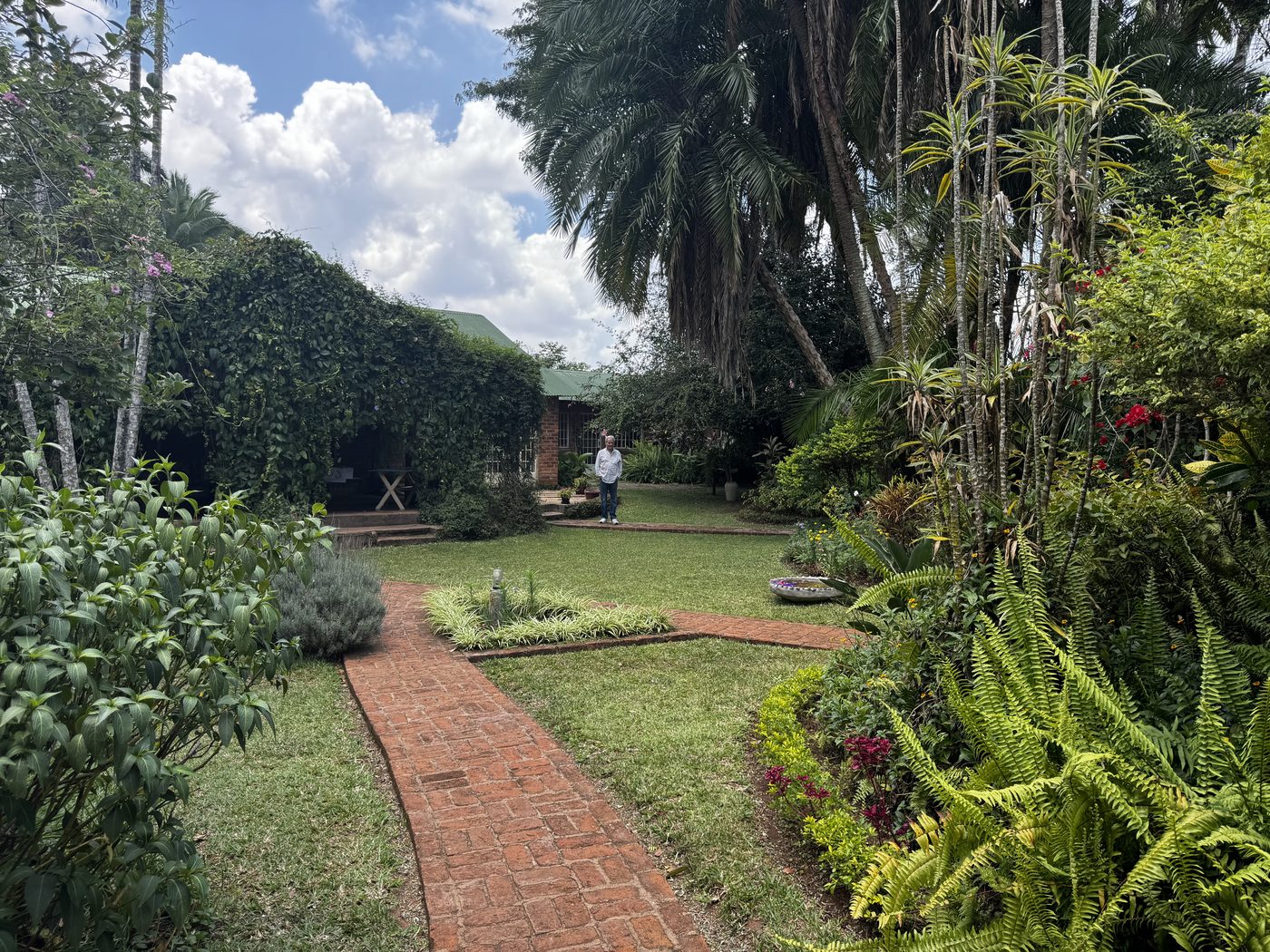
If you do stay a second night, the estate gives you a genuinely different kind of day from your Mulanje one. The tea plantation loop is the obvious walk: a 45-minute meander through the rows that lets you see how tea is actually picked and processed, with the pluckers usually happy to show you what they're doing if you ask politely. The quiet garden paths around the house is shorter — twenty minutes — but worth doing in the morning when the birds are loud and the light comes through the canopy in slabs. There are turacos in there, and if you're lucky a pair of crowned eagles.
The art studio is the wildcard. Flavia runs informal workshops when guests are interested — sometimes a morning of watercolour, sometimes something more involved if you're staying longer. There's no booking system for this. You ask, and she'll either be free that morning or she won't. The work she makes is good — large oils, often of the estate and the surrounding country — and the studio itself is one of the most pleasant rooms on the property to sit in.
For more on what else is within reach of this corner of southern Malawi, this guide to places to see near Likabula Falls covers the wider area, and our practical Likabula Falls guide walks through the hike itself.
Practical notes — booking, distances from Blantyre and Limbe, what to pack for the pairing
The logistics for pairing Likabula with a night at The Thyolo House are simple enough to fit in a paragraph, but worth doing properly.
Distances and drive times
- Likabula Falls (Likhubula Forest Station) to The Thyolo House: approximately 40 minutes by car, mostly tar road.
- Blantyre to The Thyolo House: 40 minutes via the M2.
- Limbe to The Thyolo House: 20 minutes.
- Chileka Airport to The Thyolo House: approximately 1 hour 15 minutes.
- The Thyolo House to Lake Malawi (Cape Maclear): around 4 hours.
Likabula Falls entry costs
- Likhubula Forest Reserve: MK 1,000 per person plus MK 500 per vehicle, paid once at the gate.
- Guides are not required for the falls trail but are heavily solicited. If you do hire one, US$10–25 per day is the going rate.
What to pack for the pairing
- Closed walking shoes you don't mind getting wet — the falls trail has river crossings.
- A change of clothes in the car, including dry shoes for the drive to Thyolo.
- A swimming costume — the pool at the estate is the best post-hike decision you'll make.
- A light jacket for the evening. Thyolo sits higher than Mulanje and the temperature drops after sunset, even in summer.
- Cash in kwacha for the park entry fee; the gate doesn't take cards.
Booking and timing
The property has five rooms, so weekends — particularly between May and September, which is the dry season — fill up well in advance. Two weeks' notice is comfortable; a month is safer if you're coming over a public holiday or during the European summer when expat traffic picks up. The kitchen needs a day's notice for dietary requirements, especially anything involving fish or dessert variations.
The easiest way to enquire is to message us on WhatsApp on +265 884 202 040 with your dates and how many people. We'll come back with availability, room options and rates within the day. Email works too — thethyolohouse@gmail.com — but WhatsApp is faster.
A note on the alternatives
To be clear about what The Thyolo House isn't competing with: if your plan involves climbing higher on Mulanje the next morning — Chambe, Lichenya, the Sapitwa summit attempt — then staying at the park gate makes more sense. CCAP Likhubula House and Likhubula Forest Lodge are both walking distance from the trailhead and the right choice for an early mountain start. Kara O'Mula in Mulanje town is the right choice if you want a colonial-era heritage stay with a pool and easy access back to the falls. The Thyolo House is the right choice when the question isn't where to stay for Likabula but where to stay after Likabula — when you've done the hike, you've earned the evening, and you want the evening to be something other than functional.
That's really the pairing in one line. The falls in the morning, the estate in the evening, and forty minutes of tea road in between to let the day settle. It's one of the quieter pleasures southern Malawi offers, and it's the reason most of our Likabula-day guests end up coming back for a second night, then a third, with nothing on the schedule except breakfast.