/ By The Thyolo House
Malawi Visa and Travel Tips: A First-Timer's Entry Guide
A journal from a boutique lodge in the Thyolo highlands. These are notes from our corner of Malawi — places we love, walks we've done ourselves, operators we've watched do good work. The mountain treks, tea-estate tours, and day trips are all run by independent operators in Malawi; book those directly with them. Come stay with us before or after — we'll do the room, the meal, and the quiet.
If you are putting Malawi on your travel list for 2026, the rulebook has just changed. The country quietly revoked its short-lived visa-waiver scheme on 2 January 2026, and most visitors now need either an eVisa booked in advance or a visa stamped on arrival, depending on their passport. That single shift makes Malawi visa and travel tips the first thing worth understanding before you book flights, swap dollars or daydream about tea estates and lake sunsets. This guide walks you through the new entry process, the practical realities of money and movement on the ground, and why a slow first night in Thyolo's tea country, perhaps at The Thyolo House, is one of the kindest ways to land in the Warm Heart of Africa.
Malawi Visa and Travel Tips at a Glance: What Every Visitor Should Know Before Booking
Malawi is a small country with an outsized reputation for friendliness, and most first-time visitors find the entry process less complicated than its neighbours. Still, there are a handful of moving parts you need to plan around: a brand-new eVisa system, a cash-first economy, malarial geography and a transport network that rewards slow itineraries over ambitious ones. None of these are dealbreakers — they are simply things that reward a little homework before departure.
The headline change is the eVisa. From 2 January 2026, the Department of Immigration and Citizenship Services restored the visa requirement for most non-SADC nationalities, ending the brief waiver experiment introduced in 2024. The official portal, evisa.gov.mw, now publishes two country lists: a "Visas in Advance" list, whose passport holders must apply online before flying, and a "Visas on Arrival" Category 2 list, whose travellers can pay in US dollars at the airport. SADC nationals (with the single exception of Angola) remain visa-exempt.
Beyond the visa, the other essentials are quickly summarised: bring a passport with at least six months of validity beyond your departure date and one blank page; pack USD cash in pristine, post-2013 notes; budget for malaria prophylaxis; and arrange travel insurance that includes medical evacuation. Nothing on that list is unusual for African travel, but skipping any of it can complicate an otherwise smooth trip.
The E-Visa Process: Who Needs One, How to Apply, and What It Costs
If your passport is on the "Visas in Advance" list, you must apply through evisa.gov.mw before boarding your flight. The system asks for the standard documentation — passport bio page, recent photo, flight itinerary, accommodation address, and in some cases a letter of invitation or proof of onward travel. A single-entry tourist eVisa currently costs around USD 75; multiple-entry visas cost more and are usually only worth it if you plan to cross into Zambia or Mozambique mid-trip.
Two practical points are worth flagging. First, although the portal advertises quick turnarounds, in practice the system can request additional documents days after submission. Submitting your application two to three weeks before travel gives you time to handle follow-ups without panic. Second, if you are on the Category 2 visa-on-arrival list, bring crisp US dollars in cash. Card facilities at airport immigration desks are unreliable and queues stall when the network drops.
The Thyolo House is happy to provide a confirmed booking letter for your visa file — guests usually request one once their reservation is locked in. Italian, EU, UK, US, Canadian and Australian passport holders should assume they need to apply in advance unless the official lists at evisa.gov.mw say otherwise; the lists are updated periodically and should be checked again 7–10 days before travel.
Arriving in Malawi: Chileka, Kamuzu and the Land Borders Explained
Most international visitors arrive at one of two airports. Kamuzu International Airport (LLW) sits about 25 km north of Lilongwe, the capital, and is the main gateway with daily connections from Johannesburg, Addis Ababa and Nairobi. Chileka International Airport (BLZ) serves Blantyre and the south of the country — the smaller, calmer option, and the closest airport to Thyolo, Mulanje and the Lower Shire.
If your itinerary leans towards the southern highlands, tea country, Mount Mulanje or Majete Wildlife Reserve, fly into Chileka. From Chileka to The Thyolo House is roughly a 50–60 minute drive on tar, mostly along the M2 through Limbe and then the gentle climb up to Thyolo town. From Kamuzu, the equivalent journey is around five hours by road, which is fine if you are pairing Lilongwe with the south but excessive if Blantyre is your real destination.
Land borders are useful to know about even if you are flying in. The most-used crossings are Mwanza and Dedza (to and from Mozambique), Mchinji (to Zambia) and Songwe (to Tanzania). All of them issue visas on arrival to Category 2 nationalities, and all of them prefer USD cash. Yellow fever certificates are checked on entry if you are arriving from a yellow fever country — this is non-negotiable, and travellers without one have been turned around at Songwe in particular.
Currency, Cards and Cash: Handling the Malawian Kwacha Without Stress
Malawi runs on the Malawian kwacha (MWK). At the time of writing in April 2026, USD 1 buys roughly 1,730–1,734 MWK, although the rate moves with each Reserve Bank announcement, so check on the morning of departure rather than weeks ahead. The country is overwhelmingly cash-based — outside tourist hotels, lodges and a small number of supermarkets in Blantyre and Lilongwe, your card will not work.
That makes a sensible cash strategy one of the most important Malawi travel tips for newcomers. A workable approach looks like this:
- Carry USD in pristine, post-2013 notes. Anything with a tear, ink mark or fold can be refused, even at banks.
- Declare foreign currency on entry if asked — the customs form has a specific line for it.
- Change a starter amount (USD 100–200) at a recognised bank or bureau in Blantyre or Lilongwe. Avoid airport and hotel currency desks, which tend to give the worst rates.
- Use Standard Bank or National Bank ATMs for international card withdrawals. Visa is more widely accepted than Mastercard. Withdrawal limits are typically 100,000–200,000 MWK per transaction.
- ATMs are reliable in Lilongwe, Blantyre and Mzuzu but scarce around the lake, the parks and rural areas. Pull cash before you leave the city.
USD is widely accepted for larger payments — park entry fees, lodge balances, vehicle hire — but expect to receive change in kwacha. The Thyolo House accepts both currencies and can process card payments for room and restaurant bills, which removes some of the cash juggling once you are settled in.
Safety, Health and Common-Sense Travel: What the Warm Heart Is Really Like
Malawi earned its "Warm Heart of Africa" nickname honestly. Everyday interactions are unhurried and friendly, and most visitors are struck by how easy conversation is in markets, on minibus stops or on a tea-estate path. The US State Department currently classes the country as Level 2 — Exercise Increased Caution — which is the same level as much of Western Europe, and reflects the kind of risks you would manage in any developing economy.
Petty crime is the most common concern: bag snatching and pickpocketing in downtown Blantyre and Lilongwe, smash-and-grab from cars stuck in traffic, occasional theft from beach-front lodges. Violent crime exists but is rare for tourists, and police resources are stretched. The practical rules write themselves: avoid walking alone after dark, use taxis pre-booked through your accommodation, leave valuables in your room safe, and don't display jewellery, expensive cameras or thick wallets in public.
Health planning matters more than crime planning. The whole country is malarial, so antimalarial prophylaxis is recommended for every traveller; speak to a travel clinic six weeks before departure to choose between doxycycline, atovaquone-proguanil or mefloquine. Make sure your MMR is current. Yellow fever is required only if you are arriving from a yellow-fever country, but the certificate must travel with you. Cholera outbreaks have been recurring in the rainy season (November to April) — stick to bottled or filtered water, peel fruit, and eat hot food. Mpox cases have been reported in parts of the region; check the latest WHO travel advice closer to departure.
There are no reciprocal healthcare agreements with most Western countries, so travel insurance that explicitly covers medical evacuation to Johannesburg or Nairobi is more than a formality. For a longer breakdown of safety and transport considerations, our tourist travel guide to Malawi goes deeper.
Getting Around: Transfers, Self-Drive and the Road to Thyolo
Internal travel in Malawi falls into three broad categories: private transfers, self-drive, and the public minibus and bus network. Each suits a different kind of trip.
Private transfers are the path of least resistance for first-time visitors. A driver from Chileka to Thyolo, with a stop in Limbe for cash and a SIM card, costs in the region of USD 60–90 depending on vehicle and operator. From Kamuzu down to Thyolo, expect USD 250–350 for a one-way private transfer, often combined with an overnight in Dedza or Zomba. Transfers and drivers should be booked directly with a transport provider before travel; The Thyolo House does not arrange trusted drivers, airport transfers, guides, tours, trips, or third-party activities.
Self-drive is rewarding for confident travellers. The main M1 spine and M2 link are tarred and reasonably maintained; secondary roads vary from passable to seasonally impossible. Hire 4x4 if you plan to visit Liwonde, Majete or the lake's quieter beaches. Drive on the left, watch for goats and bicycles in villages, and avoid driving after dark — unlit pedestrians and unmarked speed bumps are the two main hazards.
Public minibuses are cheap and an authentic way to travel short distances, but they leave when full rather than on a schedule and are not recommended with luggage or children. The longer-distance AXA coaches between Lilongwe, Blantyre and Mzuzu are a step up and reasonably reliable.
The drive from Blantyre up to Thyolo is one of the most pleasant short journeys in the country: about 40 minutes door to door, climbing through tea estates and indigenous forest as Mount Mulanje rises on the horizon. We've described this route in more detail in our weekend escape from Blantyre guide.
Where to Land Softly: Why Tea Country and The Thyolo House Make an Ideal First Stop
Long-haul arrivals into Africa are tiring in a particular way — body clocks scrambled, paperwork still fresh, and the impulse to cram three things into the first day. The smartest Malawi visa and travel tips repeat the same advice: don't try to drive to the lake on your arrival day. Build in a soft landing within an hour of your airport.
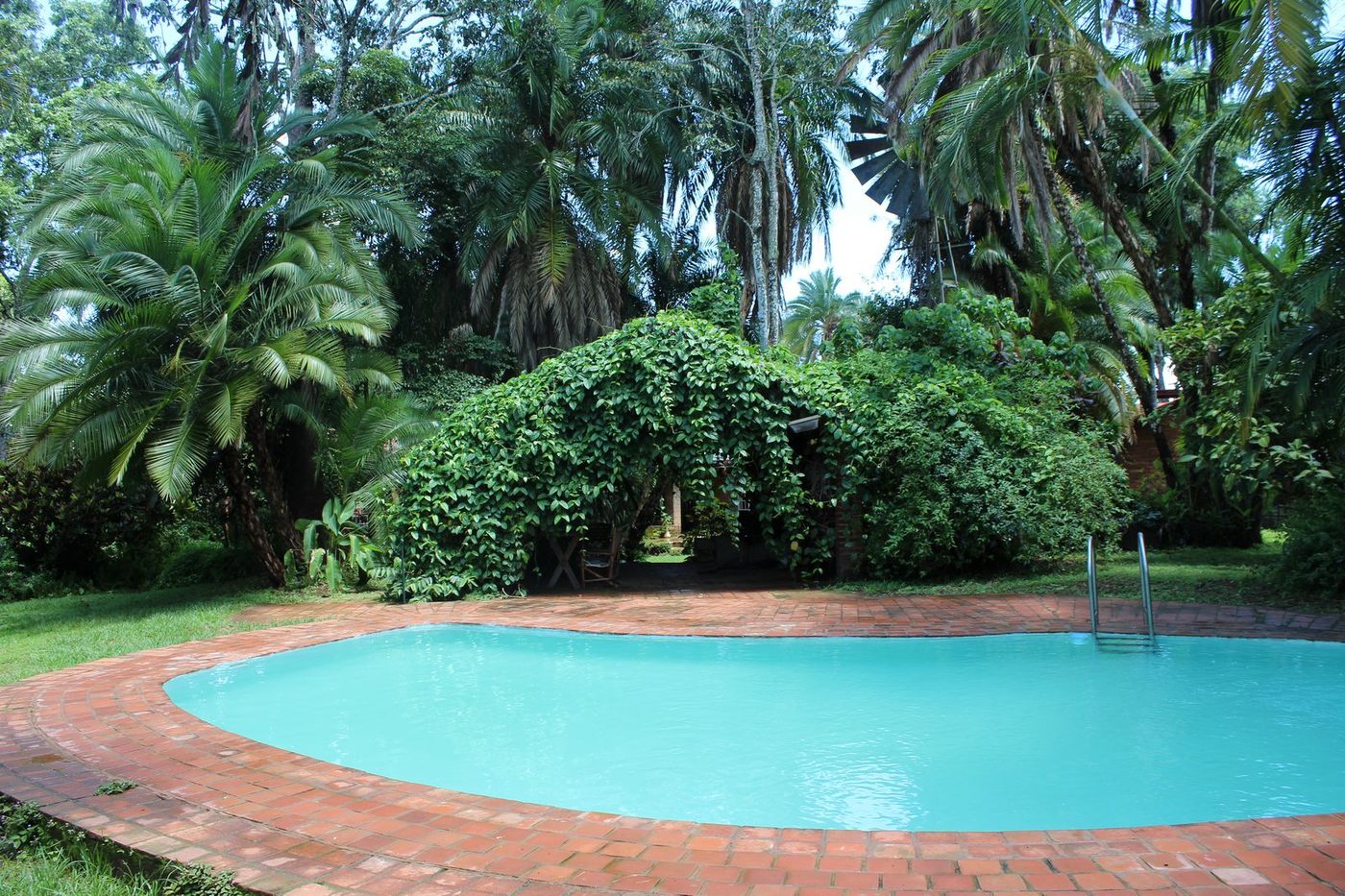
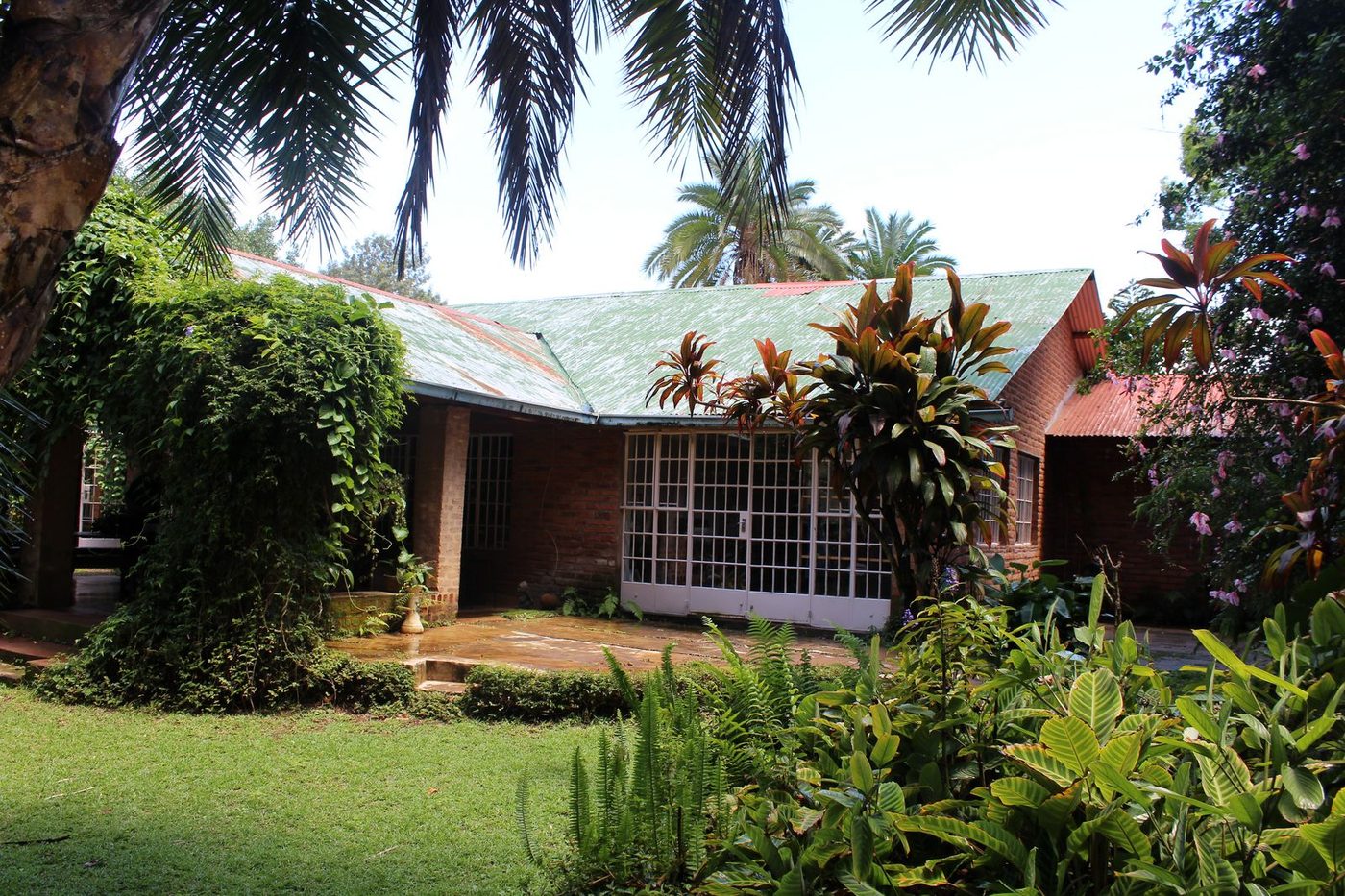
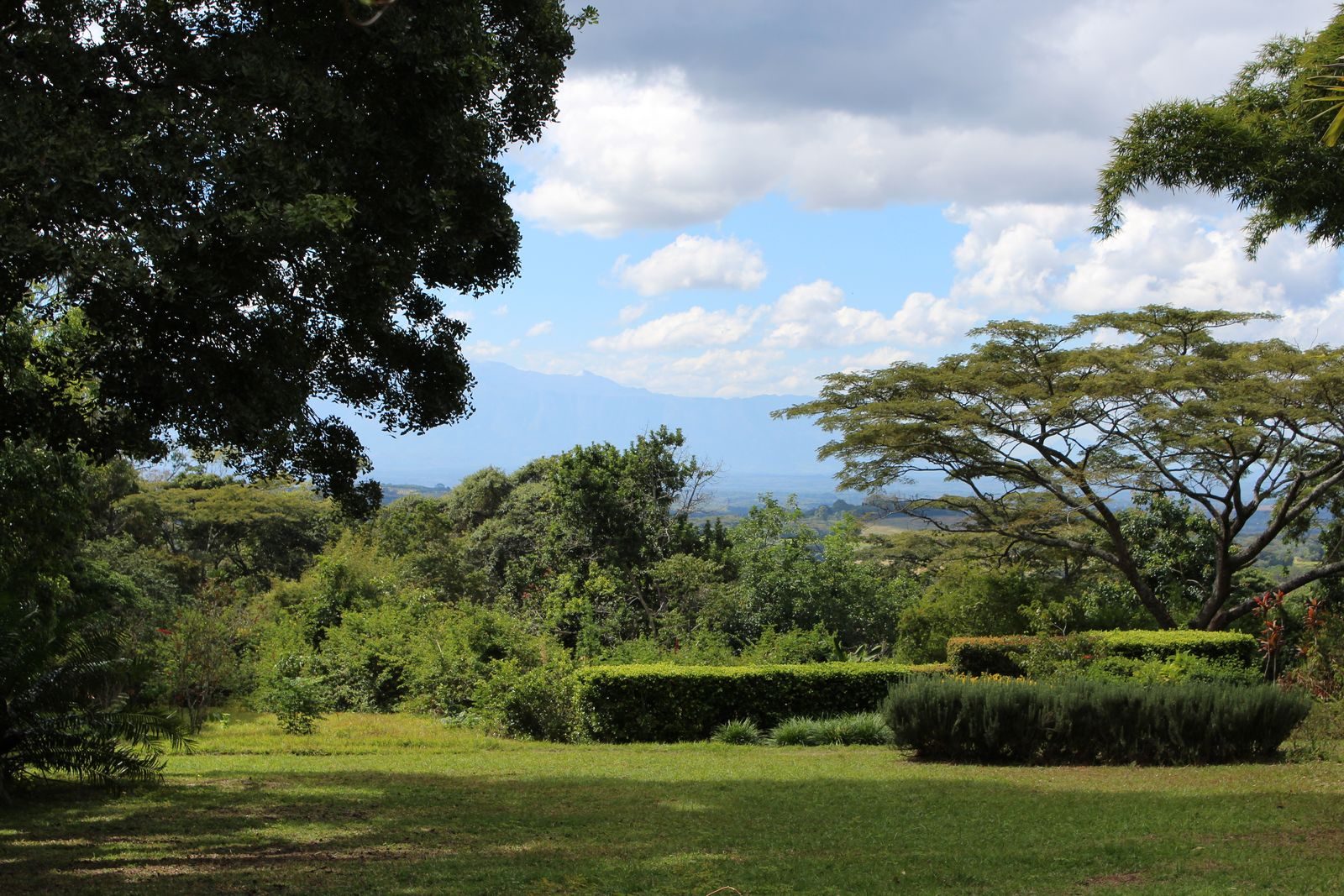
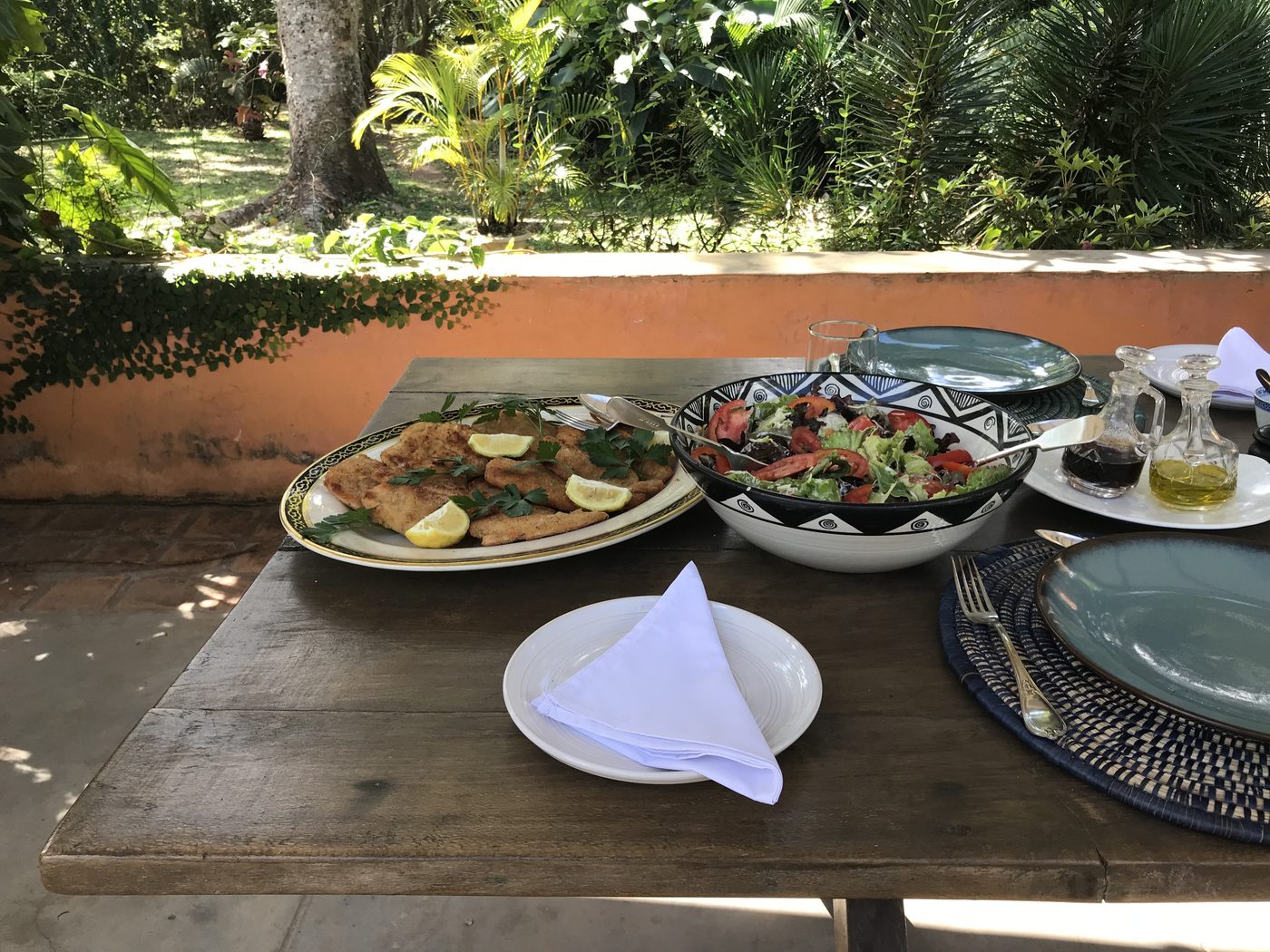
The Thyolo House is built around exactly this idea. It sits on a historic property that was once part of the Conforzi Tea Estate, 20 minutes from Limbe and 40 minutes from Blantyre, run by Italian-Malawian artist Flavia Conforzi. The hotel keeps things deliberately small — just five rooms — with a restaurant that draws on the kitchen garden, a pool for the heat of the afternoon, art workshops when available, gardens, and a long verandah that catches the breeze coming off Mount Mulanje. tea-walk activities, tea-tasting activities, third-party tea-estate visits, forest access, drivers, guides, tours, and third-party activities are not arranged through The Thyolo House.
For first-time visitors, this combination matters. You can arrive at Chileka in the late afternoon, be in your room by sunset, eat a plate of garden-grown pasta and sleep through the time difference. The next morning, you start your visit rested rather than wrecked. From Thyolo, onward routes branch easily: Mulanje for hiking, Majete for wildlife, Liwonde for the river, or Lake Malawi (around four hours north) for beaches and snorkelling. Our broader piece on why people travel to Malawi sets out those onward options in detail.
For Thyolo House room or restaurant dates, or for a stamped accommodation letter for your eVisa application, you can message us on WhatsApp on +265 884 202 040 or email thethyolohouse@gmail.com. Transfers, drivers, guides, trips, tours, and external activities should be arranged directly with the relevant providers. the boutique rooms book up early in the dry season — June through September especially — so it pays to ask.
A Short Packing and Etiquette Note for First-Time Visitors
The dry, cooler season runs from April or May through October or November, and is the best window for garden time, Mulanje hikes and game viewing. Days are warm, evenings are cool, and the sky is clear. Pack layers: a fleece or light jacket for early mornings, long sleeves for mosquitoes at dusk, sturdy shoes for forest paths, a sun hat, and a power adaptor for UK three-pin plugs. The wet season (November to April) is greener and quieter but brings cholera risk and impassable rural roads.
- Dress modestly in towns and villages — knees and shoulders covered is the local norm, especially for women.
- Always greet before transacting. A "muli bwanji?" ("how are you?") and a smile open every conversation.
- Ask before photographing people, particularly in rural areas and at religious sites.
- Tipping is appreciated but not obligatory — 10% in restaurants, USD 5–10 per day for guides and drivers.
- Single-use plastic bags are banned in Malawi. Bring a cloth shopper or two.
The country rewards travellers who slow down. Two weeks is enough for the south (Thyolo, Mulanje, Majete, Liwonde and a few days at the lake); three weeks lets you add the central highlands and the northern lakeshore. Whatever shape your visit takes, getting the visa, the cash and the first night right is what frees you to enjoy the rest.
"Malawi gives you back the time the journey took. Don't fight it — book a quiet first night, eat well, and let the country come to meet you."
If The Thyolo House sounds like the right kind of soft landing, we would love to host you. Message us on WhatsApp, drop a note to thethyolohouse@gmail.com, or browse the rooms to start planning. Safe travels, and welcome to the Warm Heart.